Tags
#CarolAnnDuffy, #EdnaSt.VincentMillay, #KatherineAnnPorter, #StoodUp, #SylviaPlath, #ThomasHardy, art, Dickens, Faulkner, Jilted, poetry, Sangster
Greetings, my fellow poets! I know it’s the merry month of May but we can’t be too merry belonging as we do (as occasion demands) to the Tortured Poets dVerse (see Taylor Swift) where we sorely test the muses with our sturm und drang.

Thus, our prompt for Poetics today has to do with those occasions where our sensitivities are most tried, when we’ve waited for a friend to show up for a previously planned lunch, a night on the town or a romantic date, and the minutes tick slowly by without a show and you realize you’ve been summarily stood up.
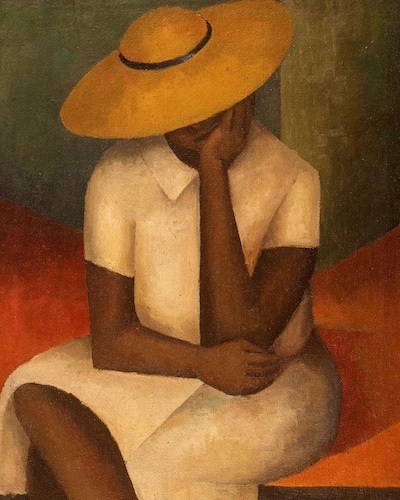
The most extreme example of being left in the lurch, of course, would be getting jilted at the altar on the day of your wedding.
Of the latter there are at least a couple of famous literary examples from short stories, e.g., the eponymous character in Katharine Anne Porter’s “The Jilting of Granny Weatherall” and William Faulkner’s “A Rose for Miss Emily.”
First, there’s Granny Weatherall, fragile only in health, not spirit, so much so that even death cannot humble her. Determined to the end to maintain control over every aspect of her life, she rues the moment when she lost control of it on her wedding day. Now on her deathbed, she remembers yet the man who left her at the altar sixty years before. “What does a woman do,” she asks herself, “when she has put on the white veil and set out the white cake for a man and he doesn’t come?”
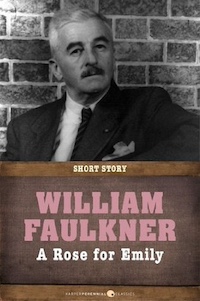
Then there’s Miss Emily Grierson and Homer Barron whose widely anticipated wedding day never materializes due to his mysterious disappearance. Faulkner takes us deep into the Southern Gothic and the thrilling, macabre revelation at the end which puts paid to the townsfolks’ lingering questions about Miss Emily, an aristocratic relic of another era whom time had passed by, as presumably had her suitor.
Carol Ann Duffy writes from the point of view of the wealthy, scheming Miss Havisham, the notorious character from Charles Dickens’ Great Expectations. She is often mistaken by readers to be elderly when in reality she is “scarcely forty,” but in her youth had been jilted on her wedding day. She is determined to make someone—anyone—pay for it with the same heartache she endures (though before she dies she repents her actions):

Miss Havisham by Carol Ann Duffy
Beloved sweetheart bastard. Not a day since then
I haven’t wished him dead. Prayed for it
so hard I’ve dark green pebbles for eyes,
ropes on the back of my hands I could strangle with.
Spinster. I stink and remember. Whole days
in bed cawing Nooooo at the wall; the dress
yellowing, trembling if I open the wardrobe;
the slewed mirror, full-length, her, myself, who did this
to me? Puce curses that are sounds not words.
Some nights better, the lost body over me,
my fluent tongue in its mouth in its ear
then down till I suddenly bite awake. Love’s
hate behind a white veil; a red balloon bursting
in my face. Bang. I stabbed at a wedding cake.
Give me a male corpse for a long slow honeymoon.
Don’t think it’s only the heart that b-b-b-breaks.
What we have personally experienced may have been on a thankfully smaller scale, perhaps not so publicly humiliating as a fiancé failing to show for a wedding with the guests assembled, but devastating nonetheless. Depending on the person we’re waiting for, a bestie, a romantic partner, someone we’ve deemed trustworthy in whom we have invested a certain measure of expectation, when we realize we’ve been deliberately stood up, the sense of disappointment, even betrayal, can be deeply hurtful. The relationship at that point will have in some sense taken an irrecoverable turn.
The nineteenth-century poet and novelist Thomas Hardy speaks to this eye-opening, heart-revealing moment:

A Broken Appointment by Thomas Hardy
You did not come,
And marching Time drew on, and wore me numb,—
Yet less for loss of your dear presence there
Than that I thus found lacking in your make
That high compassion which can overbear
Reluctance for pure lovingkindness’ sake
Grieved I, when, as the hope-hour stroked its sum,
You did not come.
You love not me,
And love alone can lend you loyalty;
–I know and knew it. But, unto the store
Of human deeds divine in all but name,
Was it not worth a little hour or more
To add yet this: Once you, a woman, came
To soothe a time-torn man; even though it be
You love not me?
Moments similar to these, where we have been left waiting fruitlessly at a rendezvous feeling cruelly spurned, perhaps for someone else, stay evergreen in our memory. As Edna St. Vincent Millay writes in this excerpt from her poem, “Time does not bring relief; you all have lied”:
The old snows melt from every mountain-side,
And last year’s leaves are smoke in every lane;
But last year’s bitter loving must remain
Heaped on my heart, and my old thoughts abide.
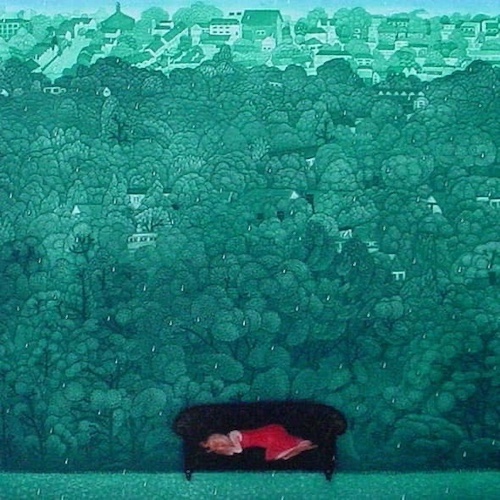
Sylvia Plath writes more bluntly:
Jilted
My thoughts are crabbed and sallow,
My tears like vinegar,
Or the bitter blinking yellow
Of an acetic star.
Tonight the caustic wind, love,
Gossips late and soon,
And I wear the wry-faced pucker of
The sour lemon moon.
While like an early summer plum,
Puny, green, and tart,
Droops upon its wizened stem
My lean, unripened heart.
Sometimes when a rendezvous does occur, it can be spoiled by a lengthy unexplained delay.
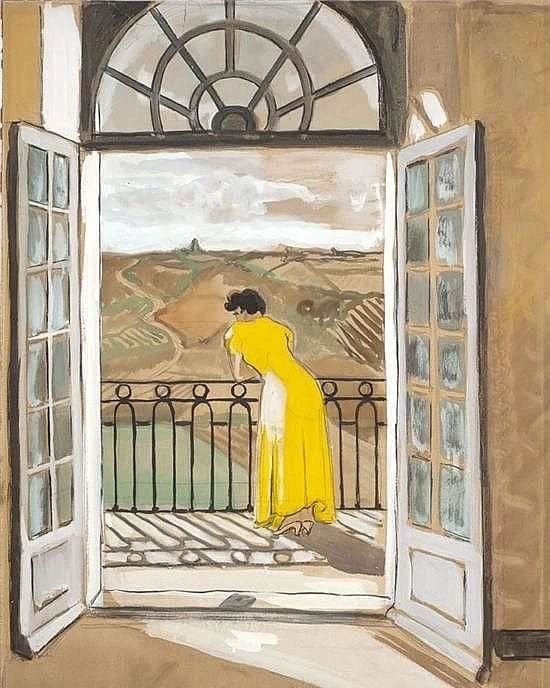
After a Day of Waiting by Margaret Elizabeth Sangster
All day long I waited—waited with soul aflame—
And then through the still of evening, humming a tune, you came;
Came with a jest on your smiling lips, and eyes that were all too gay;
And the light died out of my waiting heart with the words that I could not say.
We laughed through the star-flecked twilight—what though my laugh was strained?
You, who were there beside me, laughed with a mirth unfeigned!
And at last when I bade you leave me you went, and you never knew
That with soul aflame I had waited, all through the day, for you.
How about the one who does the jilting? Though our sympathies may not lie with them, neither is it always a bed of roses as Plath writes in “To a Jilted Lover” which you can read here.
Now we have arrived at your challenge, if you’re up for it. Using the above poems as examples, write your own in the voice of one who has been stood up in no uncertain terms on a meaningful occasion. Duffy speaks through the imagined eyes of a character, Hardy and Plath from their experience, but your own take on the topic is what we’re after, imagined or otherwise. You could also write in the voice of one who does the jilting, giving her point of view. Or the long-term effect of that singularly painful moment in time. Or the humorous or relieved discovery of misunderstanding the time or place. Use movies, music, literature, art (including those pictured or mentioned above): whatever it takes to get your creative juices flowing. Whatever approach you choose, give free rein to your poetic sensibilities in this most fraught of shared human experience.
New to dVerse? Here’s how to join in:
* Write a poem in response to the challenge.
* Post it on your blog and provide a link back to dVerse.
* Click on Mr. Linky below and enter your name and a link directly to your post; remember to check the little box to accept the use/privacy policy.
* Read and comment on other poets’ work—AND
* Enjoy!
Pub closing time is 3 PM (EST) on Thursday.
 dVerse
thank you for hosting Dora. After lunch, I’m going to have at this prompt. 🙂✌🏼🫶🏼
Hi Rob! See you soon, my friend!
Welcome everyone! The dVerse pub doors are open! Dora here, with libations a’plenty, whatever heartbreakingly scrumptious treats you fancy, and I can guarantee you won’t be left in the lurch waiting. 😉
Already on the sideboard, a fresh Strawberry Cream cake with the essence of oft-remembered strawberry fields of yesteryear, and Dom Pérignon courtesy of the gothic cellars of Miss Emily/Miss Havesham et. al.
Buckets of spring rain outside here in the DMV (Washington, D.C. area) but inside, the muses are calling. Come on in!
Hello Dora and All. Great prompt! I’m here long enough to link up, then on my way to GR to visit with family. See you later on the poetry trail.
Hi Lisa! Glad you liked the prompt and looking forward to catching up with you when you return! Have a wonderful time with family, Lisa. 🤗
Thanks, Dora. Just got home.
🤗❤️
Hi Dora and everyone else! I don’t think I’ve ever had strawberry cream cake. I’ll try some of that, please!🍰
Good to see you, Melissa! Here’s a big slice for you, my friend. Thanks for dropping by.
Hi Dora. Thanks for hosting. Love the prompt and the poems you shared. I wrote and discarded quite a few drafts, then ended up writing a sort of companion poem to one I had written a couple of years ago.
Send some rains, if possible. We are experiencing 106 during the day.
Hi Punam, I’m getting out my rainstick right now to wave in your direction! 106! Stay inside, stay cool! Can’t wait to read your poem!
Yay! Thanks, Dora. 🥰
❤️🤗
hi all
wow what a prompt, had fun with this
will be back when I can for a read.
rog
Hi Rog! Loved your brilliant write! Thanks for joining in.
Hi Dora! What a sumptuous array of artwork and poems you have shared with us here! I’m inspired to pen something…though I can’t promise I’ll post it if it gets too personal (I’m not as brave as some people!).
Meanwhile, can I have a Heartbreaker cocktail with extra strawberries please? ❤️🍹
Hi Sunra! So good to see you here. ❤️ Glad you’re inspired and I’m getting you that Heartbreaker cocktail w/strawberries on the double hoping to see your poem soon! Cheers, my friend.
Thank you! 🤩🍓
🥰
Very interesting artwork, and so many different techniques. I enjoyed looking at the pictures.
I’m so glad you enjoyed them. Each seems to suggest a world of its own, and as you say, windows into differing techniques.
Oh My!! You shared so many examples of great poetry with us, Dora!! Strawberry Creme Cake and Champagne sound delicious. You are Hostess with the Mostess today.
Glad to see you, Helen! Extra big cake slice and champagne coming right up. Cheers.🥂🤗
Now, this is a term I have not heard in a while. An interesting prompt to ponder, Dora. Thanks for hosting this evening.
Sadly, the moment after the post went live I thought of Lurch, the butler in the Addams Family!! Glad you found the prompt something worth pondering — Thank you, Dwight.
He came to mind also when I read your post. I will see what I can do with this one.
Looking forward to it!
Somehow, my “Place” poem from last week got posted for this prompt as well. Sorry about that. I’m traveling and seem to have left my brain back in Mexico. The real poem for this prompt is the second one posted via Mr. Linky. Don’t know how this happened.
Judy, I’ve misspelled my own name on Mr. Linky more than once! Nothing beats that. *sigh* It’ll be no problem at all to take off the mistaken link. Thanks for joining in the prompt. Wishing you safe, and happy travels, Judy!
Thanks, Dora. You are now complicit in making me appear to be less incompetent than I am!
Glad to help! 😂
HI Dora, this is an interesting prompt. Thank you.
Thank you Robbie! Glad you enjoyed it. Hope to see you on the poetry trail. 🤗💖
Thank you for hosting, Dora. I enjoyed this prompt, never thought on these lines before. I enjoyed your poetry selection. 🙂
So good to hear, Aishwarya. I’m looking forward to seeing what poetic path it has led you towards! 😊💖
Will come back to attempting this type of poetry again. 🙂
Loved your word-smithing! So well done. 😀
What a great challenge, Dora! Thank you for hosting!
I’m so glad, Jennifer, gladder still to read your amazing response, leaving me in awe of your poetic skills. Thanks so much for joining in!
Thank you ever so kindly, sweet Dora!
Dang woman, I wish you could send up a flare when you’re hosting here, for us occasional types. 😉
Well, tbh Shay, I’ve been busy working on your prompt — so as usual, you have only yourself to blame.😂
Ha! AGAIN??? 🙂
…as I’ve been working on yours!
🙌😍
Hey there, Dora, thank you for the prompt! My post doesn’t go live ’til the morning but I wanted to join the party now. Maybe just a lovely piece of the pie?
Absolutely! Saved one for you, Kim! And I just read your poem combing a tanshi with another of your verses and enjoyed it very much indeed (as I wrote). Thanks for joining in the prompt! 💖
Hey, Dora. I want to give this one a go. Thanks for inspiring it.
Oh I just love it, Selma. A drama steeped in history and the Japanese landscape, its poetic overtones which you beautifully carve out for us with your exquisite skill–Nice indeed.
Thank you for the prompt – Just made it in time
Alan, I’m so glad you did. I just read it. You describe a liminal space of primary importance, a waiting that’s not without hope. Such an inspired response and I loved it.
Great prompt, Dora. Unfortunately, I am late.
My poem can be found on my blog:
https://purplepeninportland.com
Loved your poem, Sara! I absolutely don’t mind adding in stragglers as long as Mr. Linky lets me! Thanks for joining in. 😊💜
Thanks, Dora!
HI Dorahak, I’m a little late: https://roberta-writes.com/2024/05/18/roberta-writes-a-trio-of-dverse-poems-poetry-elephant-herds/
Loved your poetic trio, Robbie, especially the response to the prompt! Amazing photographs too. Wow. (Better a little late than never and I went ahead and entered it into Mr. Linky.💖)
Here’s my second offering, Dora!
https://madhatterpoetry.com/2024/05/15/yellow-canary/
🙏🏽💖