
Tags
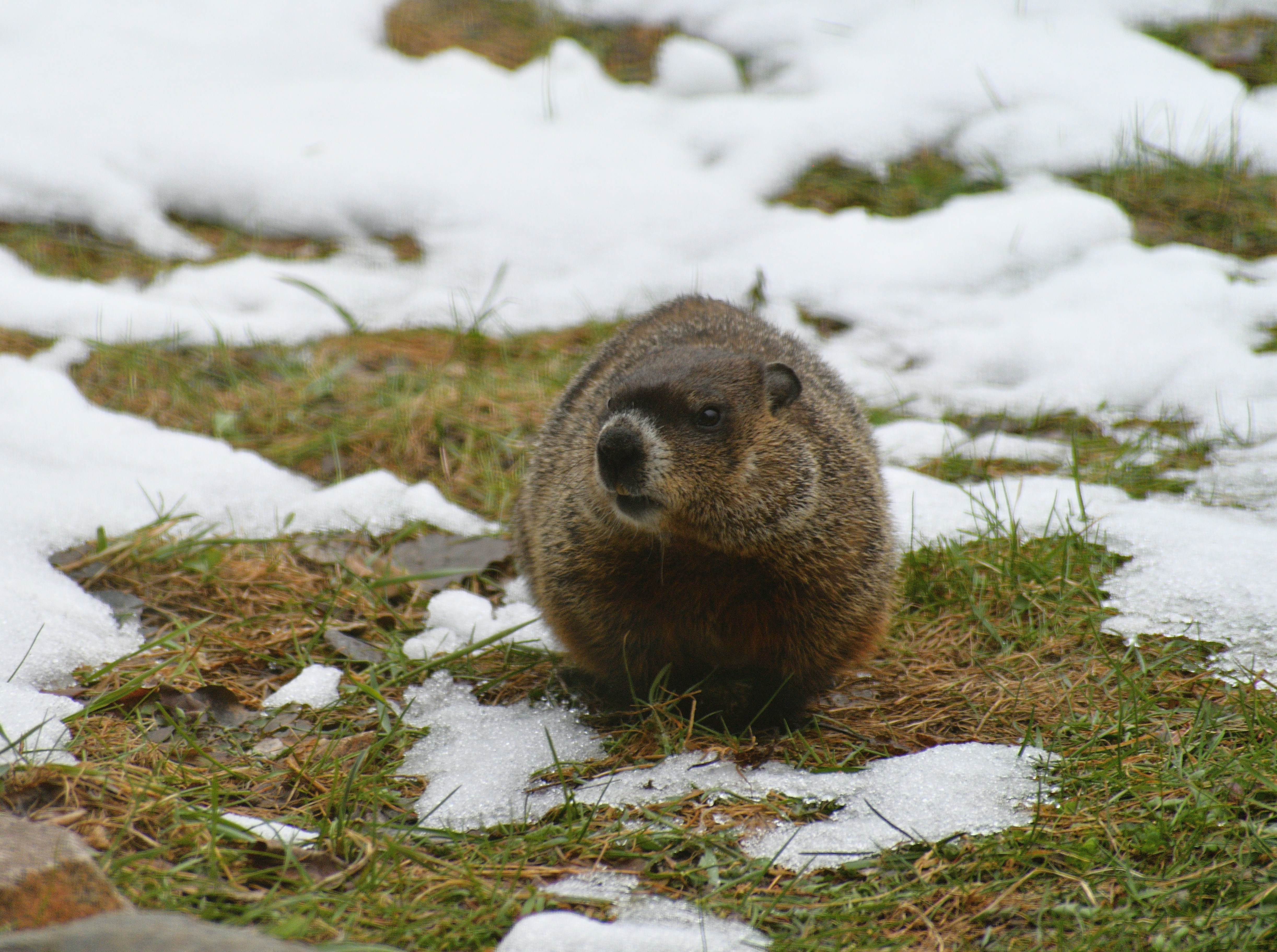
Photo by Ralph Katieb 1
Had enough Arctic cold? Buried under unseasonable snow? Or, for those living south of the equator, are you enjoying an arid summer? Well, whatever your situation, you might have heard about a certain rodent prognostication. Frank Tassone, here, & honored to be your host for another Haibun Monday, where we blend prose and haiku together. Today, let’s celebrate an American, weather-predicting tradition with Northern European roots: Groundhog’s Day.
Yesterday, the United States marked another of these rodent-led prognostications. What is it all about? Well, this:
What is Groundhog Day?
In the American tradition of Groundhog Day, the nation’s groundhog prognosticators take a stance on the season ahead. If the groundhog sees his shadow, he predicts six more weeks of winter. If he doesn’t, it’s a forecast of an early spring.
Groundhog Day’s roots are in the Christian holiday Candlemas, the midway point between the winter solstice and spring equinox. Candlemas was traditionally aligned with the anticipation of planting crops, according to the Old Farmer’s Almanac, and seeing sunshine on the day was said to indicate winter’s return.
In Europe, people traditionally looked to bears or badgers to look for the sign of returning winter or coming spring, but when German immigrants arrived in Pennsylvania, they instead used groundhogs to make the forecast instead.
The first official Groundhog Day took place on February 2, 1887, in Punxsutawney, Pennsylvania. The event took up permanent residence at Gobbler’s Knob the following year.
Will Punxsutawney Phil get it right? Well, historically, he only has about a 40% success rate. Guess we’ll have to wait and see, right?
Of course, some poets have commemorated this unique holiday in their own way:
First Warm Day in a College Town
Beth Ann Fennelly 1971 –
Today is the day the first bare-chested
runners appear, coursing down College Hill
as I drive to campus to teach, hardnot to stare because it’s only February 15,
and though I now live in the South, I spent
my girlhood in frigid Illinois hunting Easter eggsin snow, or trick-or-treating in the snow, an umbrella
protecting my cardboard wings, so now it’s hard
not to see these taut colts as my reward, these yearlingstesting the pasture, hard as they come toward my Nissan
not to turn my head as they pound past, hard
not to angle the mirror to watch them cruisedown my shoulder, too hard, really, when I await them
like crocuses, search for their shadows as others do
the groundhog’s, and suddenly here they are, the boyswithout shirts, how fleet of foot, how cute their buns,
I have made it again, it is spring.
Hard to recall just now that these are the torsosof my students, or my past or future students, who every year
grow one year younger, get one year fewer
of my funny jokes and hip referencesto Fletch and Nirvana, which means some year if they catch me
admiring, they won’t grin grins that make me, busted,
grin back–hard to know a spring will comewhen I’ll have to train my eyes
on the dash, the fuel gauge nearing empty,
hard to think of that spring, thatdistant spring, that very very very
(please God) distant
spring.Published in Unmentionables (W. W. Norton, New York, 2008) Copyright © 2008 by Beth Ann Fennelly. Used with the permission of the author.
Anna Cates
Groundhog’s DayI live on the edge of a small Midwestern town, beside a field, beside the woods. Sometimes, wildlife wander in through the trees from the country onto my street: rabbits in morning dew, the occasional deer clomping across the asphalt, carrion birds circling for the unlucky feral cat, and a hedgehog that comes and goes. . . .
cold sunrise
a gopher samples
February snowCourtesy of Contemporary Haibun Online (12.4, January 2017)
white skies…
a grumpy groundhog
emerges
© Connie Marcum WongCourtesy of PoemHunter.com
The groundhogs have come and gone. They’ve made their predictions, for good or ill. Let’s celebrate their effort either way. Write your haibun alluding to Ground Hog’s Day.
New to haibun? The form consists of one to a few paragraphs of prose—usually written in the present tense—that evoke an experience and are often non-fictional/autobiographical. They may be preceded or followed by one or more haiku—nature-based, using a seasonal image—that complement without directly repeating what the prose stated.
New to dVerse? Here is what you do:
- Write a haibun alluding to Groundhog’s Day.
- Post it on your personal site/blog.
- Include a link back to dVerse in your post.
- Copy your link onto the Mr. Linky.
- Remember to click the small checkbox about data protection.
- Read and comment on some of your fellow poets’ work.
- Like and leave a comment below if you choose to do so.
- Have fun!
 dVerse
Good evening all, and thank you, Frank, for hosting.
Thank you for joining in, Kim! 😀
Pingback: dVerse — Haibun Monday — Groundhog Day – Tao Talk
Happy Monday…I wish for some winter so we can get some spring afterwards.
Bjorn you all haven’t gotten any winter yet?? You are welcome to some of ours 🙂
Hardly any winter… God probably sent the cold weather to punish the US 🙂
We deserve it.
Great to see you here, Bjorn! Hopefully you’ll get your Winter, soon!
Hello Kim and Frank and All. Frank, thanks for the background info on the holiday origins. Considering yesterday and today in Michigan, I think we are going to have an early spring.
Great to see you, Lisa. I hope you’re right!
Thanks, Frank!
Welcome poets! The Pub is open!
Love this invitation to Haibun the Groundhog. Love the poetic offering of Fennelly (b 1971), a mere baby herself, watching her semi-naked students pound by. Love that Groundhog day has its European roots in Candlemas, whichin turn has its roots in Brighid the Celtic Triple Goddess, via St Bride the Irish saint.
Now I am getting boring; better go back in my burrow, emerging perhaps to read some of the Haibunnies. Thanks Frank for the prompt tonight.
Happy you could join us!
The groundhog left. I need to cry into a drink. Any suggestions?
I’m a Burgundy man myself. Care for some?
or would you care for a custom special—the fleeing Groundhog?
I’ll take the custom special – with a straw!
Coming right up!
hi frank
hi poets
interesting prompt i enjoyed
catch up later
rog
Glad you came out, Rog. See you when we see you!
Thanks for hosting, Frank. I appreciate that the information in the post references Candlemas. It was also yesterday and, believe it or not, is the traditional Catholic end of the Christmas season. I was not aware that there was a way to predict the future weather from that.
Great to see you join in, Jenna! Yes, isn’t it amazing what we can learn from nature?
Thanks for the wonderful prompt, Frank. I will have a shot of Canadian rye whiskey to warm me up. 🙂
One Canadian rye whiskey coming right up! Happy to see you join in, Mish!
I am hoping Phil’s prediction will be wrong and spring will arrive early.
Thank you for the lovely prompt! Maybe just some hot chocolate for me? It’s bedtime, and early to rise. But I can’t wait to read the other poems tomorrow.
Apologies, all, but something personal came up. I’ll be back to read your wonderful haibun tomorrow. Meanwhile, help yourselves to whatever the bar has!
Thanks for hosting, Frank. Beautiful prompt!
Thanks v much Frank….never knew about te shadow stuff before…
Many thanks for hosting Frank – an intriguing custom 🙂
F
?