Welcome to this Tuesday’s Poetics, a challenge familiar to many of you though its form may take many imagined shapes thanks to the creativity of our dVerse pubtenders and poets. Dora here from Dreams from a Pilgrimage hoping to entice you to consider with me how a poem can reimagine the familiar.
Habitualization devours work, clothes, furniture, one’s wife, and the fear of war. If the whole complex lives of many people go on unconsciously, then such lives are as if they had never been. And art exists that one may recover the sensation of life; it exists to make one feel things, to make the stone stony. The purpose of art is to impart the sensation of things as they are perceived and not as they are known. The technique of art is to make objects ‘unfamiliar’ . . . .”
Russian literary critic Viktor Shklovsky, who coined the word defamiliarization
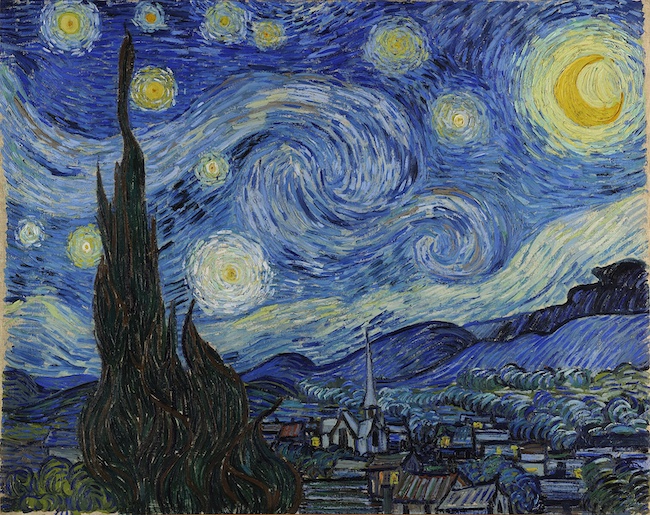
Vincent Van Gogh, The Starry Night (1889), oil on canvas (MMA, NY)This impressionistic painter took the familiar night sky and defamiliarized it by giving us his unique “impression” of it which, ironically, is now very familiar.
We’ve seen talented and oftentimes anonymous artists create graffiti, taking the familiar sides of buildings and walls and reimagining them, creating memorable, though ephemeral, street art. Yarn bombing is a type of street art that covers a familiar public structure, a park bench or phone booth, defamiliarizing it with a display of knitted or crocheted yarn.
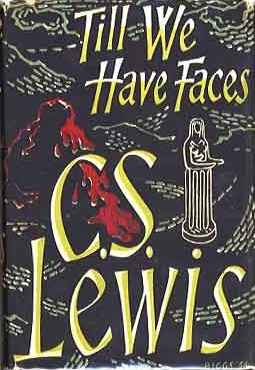
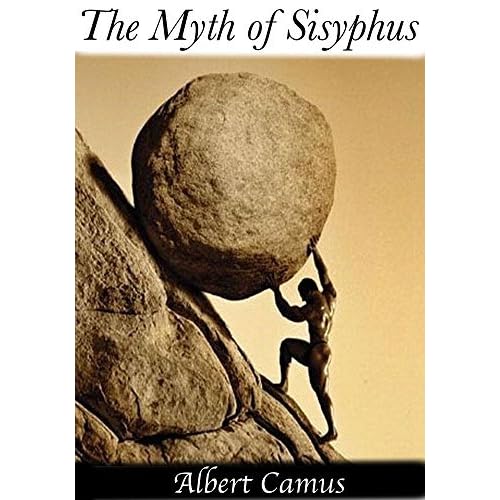
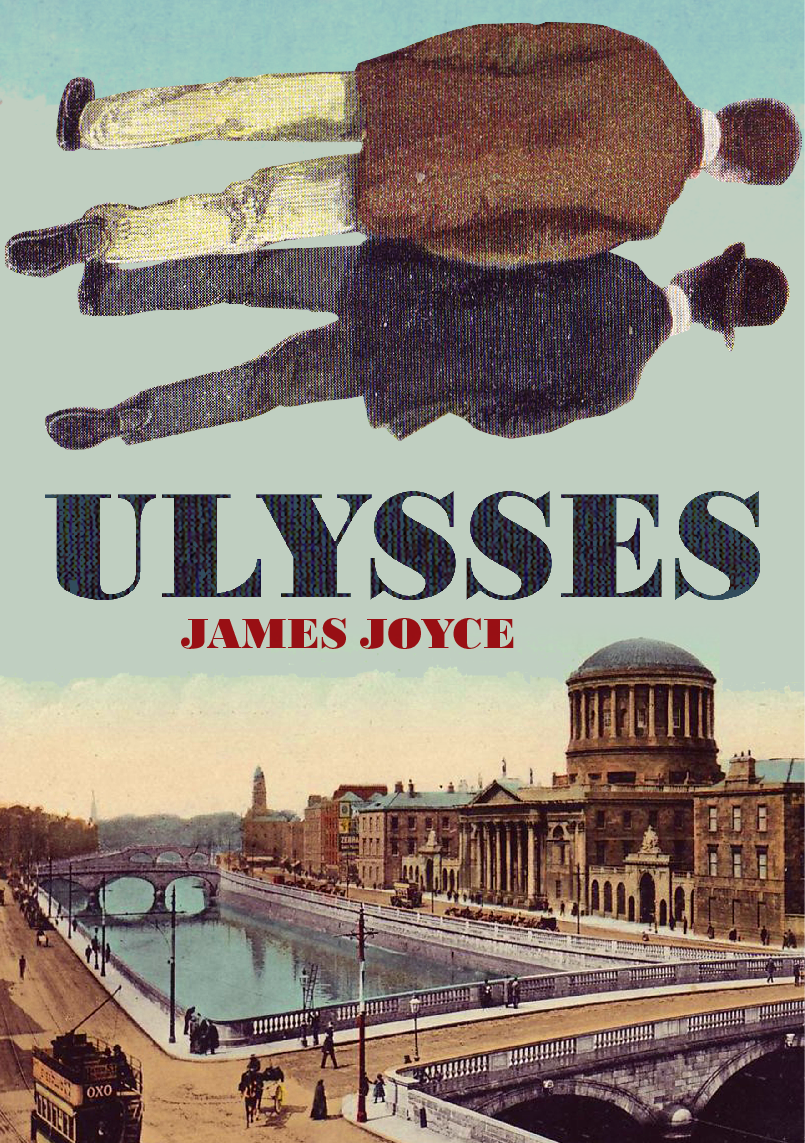
We’ve seen novelists do it in classics like C. S. Lewis’ Till We Have Faces:A Myth Retold where Lewis reimagines the familiar myth of Cupid and Psyche from the perspective of Psyche’s older sister. The French nihilist philosopher/novelist Albert Camus in his absurdist work, The Myth of Sisyphus, reinterprets that “tale of futility into a parable of purposeful striving” in which Camus writes, ‘the struggle itself toward the heights is enough to fill a man’s heart’ . . . ‘One must imagine Sisyphus happy.’”1 In his novel Ulysses the modernist Irish writer James Joyce uses stream-of-consciousness to humorously re-envision that eponymous hero in the cuckolded person of the less-than-heroic Leopold Bloom.
Poet Louise Gluck takes the familiar figure of Circe in Homer’s Odyssey and reimagines her visiting her lover Ulysses’ (Odysseus’) wife, faithful Penelope.
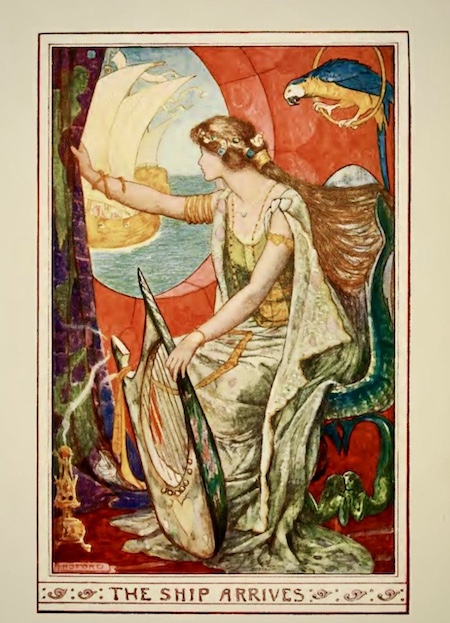
Illustration by Henry Justice Ford (1908) in The CrimsonFairy Book by Andrew Lang: “The ship cut through the waters like a falcon through the air.”
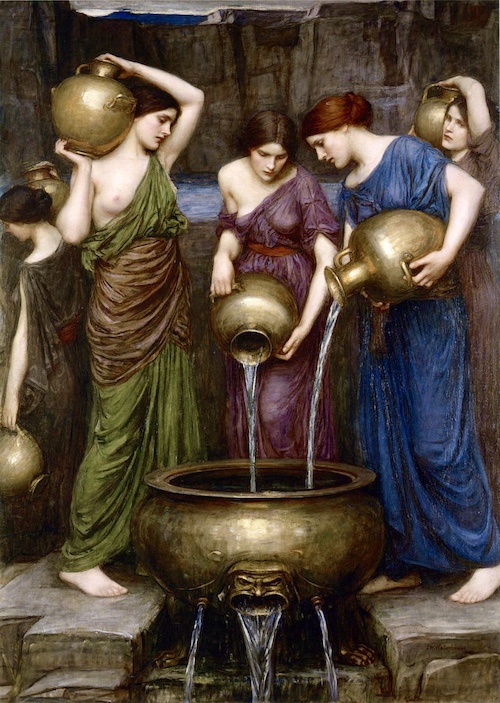
John Williams Waterhouse,The Danaides (1903). The fifty daughters of Danaus, known as the Danaides, all kill their husbands on their wedding night and so are condemned to fill a basin with water for eternity.
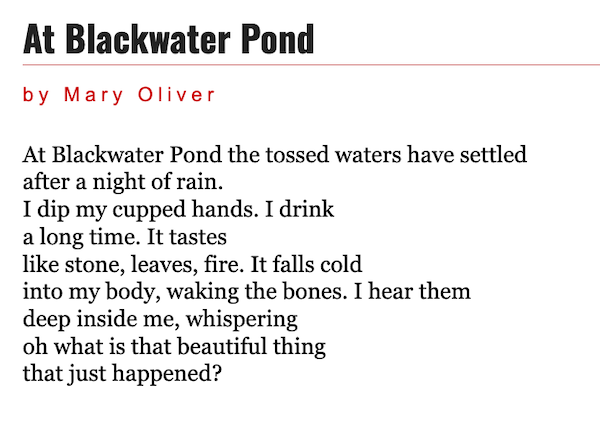
Mary Oliver reimagines the ordinary act of drinking pond water as something extraordinary.
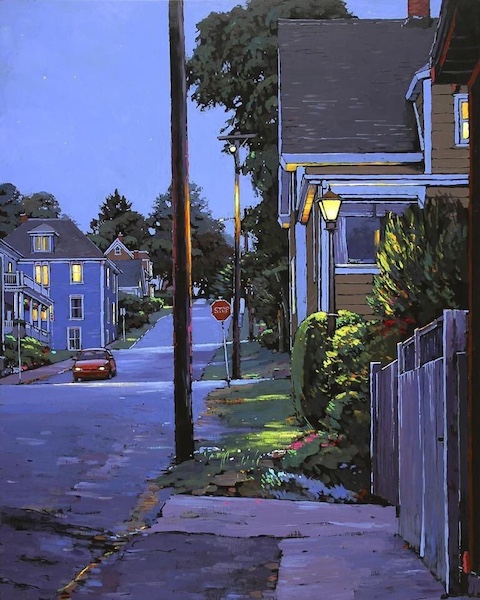
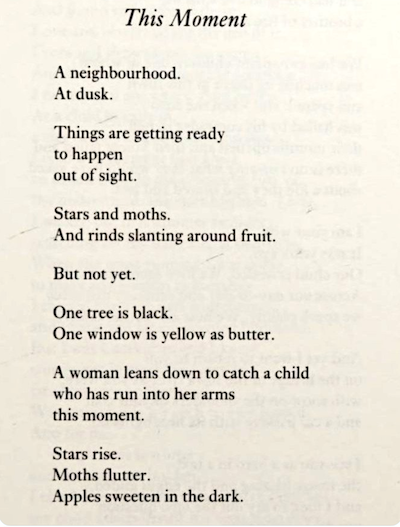
Eavan Boland takes a look at her familiar, even mundane, neighborhood in the light of the setting sun, defamiliarizing domestic tranquility as something magical in “This Moment.”
Mark Grantham, “Until Tonight” (2019, acrylic on board)
Eavan Boland, This Moment, from A Woman Without a Country: Poems (2014).
Set wide the window. Let me drink the day.”
Edith Wharton
What I’d like us to do in our poetry is to take something familiar and reimagine it in some way. Here’s a short list of ideas to get you started:
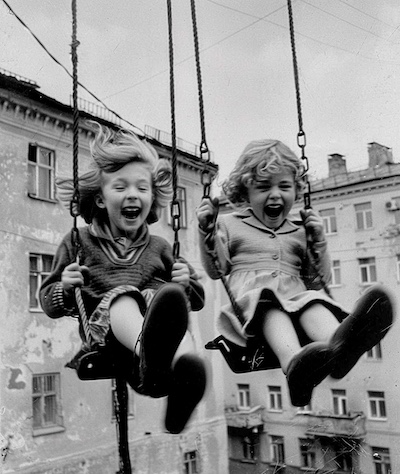
Untitled – by Armenian photographer David Galstyan (1986)
Engaging in a sport or pastime (like Yeats’ poem above) Gazing at something familiar (like Boland above) Encountering a fork in the road (Robert Frost’s “The Road Not Taken” comes to mind) Reading a book
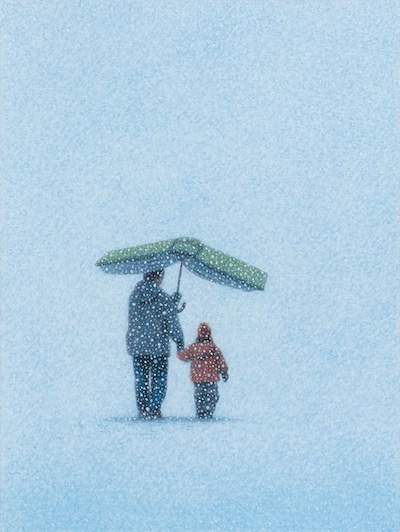
Quint Buchholz, In the Winter, 2013.
Checking the mailbox Throwing open a window Dragging on your clothes (e.g., as an act of arming oneself like Achilles perhaps) Suppressing uncontrollable giggles or hiccups Taking a walk Driving a car
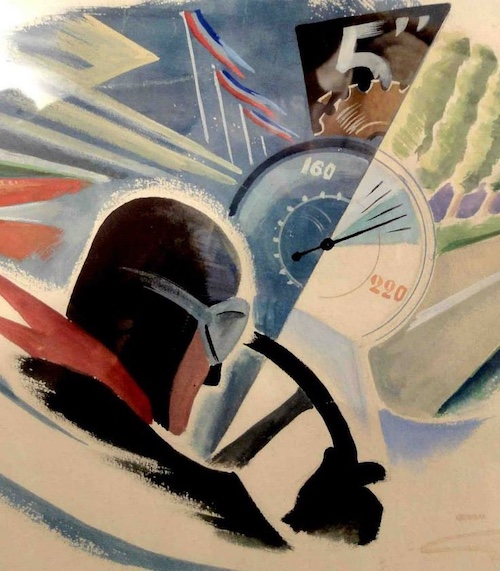
Géo Ham- The Forgotten Prince Of Speed.
Boarding a plane or train Observing a parade or a play
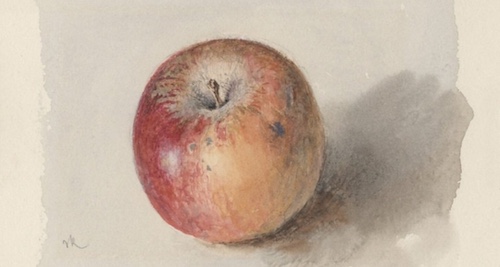
John Ruskin, Blenheim Orange Apple c.1873, Watercolour and bodycolour on heavyweight white wove watercolour paper; 11.7 x 16.5 cm (sight), Private collection
Eating an apple (akin to Oliver’s poem on drinking from a pond) Washing dishes Jogging Or Tweak a familiar myth or fairytale (like Lewis and Gluck did above) and de-familiarize it with a more modern, personal or iconoclastic perspective
Photo by Lebanon-born photographer Rania Matar, known for her images of women from her home country
Make us see how the familiar or habitual can be uniquely reimagined and defamiliarized.
New to dVerse? Here’s how to join in: * Write a poem in response to the challenge. * Post your poem on your blog and link back to this post. * Enter your name and the link to your post by clicking Mr. Linky below (remember to check the little box to accept the use/privacy policy). Mr. Linky will remain open until 3pm EST on Thursday, February 6th. * Read and comment on your fellow poets’ work –- there’s so much to derive from reading each other’s writing: new inspiration, new ideas, new friends.
Dora thank you for all the poetry above and many options – this was such a tempting Poetics prompt but only one really stood out for me so just an elderflower presse with an apple crumble please!
I now remember about defamiliarization from when I took a course in creative writing… and it is something that can be very good to use. I remember a reflection that we had when discussing it where Shklovsky used an example of a public execution (which apparently was very familiar at the time of writing), thankfully public executions are not familiar to me. Alas as of today school shootings become familiar even here in Sweden….. huge tragedy and a lot of things we don’t know.
Shklovsky is rather new to me but I’m not surprised to see him introduced in such a class. Sorry to hear that school shootings are becoming familiar in Sweden. What a tragedy! Do you think public executions should perhaps be reintroduced as a deterrent? I’m almost of a mind to think so.
Yes, commiserations Björn. They will find a cause, and root cause too I would imagine, both open to interpretation. At the end of the day is an absolute tragedy, whatever results come forward.
Dora, what a fantastic prompt! So many lovely poems to inspire and so many great ideas you gave us.
I almost wrote a poem deconstructing Draupadi and reimagining her in today’s context but gave up the idea. We have become very touchy these days and our epics and mythology are untouchable. So I went with something lowly. Literally. 😉
A most beautiful post and prompt, dear Dora. I adored reading all the poems and commentary you added. Fantastic all of it. I gave it a go. Though in the end I almost shied away from adding to Linky as I might have gone a totally different direction. But see, I didn’t budge. I posted it anyway. I actually liked the poem that visited me today. Thanks dearly for this.
Here it is for your ease: https://selmamartin.com/loaded/
At least you will get a window view of my childhood that came to me the moment I read YOURS. You’ll see why when you read. Thanks. I loved writing this poem. Bless you.
It’s close to dinner time here. On a wednesday. I might be rebellious with the rules I set for myself, about weekday drinking, but today I will ask for a gin tonic. Olive too, please. Thanks.
Your comments gladdened my soul, Selma, as you are so apt to do with your glorious pen. I can’t wait to read your poem but in the meantime, a gin & tonic with olive coming right up! 🍸 Cheers, my friend.



 dVerse
Welcome, everyone, to the dVerse Pub!
Doors are open and we have the lot of refreshments, so take your pick! Meantime, see you on the poetry trail.
Dora thank you for all the poetry above and many options – this was such a tempting Poetics prompt but only one really stood out for me so just an elderflower presse with an apple crumble please!
I’m glad to play the tempter in this instance, and having just read your poem, I am delighted with the result. Your treat is on its way! Cheers.
I now remember about defamiliarization from when I took a course in creative writing… and it is something that can be very good to use. I remember a reflection that we had when discussing it where Shklovsky used an example of a public execution (which apparently was very familiar at the time of writing), thankfully public executions are not familiar to me. Alas as of today school shootings become familiar even here in Sweden….. huge tragedy and a lot of things we don’t know.
Shklovsky is rather new to me but I’m not surprised to see him introduced in such a class. Sorry to hear that school shootings are becoming familiar in Sweden. What a tragedy! Do you think public executions should perhaps be reintroduced as a deterrent? I’m almost of a mind to think so.
I really hope not… it is not a deterrent, most mass-shooter wants to die actually.
True enough. They fall so out of the bounds of social norms.
Yes, commiserations Björn. They will find a cause, and root cause too I would imagine, both open to interpretation. At the end of the day is an absolute tragedy, whatever results come forward.
Ain, if you are reading this, please know that I am unable to access your post. Believe me it is very frustrating.
Oh no…I am sorry and puzzled, will try to get all this sorted.
Same, Ain. I haven’t been able to comment on your past two poems.
neither can I and yet I wanted to because your poem is remarkable, memorable and very moving
Sorry to link and run today. Will be back in the morning, a little fresher and hopefully better.
Take care, Kim. Hope you feel better soon. 💞
Thank you, Dora.
Stunning presentation, with real clarity also…ta🍏
A hint? The apple is taking the lead in the reimagining stakes! 🙂
Ha! ‘Twas at first but now a different route has taken me..
Yes indeed. A tragic one of war’s transformations.
i don’t know how to comment on your poem so I’m writing my thoughts here:
The contrast between innocence and wars is so nicely expressed, I liked the poem very much!
Thanks so much my friend, yes, sorry, trying to sort things out.
I don’t know if what I wrote is exactly right, but it’s what came out. What alcoholic drink goes good with apple juice?
Haha! You tell me and I’ll take it under advisement after reading your poem!
hi dora
hi poets
realy enjoyed this prmpt
thanks rog
So glad you dropped by and delighted by your “unhinged” poem.
Thank you for another fantastic prompt, Dora!
Yaay! Glad to see you here, Shay.
Dora, what a fantastic prompt! So many lovely poems to inspire and so many great ideas you gave us.
I almost wrote a poem deconstructing Draupadi and reimagining her in today’s context but gave up the idea. We have become very touchy these days and our epics and mythology are untouchable. So I went with something lowly. Literally. 😉
I understand, Punam, and saddened by the political winds these days all around the world. Whatever you write, I’m looking forward to reading. ❤️
❤️
great prompt, Dora! I was inspired by the prompts you listed.
Hooray! Looking forward to what issued forth from your gifted pen, Jay.
A most beautiful post and prompt, dear Dora. I adored reading all the poems and commentary you added. Fantastic all of it. I gave it a go. Though in the end I almost shied away from adding to Linky as I might have gone a totally different direction. But see, I didn’t budge. I posted it anyway. I actually liked the poem that visited me today. Thanks dearly for this.
Here it is for your ease: https://selmamartin.com/loaded/
At least you will get a window view of my childhood that came to me the moment I read YOURS. You’ll see why when you read. Thanks. I loved writing this poem. Bless you.
It’s close to dinner time here. On a wednesday. I might be rebellious with the rules I set for myself, about weekday drinking, but today I will ask for a gin tonic. Olive too, please. Thanks.
Your comments gladdened my soul, Selma, as you are so apt to do with your glorious pen. I can’t wait to read your poem but in the meantime, a gin & tonic with olive coming right up! 🍸 Cheers, my friend.
I like the prompt Dora, made me think and also feel, a good challenge for me.
I’m so glad. I took my time putting it together and getting feedback like yours makes it is so worth it.
❤️
Superb challenge, Dora!
Thanks, Jennifer! Your poem was a wonder to read.
Thank you, Ms. Dora. I made a second one, though I am too late to link it. That Mary Oliver poem got me going! ❤
Here it is:
http://www.poetlaundry.com/2025/02/yabba-dabba-doo.html
It is absolutely lovely, Jennifer! And I can’t get enough of your distinctive poetic voice, such a hard thing to achieve. ❤️
Thank you so much, kind Dora! That makes my day!
That has to be the most comprehensive prompt I have ever seen. I am appreciative of all the thought and effort you have put into it.
You’ve made my day, Sean. Thank you!