Tags
***ANNOUNCEMENT***
Call for Poetry Submissions: Krisis: Poetry at the Crossroads // Be a part of an upcoming dVerse anthology in celebration of our 15th anniversary! Find more information here!
“Those not busy being born are busy dying…”
—Bob Dylan
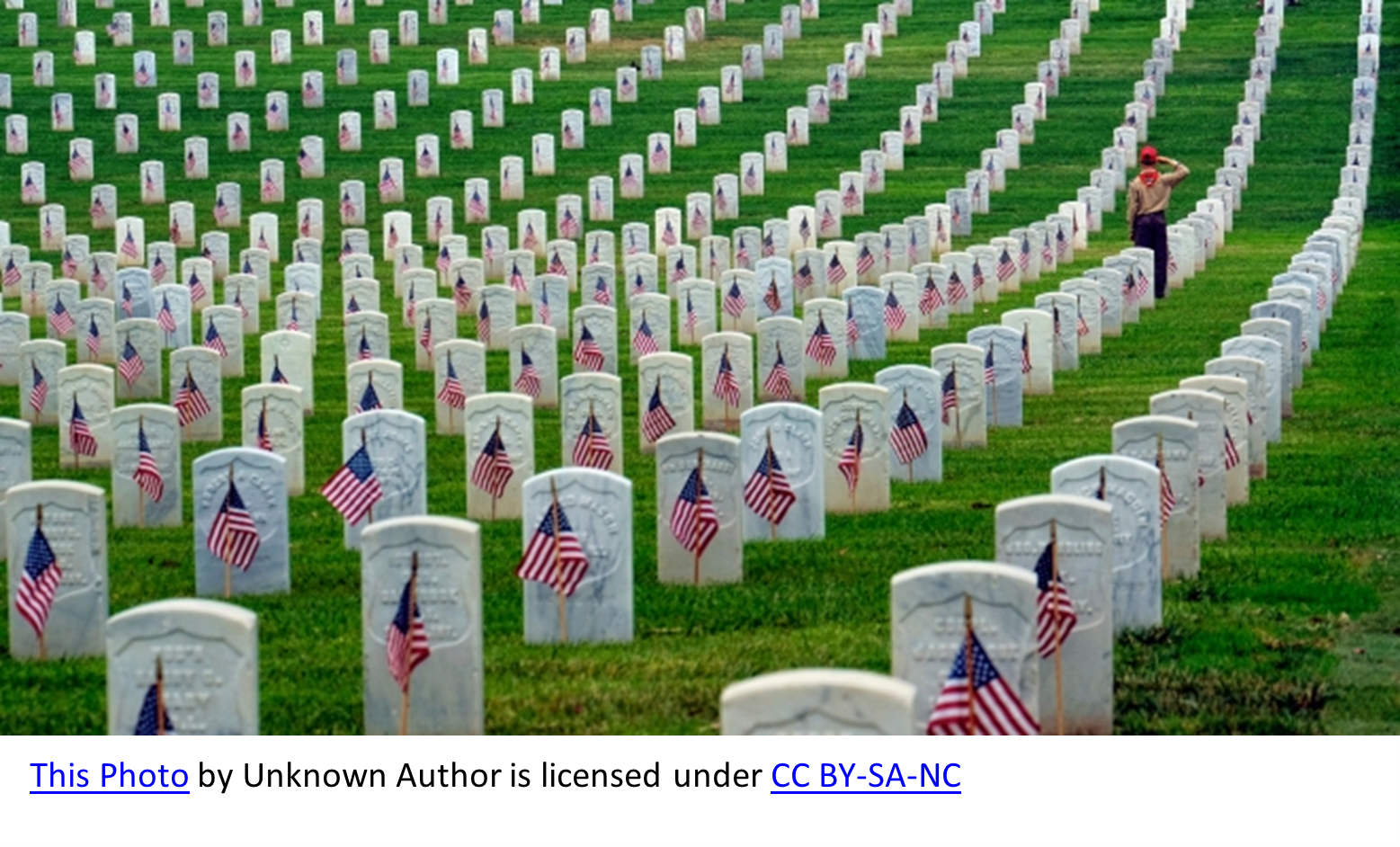
We will all die someday. & we have all lost people whom we loved. Many, if not all, of us find it difficult to face these facts. Nevertheless, we must. Memorial Day, which the United States celebrates today, allows us to do so. Welcome to Haibun Monday, poets. Frank Tassone, here, your host, and today, we write the Japanese hybrid form made famous by Basho. In the spirit of Memorial Day, let’s memorialize those loved ones we lost.
Ironically, a US holiday commemorating US military men and women who made the ultimate sacrifice falls on the last Monday of May—a month announcing Summer. Indeed, many Americans celebrate Memorial Day weekend as the unofficial beginning of Summer. But this day is still one of remembrance. Therefore, it is a fitting day to recall those whom we lost.
My first experience of a loved one’s death was my paternal Grandmother. She died unexpectedly of an infection. I was six years old. Because my mother listened to well-intentioned but ill-considered advice, she did not let me attend Grandma’s wake and funeral. I spent the next months in confusion, wondering why Grandma wouldn’t come to visit. I could not process that she died.
Mom made sure I attended the wake or funeral of my other beloved relatives who passed after that.
Some haijin have memorialized those whom they’ve lost, or whom others have lost, with striking precision:
Adelaide B. Shaw
A Blink of an Eyemy neighbor’s young brother died struck by lightning like that one second alive then not alive too quick to know that death was imminent too quick to pray to confess for sins imagined or actual to ask for forgiveness too quick to remember the good times too quick to say good-bye to loved ones
night sky
I blink and miss
a shooting starJo Balistreri
Day of Remembrance
This Memorial Day is different. My father places a small carton of artifacts before me on the kitchen table—things I never knew he had. In seventy years, he deflected all questions about the war with “There’s nothing to talk about.” He’s in his nineties, and I wonder, why now?secrets
out of the closet
articles of war
I dig out his aluminum dog tags, the size of half dollars; register the cold on my palm, wonder what it felt like around his neck. Letters from my mother, along with her picture and a lock of hair are enclosed within a heavy envelope. I put them back, leaving the letters for later. Remaining are two pocket-sized black books—Dad’s diaries.
I open to the slanted script, ink smeared in places, fragments rather than sentences—a decimated Japanese village, little kids lost, crying; bodies in the rice paddies, bodies huddled together in fear—killing them out of fear. His handwriting is trembly, and as I continue to the second book, I hear the uncertain, quivering voice that haunts these pages. I never heard my father cry. These books are full of tears.
brittle leaves
falling from the trees …
my tea’s bitter taste
I stare out the window. Flags hang limp in the desert sun. The Sousa marches that stirred the morning air are now replaced by images, death-stilled and sun-hollowed. How do I reconcile the spirited music of patriotism with killing for one’s flag?
I continue with the second book, father’s handwriting almost illegible—names of the dead, of the wounded. I hear loneliness and loss, despite the entries about the band he sang with on board his ship. A picture unmoored from its scotch tape shows the young men in his group. All dead except my father.
eviscerated—
the mouse no match
for the hawk
Together in the living room, we finally talk about his war, his years of silence, my unknowing. How he’d been lost inside that war. He said coming home to a loving wife and two small children saved him. He’d been afraid, ashamed, beaten. Now in his last years, he wanted me to understand.
flowering Katsura
in their midst
my father’s shy smile
This Memorial Day, let us live the ancient Romans’ “Momemto more” by remembering our beloved dead. Write a haibun in which you offer your remembrance for anyone who has died, whom you love, or with whom you have a connection.
New to haibun? The form consists of one to a few paragraphs of prose—usually written in the present tense—that evoke an experience and are often non-fictional/autobiographical. They may be preceded or followed by one or more haiku—nature-based, using a seasonal image—that complement without directly repeating what the prose stated.
New to dVerse? Here’s what you do:
- Write a haibun that memorializes a loved one, or one with whom you have a connection, as described above.
- Post it on your personal site/blog
- Copy your link onto the Mr. Linky
- Remember to click the small checkbox about data protection.
- Read and comment on some of your fellow poets’ work
- Like and leave a comment below if you choose to do so
- Have fun!
 dVerse
Good eveming. I hope you all have an opportunity to have a day off today. Here in Sweden Thursday is Acension, so once again we will have a long weekend.
This piece made me actually feel I’d experienced the pain of battle –something no other book or poem ever has. Those people huddled in fear of death and the soldier shooting them in fear of his own death..then having to remember that for the rest of his life. Beautifully done. Excruciatingly painful.
Welcome poets! The pub is open!
Pingback: dVerse Poets Haibun Monday – The Bag Lady
Hi Frank and all. Excellent selections you’ve shared, Frank~
Pingback: Death in Plastic – Addicted to Words
Well, that was depressing…. Do you have anything with lots of sugar behind the bar?
Sure! How about a Strawberry Daquori?
Again, welcome poets! The pub is open!
Pingback: Ghost Stories for dVerse Poets Momento Mori Prompt, May 26, 2025 | lifelessons – a blog by Judy Dykstra-Brown
Pingback: Falling Through Clouds | Pandamoniumcat's Blog
Pingback: Tears of Remembrance - How would you know...
As always on a Tuesday morning, I have squeezed in a piece before going off to work so a quick cup of breakfast coffee would be most welcome, thanks…
One hot cup of coffee, coming right up! Creams and sweeteners are on the bar.
Is it ‘momento mori’ or ‘memento mori’?
Probably the latter! 😆
Please forgive me for being a huge dork 🤓
No need to apologize. Aren’t we all? 😆
I’ve edited an old haibun of mine and posted it as it fits the prompt. Thanks for hosting, Frank.
Happy to see you join in!
Pingback: In Memoriam – Creative Experiments and More
Pingback: A Haibun: I Walk Alone – JJJ Interactive Books
Pingback: Re-membered – Haibun by Paul Vincent Cannon | parallax
I like how you’ve offered this Frank, a broader scope of memorial, thank you for a timely prompt.
Glad you could join in, Paul!
❤️
Pingback: Too Soon Gone ~ haibun | rivrvlogr
Pingback: Difficult loss to bear – Keep it alive
Pingback: Grief Journey Day + 289 – A Little Bit of Everything, With Love
I have attempted to rise to your challenge. Thank you for the opportunity. I have loved reading all the entries very much.