This is our last prompt before we go for a two week summer break. dVerse will back on July 14, 2025, which is our 14th year anniversary.
** AN ANNOUNCEMENT**
Call for Poetry Submissions: Krisis: Poetry at the Crossroads
Be a part of an upcoming dVerse anthology in celebration of our 15th anniversary!
Hurry! Submission period closes June 30, 2025. Click here for more information!
We have taken up synesthesia in our prior MTB here and here. Let’s revisit the key concepts as synesthesia is such a rich and evocative concept for poetry.
What Is Synesthesia in Poetry?
In literature, synesthesia is a figurative device where one sensory experience is described using terms from another — like hearing colors, tasting sounds, or feeling scents. It’s a way to blur the boundaries between senses, creating vivid, unexpected imagery that resonates emotionally and sensorially.
This technique draws inspiration from the neurological condition of the same name, where people involuntarily experience one sense through another (e.g., seeing music as colors). But in poetry, it’s a deliberate act of imagination — a way to deepen metaphor and stir the reader’s senses.
Examples:
Aubade
By Dame Edith Sitwell
Jane, Jane
Tall as a crane,
The morning light creaks down again;
Comb your cockscomb-ragged hair,
Jane, Jane, Come down the stair.
Each dull blunt wooden stalactite
Of rain creaks, hardened by the light,
Sounding like an overtone
From some lonely world unknown.
But the creaking empty light
Will never harden into sight,
Will never penetrate your brain
With overtones like the blunt rain,
The light would show
(if it could harden)
Eternities of kitchen garden,
Cockscomb flowers
that none will pluck,
And wooden flowers
that ‘gin to cluck.
In the kitchen you must light
Flames as staring, red and white,
As carrots or as turnips, shining
Where the old dawn light lies whining
Cockscomb hair on the cold wind
Hangs limp,
turns the milk’s weak mind…
Jane, Jane,
Tall as a crane,
The morning light
creaks down again!
***********
By George Meredith
By this he knew she wept with waking eyes:
That, at his hand’s light quiver by her head,
The strange low sobs that shook their common bed
Were called into her with a sharp surprise,
And strangled mute, like little gaping snakes,
Dreadfully venomous to him. She lay
Stone-still, and the long darkness flowed away
With muffled pulses. Then, as midnight makes
Her giant heart of Memory and Tears
Drink the pale drug of silence, and so beat
Sleep’s heavy measure, they from head to feet
Were moveless, looking through their dead black years,
By vain regret scrawled over the blank wall.
Like sculptured effigies they might be seen
Upon their marriage-tomb, the sword between;
Each wishing for the sword that severs all.
In her heavily synesthetic poem “Aubade,” Dame Edith Sitwell describes the “dull blunt wooden stalactite / Of rain creaks, hardened by the light.” In George Meredith’s “Modern Love: I,” a woman’s heart is made to “drink the pale drug of silence.” Synesthetic effects include textual amplification, complication, and richness.
Source: Poetry Foundation
Writing challenge: Write a poem that explores a moment — real or imagined — through the lens of synesthesia. Choose a dominant emotion or memory and describe it by blending at least two senses in unexpected ways. Let your metaphors cross sensory wires: let grief shimmer in ultraviolet, taste the thunder or hear the color of longing.
If you want to incorporate synesthesia to our anthology theme: Write a poem about a moment of decision — a literal or metaphorical crossroads — using synesthesia to express the emotional and sensory dissonance of that moment. Let the senses misbehave. Let the road sing, the sky taste, the silence glow. Ask yourself: What did that choice feel like in the body? What color was the regret? What sound did hope make? Let the feeling of indecision have a texture or color.
 dVerse
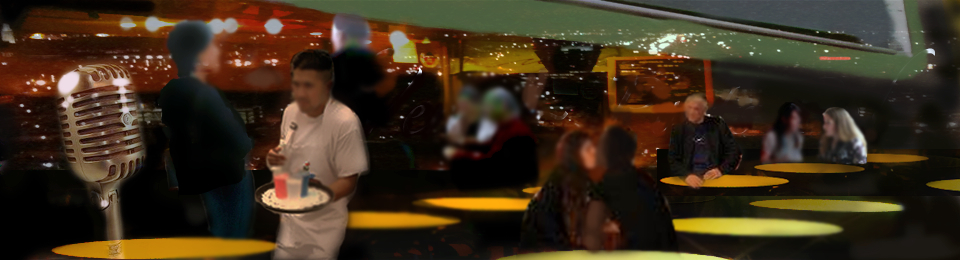
Hi everyone. After the scorching heat, we now have a calm summer season. Let me know what I can offer you – tea, cakes or cold drinks. I wish you all a good summer break. Our links are open to still accept your Anthology poems. Happy Thursday!
Today I would need some sweets.
Hi Bjorn! We got some sweet pies here from apple to lemon. Hope you enjoy the summer break.
Great prompt Grace 🙌
Thank you!
Greetings! Wishing all a ‘fruitful’ summer break, and thank you Grace for a fine challenge! I would love a large glass of iced tea with lemon please.
Hi Helen. Here’s a large glass of iced tea with lemon. Wishing you a relaxing and cool summer break!
thank you for the prompt to get me writing again : )
Thanks for joining in. Happy summer day!
A fun prompt, Grace. Thanks for hosting this evening.
A tall glass of cold cider would be wonderful
Hi Dwight. Here is a glass of cold cider for you. Perfect for the summer season!
Thank you! :>)
Any chocolates? time out well deserved
See you all in July
much♡love
Hi Gillena. This bar is stocked with chocolates which I will share with you. Have a good summer break. See you all in July!
Thanks for the prompt, Grace. I’m looking forward to reading these poems!!!
Thanks for joining in. Really good poems out in the poetry trail. Have a good summer!
Thanks Grace. I hadn’t heard of this particular poetic technique. It’s interesting. Have a lovely break.
Yes, a wonderful technique to use in writing. See you in July!
🥰
Hello, Grace, thanks for hosting! I loved the prompt.
Thanks for joining in Jay. Have a wonderful summer break!
Thank you for the wonderful prompt Grace!
Thanks for joining in. Have a wonderful summer break!
Grace thank you for the opportunity to hone that synesthesia muscle.
Hi Paul. Yes, that muscle needs flexing every now and then. Thanks for joining in and enjoy the summer break!
🙂
Hi Grace and all. Thank you for hosting. My poems often feature some synesthesia because my senses sometimes blend or overlap.
Hi Merril! The outcome is amazing when that happens. Have a good summer break!
Hi, Grace.
Thank you, and you as well. For me, it’s only a break from dVerse.
Hi Grace, thank you for the delightful prompt. I learned something! Could I please have a sparkling water? I already have a glass of chardonnay.
Hi Kim. My apologies for the late reply. I am glad you learned something new. Sparkling water for both us in this hot summer day. Enjoy your weekend.