Tags
creative writing challenge, dVerse Poets Pub, Homer's Iliad, Join in the festivities, Litotes, New Year 2024, Poetics, poetry prompt, Sanaa Rizvi, T. S. Eliot, William Shakespeare, Winter season

Picture courtesy: Cutting into a dessert on a plate, Unsplash.
Happy New Year, everyone!
Sanaa here aka adashofsunny to welcome you all and to stir your muses toward exploring the litotes of yesterday. It was a lovely holiday break for me, and I hope it was for you as well! We are delighted to be back!
Defining Litotes: Litotes, as a figure of speech, is a rhetorical device used to make an understatement by negating the opposite of the intended message. A double negative is frequently used in this, leading to a positive declaration.
However, this method is used to make a vague, indirect, or modest claim instead of a clear, positive statement.
The question is, why would we use litotes when we can say things directly?
It is a deliberate understatement for effect, the opposite of hyperbole. For example, a good idea may be described as “not half bad,” or a difficult task considered “no small feat.”
Examples of Litotes in Classic Literature
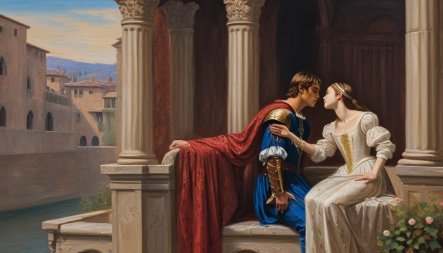
Romeo and Juliet “It is not so deep as a well, nor so wide as a church-door; but ’tis enough.”
In Act 3, Scene 1 of Romeo and Juliet, the witty Mercutio utters this famous line. He playfully describes his wound, suggesting that it may not be as severe as a deep well or as broad as a church door, but it is sufficient.
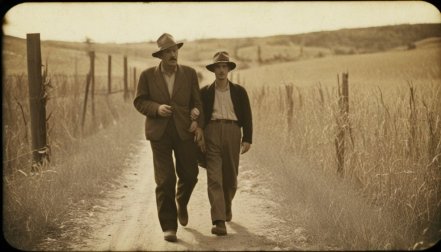
Of Mice and Men by John Steinbeck
“I ain’t no good. But I could cook and tend the chickens and hoe the garden some.” Here the character expresses self-perceived inadequacy yet highlights practical skills.
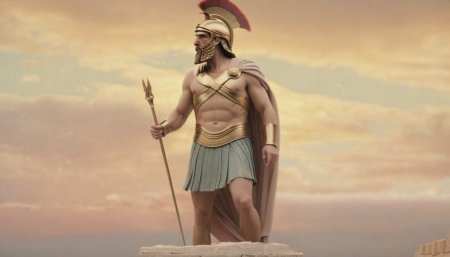
The Iliad by Homer
“And in his heart, he’s not sorry to leave a brother behind, when he’s run and escaped his death.”
This ancient Greek masterpiece recounts significant events during the final weeks of the Trojan War, a ten-year siege of the city of Troy by a coalition of Mycenaean Greek states.
This poignant line carries the weight of survival, sacrifice, and the harsh realities of life. It speaks of a moment when one’s own survival instinct overrides the bonds of kinship.
Litotes can also be found in everyday speech, where they often serve to understate or add emphasis to our statements. Common examples include:
- I can’t turn down that offer.
- The weather is not unpleasant.
- He is hardly unattractive.
- That compliment is not unwelcome.
- That lesson is not hard.
- I can’t say that I won’t try the dessert.
- Your effort has not gone unnoticed.
Why do writers use Litotes?
Writers use litotes for a few different reasons.
First, a litotes is one way to soften a blunt statement. For instance, “He’s not the brightest penny in the fountain” (courtesy of The Simpsons) is a milder and perhaps kinder way of saying someone is not very smart.
Sometimes, litotes emphasize the positive in a situation, “He had an interview for the managerial position. It wasn’t half bad.”
Litotes are a literary device that writers use to evoke the conversational style of everyday speech. And because litotes are so common in our everyday language, using them in writing makes the protagonists more relatable.
The technique can also make a line of writing more complex in a way that improves the reader’s overall reception of the work. The use of a negative when the writer really wants to say something positive can help in making the reader think more deeply about their statement. It can even make that same statement more powerful.
And then there’s the “snark effect” — where litotes can help add some biting humor to a scene.

More examples of Litotes from Poetry and Pop Culture
The Love Song of J. Alfred Prufrock by T. S. Eliot
But though I have wept and fasted, wept and prayed,
Though I have seen my head (grown slightly bald) brought in upon a platter,
I am no prophet — and here’s no great matter;
I have seen the moment of my greatness flicker,
And I have seen the eternal Footman hold my coat, and snicker,
And in short, I was afraid.
Sonnet 116: Let me not to the marriage of true minds by William Shakespeare
Love’s not Time’s fool, though rosy lips and cheeks
Within his bending sickle’s compass come;
Love alters not with his brief hours and weeks,
But bears it out even to the edge of doom.
Among the many tools in a filmmaker’s arsenal are literary devices that have helped creatives for thousands of years. One of them is Litotes.
The Godfather (1972)
In a pivotal scene, Michael Corleone, played by Al Pacino, tells his brother Fredo, “I know it was you, Fredo. You broke my heart.” The understated “You broke my heart” carries more emotional weight than a more direct expression of betrayal ever could.
Eternal Sunshine of the Spotless Mind (2004)
When Joel, played by Jim Carrey, describes his relationship with Clementine, he says, “I can’t see anything that I don’t like about you.” This indirect affirmation adds complexity to the character’s emotions.
Sources: Litotes: Definition and Examples of Litotes in Everyday Language & Literature and ThoughtCo. Definition and Examples of Litotes in English Grammar.
For Today’s Poetics, I’d like you to write keeping in mind the following three options. Choose ONE.
- Write a narrative poem using litotes where the main character or antagonist stands out.
- Write a poem using litotes and follow the example of Homer or Shakespeare. Give us something classic.
- Write a poem by employing litotes as a part of everyday speech.
New to dVerse? Here’s how to join in:
- Write a poem in response to the challenge.
- Enter a link directly to your poem and your name by clicking Mr. Linky below
and remember to check the little box to accept the use/privacy policy. - You will find links to other poets and more will join so please do check
back later in order to read their poems. - Read and comment on other poets’ work– we all come here to have our poems read.
 dVerse
Happy New Year!
Welcome to Poetics, everyone!
On the menu we have Skillet Cod with Bulgur, Zucchini, and Tomatoes paired with Sauvignon Blanc and Soft cheese 🙂 I am adding Sbrisolona (Italian almond tart) to the list – I hear it goes splendidly with champagne sabayon.
For dessert we have New Year’s Eve Parfaits with Raspberries and Grand Marnier or if you prefer, we also have scones with coffee/tea of your choice.
Hope you guys enjoy the prompt! See you on the poetry trail! 🩷🩷
Good evening — already the second prompt for the new year.
Good evening – yes we are off to a great start 😀
Love this one Bjorn!!!!
And the lyrics are still very real (alas)
Such a great one! 🩷🩷
Hello Sanaa and All. Nice to be back at the Poets Pub. Challenging prompt and I did the best I could with the time I had. An almond tart please, with a cup of hot rooibos with a shot of Baileys in it sounds perfect 🙂
Almond tart with a cup of hot rooibos and a shot of Baileys coming right up! 😀 So nice to see you! I’ll be over to read in a minute🩷🩷
Thanks and Cheers!
Cheers! 🥂
Pingback: These Unseasonal Gifts – Dreams from a Pilgrimage
Good evening Sanaa and poets one and all! I’ve eaten already this evening, but I like the look of the scones and coffee. I enjoyed writing to this prompt.
Coffee and classic buttery scones for you, Kim 🥰 I am so pleased you enjoyed the prompt! 🩷🩷
Hi Sanaa. Thank you for the introduction to the litotes and for hosting our first Poetics prompt. May I please have Italian almond tart with the New Year’s Eve special – parfaits with raspberries.
Italian almond tart with the New Year’s Eve special – parfaits with raspberries for the lovely lady 😀
Always a pleasure to host Poetics, Grace 🩷🩷
Thank you for the evening’s special menu.
You’re most welcome! xx
Nice start to 2024’s Poetics, Sanaa! Thanks for hosting, and may I have some hot Earl Grey and scones to warm these old bones?!
Hot Earl Grey and scones coming right up! I just came from reading your poem and absolutely loved it! Thank you 🩷🩷
Wow, thanks, and buttered scones too! I feel spoiled. You can thank yourself for the poem’s inspiration. 🙂 💖
*blushing* you are so kind! 🩷🩷
Pingback: Winter days – The Four Swans
Hi, Sanaa and Everyone! Happy New Year. I didn’t get to yesterday’s prompt.
I hope I’ve met this challenge!
I’ve just finished a 3-hour plus poetry Zoom, so I may come back to read tomorrow.
But meanwhile, a slice of almond tart with a cup of black coffee would be great!
Almond tart with a cup of black coffee coming right up! I hope the poetry Zoom went well, Merril! Heading over to read you 🩷🩷
Thank you! ❤️
You’re most welcome! xx
Pingback: wonderful weirdo. – perspective poetry
hi Sanaa
hi all,
happy new year .
wow i found that challenging (unsure if my effort works)
heading off to catch up on a tv documentary I have been meaning to watch for an absolute age. while sipping a Camille tea before bed.
will catch up in the morning before work.
rog
Happy new year, Rog! Heading over to read you ☕🩷🩷
Pingback: A New Year, A New Look for 2024 – Experience Writing
Pingback: Little Company | rivrvlogr
Hi Sanaa. Thanks for hosting today. You don’t just give us a prompt, you knock it out of the park! :>)
Hi Dwight! I am so pleased you liked the prompt 🥰 I just came from reading your poem and absolutely loved it🩷🩷
Wonderful. Thank you very much.
You’re most welcome! 🙂
Bit of a throwaway for now as I could not get the meter and rhyme scheme of my entry out of my head; I like this concept a lot, and may try again.
I am so pleased you liked the concept, Xan! 😀 Your poem is a gorgeous one! 🩷🩷
Pingback: Happy birthday🥳 – Mom With a Blog
Pingback: Pessimism – Reena Saxena
Pingback: Gasping – a poem by Paul Vincent Cannon | parallax
Hi everyone. Thank you Sanaa, such fun. And also a great menu, I’ll have the cod, and the almond tart, followed by a whiskey (of course). I think this was such a great idea to try.
Hi Paul! Here’s your skillet cod with bulgur, zucchini, and tomatoes with almond tart and whiskey 😀
I am so pleased you liked the prompt. Heading over to read you 🩷🩷
Lunch time in Oregon ~~ the cod dish sounds yummy! A glass of Pinot Gris if it’s available. What a terrific challenge. Sanaa, Sanaa, Sanaa ~ practicing. LOL
LOL! 🥰 A glass of Pinot Gris with skillet cod with bulgur, zucchini, and tomatoes coming right up! 🩷🩷
Pingback: Oh Winter, Why Don’t You Knock? – A Writer In The Room
Happy New Year! Litotes is a rhetorical device that employs understatement, often through double negatives, to convey meaning. It’s used to soften statements, emphasize the positive, and create a conversational tone. Examples from classic literature, poetry, and pop culture, including The Simpsons and films like The Godfather and Eternal Sunshine of the Spotless Mind, showcase its versatility.
I noticed that my students had more problems with understanding litotes than with understanding other rhetorical figures. Well, they understood it but had problems to use it..
All the best
Klausbernd 🙂