
Tags
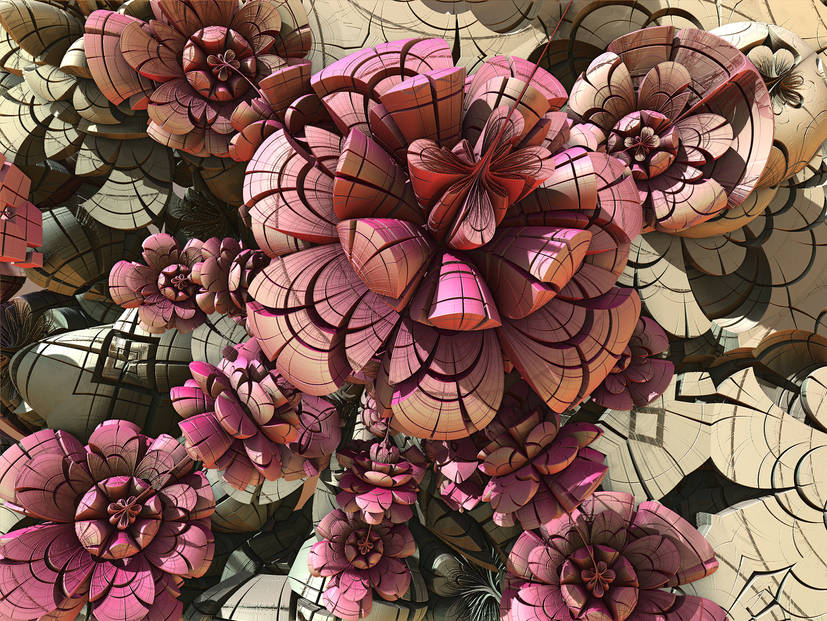
Figure 1: Dcoetzee, Public Domain, via Wikimedia Commons
May is a month for appreciating the fullness of Spring (or Autumn), a month in the United States for celebrating Mother’s Day and Memorial Day. It is a month of lengthening days, blooming flowers, and rising temperatures. How bountiful! Yet how quickly such a bounty passes. Flowers wilt, blossoms fade, and days pass. While it is a month of acknowledging abundance, May is also a time to remember transience, the impermanence of everything. Frank Tassone here, your host for Haibun Monday, where we blend prose and haiku. Today, let’s face the inevitable passing away of it all: let’s embrace Mono no Aware:
Mono no aware (物の哀れ),[a] lit. ’the pathos of things’, and also translated as ‘an empathy toward things’, or ‘a sensitivity to ephemera‘, is a Japanese idiom for the awareness of impermanence (無常, mujō), or transience of things, and both a transient gentle sadness (or wistfulness) at their passing as well as a longer, deeper gentle sadness about this state being the reality of life.[2]
Mono no aware is not only “a Japanese idiom for the awareness of … the transience of things.” It’s a paradigm through which the Japanese, as far back as the Heian Court era, view life:
Japanese cultural scholar Kazumitsu Kato wrote that understanding mono no aware in the Heian period was “almost a necessity for a learned man in aristocratic society”, a time when it was a prominent concept.[3] Donald Richie wrote that the term has “a near-Buddhistic insistence upon recognition of the eternal flux of life upon this earth. This is the authentic Japanese attitude toward death and disaster”.[7]
Of course, it’s not simply a morbid attitude toward impermanence. Rather, it is accepting “the beauty of passing things.” As such, Mono no aware lies at the heart of Japanese poetry. Basho, the progenitor of the haibun, exemplifies mono no aware in the following excerpt from his Narrow Road to the Interior:
Here (Hiraizumi) three generations of the Fujiwara clan passed as though in a dream. The great outer gates lay in ruins. Where Hidehira’s manor stood, rice fields grow. Only Mount Kinkei remained. I climbed the hill where Yoshitsune died; I saw the Kitakami, a broad stream flowing down through the Nambu Plain, the Koromo River circling Isumi Castle below the hill before joining the Kitakami. The ancient ruins of Yasuhira—from the end of the Golden Era—lie out beyond the Koromo Barrier, where they stood guard against the Ainu people. The faithful elite remained baoud to the vastle—for all their valor, reduced to ordinary grass…
We sat a while, our hats for a seat, seeing it all through tears.
Summer grasses
All that remains of great soldiers’
Imperial dreams
–Basho. “The Essential Basho” (Samuel Hamill, Translator). 1999, Shambhala, pg. 18-19
Other haijin have also exemplified the aesthetic:
clear water is cool
fireflies vanish–
there’s nothing more-Chiyo-ni 1703-1775; trs. Donegan & Ishibashi
good-bye…
I pass like all things
dew on the grass
—Banzan 1661-1730the dead body —
autumn wind blows
through its nostrils
—Iida Dakotsu 1885-1962
This week, let’s imbue our haibun with mono no aware. Write on any topic that you like (although bonus points to any choosing one related to May) as long as your haibun embodies that wistful sadness marking the beauty of transience.
New to haibun? The form consists of one to a few paragraphs of prose—usually written in the present tense—that evoke an experience and are often non-fictional/autobiographical. They may be preceded or followed by one or more haiku—nature-based, using a seasonal image—that complement without directly repeating what the prose stated.
New to dVerse? Here is what you do:
- Write a haibun on any topic that expresses mono no aware.
- Post it on your personal site/blog.
- Include a link back to dVerse in your post.
- Copy your link onto the Mr. Linky.
- Remember to click the small checkbox about data protection.
- Read and comment on some of your fellow poets’ work.
- Like and leave a comment below if you choose to do so.
- Have fun!
 dVerse
Thanks for hosting, Frank! Enjoyed the prompt. It’s a beautiful spring day today in Boston and as so often happens, we’re going from finally getting a spring day directly to summer tomorrow! 85 degrees expected. We’ll be sitting out on our deck, looking out at the city scape tomorrow!
Happy you could join in, Lillian! 😀
Good evening poets, and thanks to Frank for hosting I’m going to post and go this evening, but I will be back in the morning to read and comment. Have a great evening!
Thanks, Kim! Looking forward to seeing you!
Good evening… now back from a trip to Texas and back. I prefer the warm weather to the heat of Texas sun, but it was nice to see a real Graduation…
Happy to see you made it, Bjorn! 😀
Bjorn, next time you come to Texas, let me know! Were you here with us in Houston during the Terrible Storm last week?
I was in Fort Worth, and there was a little rain that might have been a storm in Houston.
Hello Lillian, Kim, Frank, and All. Frank, thank you for the prompt, it brought a few tears while writing to it. Welcome back, Bjorn. You were missed!
I am almost adjusted back to the time-zone…
Who graduated, if I may ask?
My godson graduated at TCU.
Congratulations to him. Glad you made an opportunity to see him do it. It’s a wonderful tradition/ritual for a student and his loved ones.
Congratulations! 😀
Happy to see you, Lisa!
Thanks, Frank!
👋🏻Hello, Frank! Hello everyone! I’m relaxing, watching a movie with the kids after they just got home from school.🍿 And trying to get caught up with reading everyone’s poetry.🤭
Great to see you, Melissa! 😀
Thanks for hosting. Life is full of ephemeral moments. Nature shows that with each season. I cannont believe summer is on the way already! I think I need a big glass of Ice Tea.
One Iced tea coming up!
:>) Thanks.
Good afternoon, poets! The pub is open!
Pingback: The Final Week or Only the Beginning – Experience Writing
Greetings all! What a lovely challenge for May, for Spring, for taking pleasure in the transient beauty of it all.
Happy you joined in today, Helen!
I enjoyed the prompt. It inspired me to go out and admire all the fallen flowers in the yard. I apologize that my first link didn’t load correctly. My second link goes to my poem.
Thanks, Marial! Happy to see you!
Pingback: Haibun Monday at D-verse – Therapy Bits
Thank you for hosting Frank. Wonderful prompt, perfect for this time of year. 🙂✌🏼🌼
You’re welcome, Rob. Happy you joined in!
Hi Frank, your prompt was serendipity incarnate! I was already to planning to write a post inspired by @purpleinportland from her poem in response to the Magic 9 prompt from a few days ago, and then your guidance was – boom! – right on point for my theme.
May I have a very chilly chardonnay? (It’s been a long day, as we still don’t have power 4 days after the Big Storm in Houston.)
I hope you helped yourself to that chilly chardonnay, Kim. Thanks for joining in!
I DID!
Pingback: Sakura (Cherry Blossom) – Reena Saxena
Hi! Haven’t shared in a while but I love this form and the prompt behind it and wanted to join in. Thanks.
Glad to see join in! Welcome back!
Pingback: The Transient Walls – Haibun by Paul Vincent Cannon | parallax
Thank you for hosting us Frank, and for the prompt, for me it was timely (pun intended).
Pingback: This Old Carp in May (a haibun) – Dreams from a Pilgrimage
Thank you for hosting, Frank. Writing a Haibun after a long time. 🙂
Pingback: Transient May: a haibun (mono no aware) – LesleyScoble.com
Greetings, Frank. Thank you for your wonderful prompt. 🌸 🩷
Hello Frank, thanks for hosting, it was a great prompt and I enjoyed it very much.
Pingback: A Gentle Nudge – JJJ Interactive Books
Pingback: A Tale of Two States – The Scribbletorium
Pingback: Wilting flowers – Keep it alive
Pingback: I Know Where The Years Go – Selma
thanks for the lovely prompt, Frank. Stellar. https://selmamartin.com/i-know-where-the-years-go/
I’ll dream of you all and will read in the morning. Good night.
Pingback: Haibun Monday: The Peonies of May – Colleen Chesebro, Author & Poet
Pingback: Labyrinthine (Thursday Doors) | method two madness