Tags
#EdwardHopper, #MarianneStokes, #MaryOliver, #SylviaPlath, #TSEliot, #WaltWhitman, #Yeats, art, Klimt, Magritte, Photography, poetry
***Announcement***
Please join us at dVerse LIVE on Saturday, January 18, from 10 to 11 AM EST. Google meet link will be provided at Open Link Night on Thursday.
For last year’s words belong to last year’s language
T.S. Eliot, Four Quartets
And next year’s words await another voice.

Welcome, dVersians, new ‘uns and old ‘uns! I’m Dora from Dreams from a Pilgrimage, and it’s so good to be back at the start of 2025 to say how good it is to see you all!
I don’t know about you but the beginning of a new year invariably puts me in a philosophical mood. And I think I’ve figured out why. It’s not just turning the page on an old calendar year. It’s the act of turning the page itself, ushering out the old as if were finished in some sense while settling into the new as If it were a blank slate, fresh, untainted. (But is the old really gone or is the new really different?) The month of January is a margin delineating transition, an interstitial calendrical space creating the same effect as physical and emotional spaces or times in our lives. Its very indeterminacy invites contemplation, even examination as to its significance (if any), truth (if any), reverence, even fear of what revelation it may harbor like a soothsayer as we pass through it.
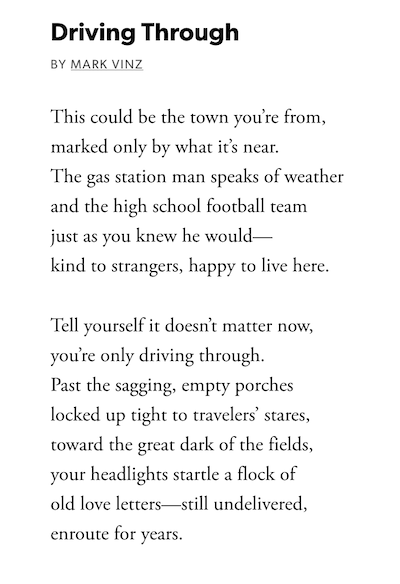
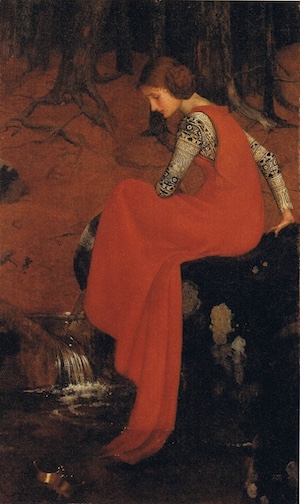
The poem below, for example, describes how the margins delineating the past and the present are never really crossed but reappear in the familiar.
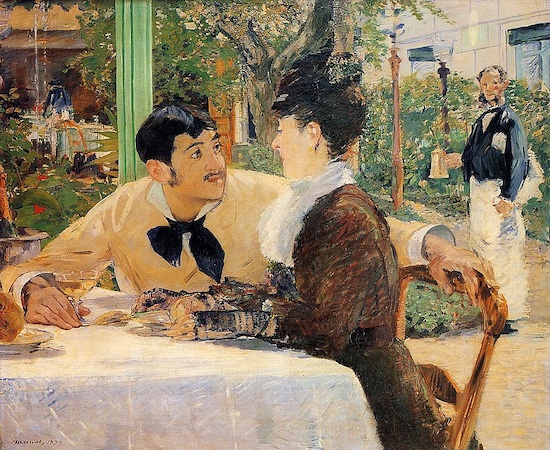
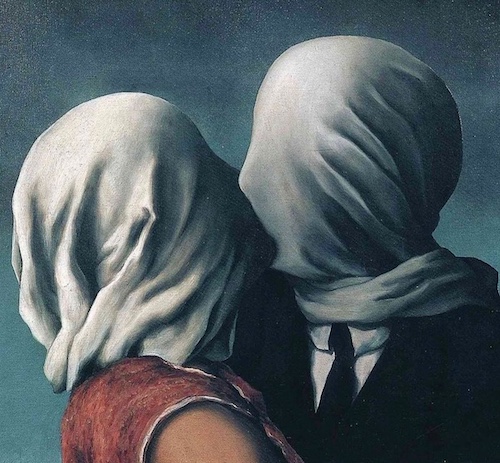
Your challenge: I’ve compiled a list of margins for you to use as inspiration for a poem on a theme of your choosing using a margin of any kind, a diving off point, event, place, landscape, or concept. Use the list (including the images) as a starting point for brainstorming an idea. (Click on the images for more detail.)
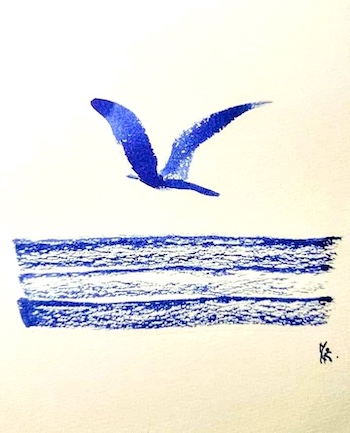
The margin of a stream or the seashore
The margins of sensation, of knowing and feeling


Being cold is not the same as feeling cold,
From “Orion,” by Karen Solie (London Review of Books, 26 December 2024, p. 14)
just as Seneca, who wrote on anger,
said it’s different to know a thing
than to feel its truth.
The margin of shade and light, as coming out from under a willow tree, or like twilight and dawn, morning and evening
The margins of time, like the eve of a new year, the past and the present, the present and the future
Mother died today. Or maybe, yesterday; I can’t be sure.
Albert Camus, from The Stranger, first lines
Margin between what you are and what you are becoming, what you were and what you are
Being on the margin of an end and a beginning
Margins of definition, denotation and connotation, interpretation
Margins of creation, conceiving and crafting

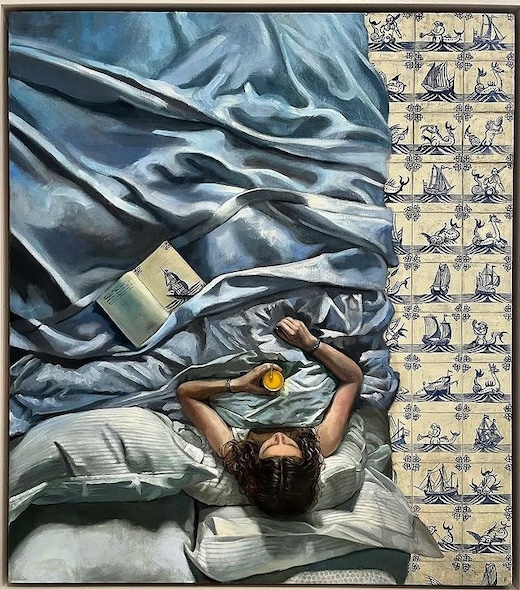
Margins of society
The experience of being marginalized
. . . to survive, to hang on,
From “Windy Evening,” by Kim Seong-dong
waiting for the new world to dawn,
what can you do but become a leper
nobody in the world would deign to touch?
Writing from the margins
Margins that act as boundaries, restricting or organizing
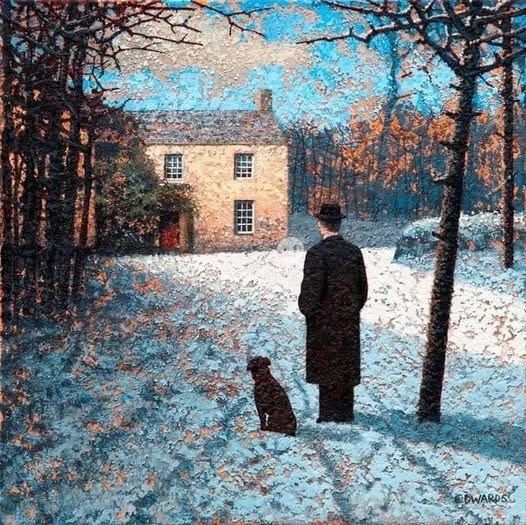
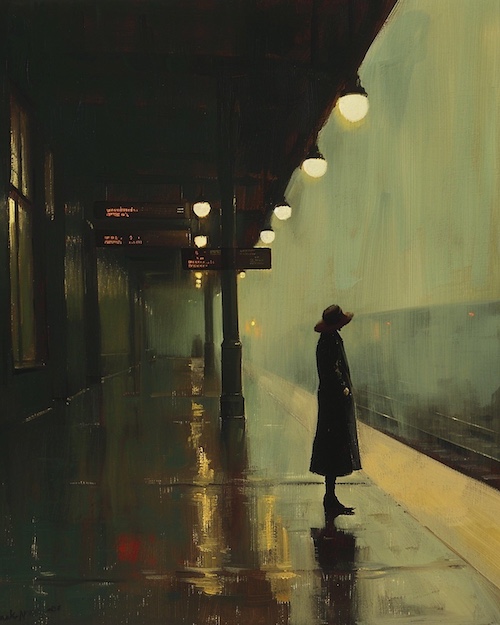
Held between wars
Muriel Rukeyser, excerpt from “Käthe Kollwitz”
my lifetime
among wars, the big hands of the world of death
my lifetime
listens to yours.
Margin of being on the verge of acting or doing or writing or composing or speaking
Margins of either inviting or dissuading, entering or retreating
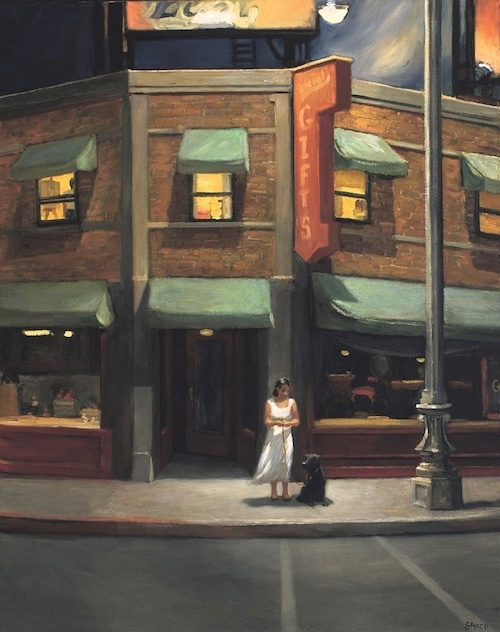
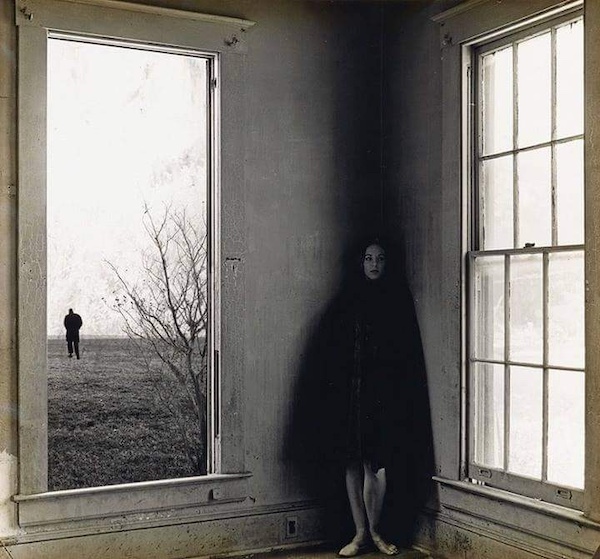
Standing on the margins as a wallflower, an intruder, a stranger
Hiding in the margins
Margins of love and hatred, of war and peace, of heaven and hell
Be not forgetful to entertain strangers: for thereby some have entertained angels unawares.
St. Paul in the Letter to the Hebrews (KJV)
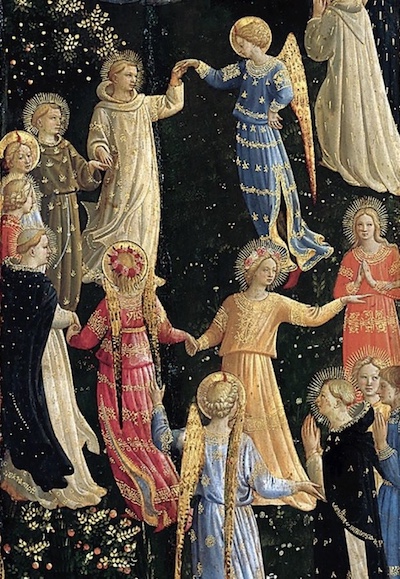
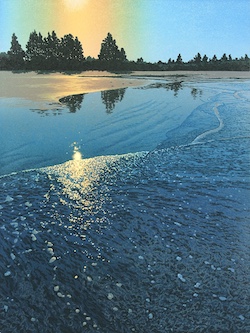
Do bells signal a margin to you as they do for me?
Here are some poetic examples for you to look at for inspiration.
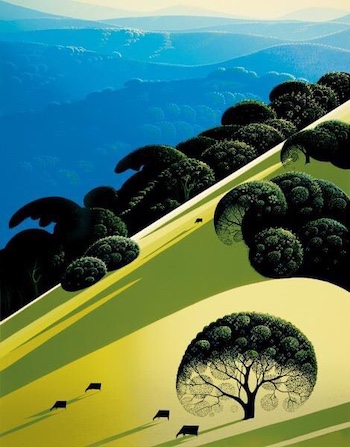
I dreamt of walking out of a landscape
from “Outside the Work” by Lavinia Greenlaw in LRB, (24/12/2024, vol. 46, number 24)
as if out of a painting –
tipped from its picture by its tilting fields.
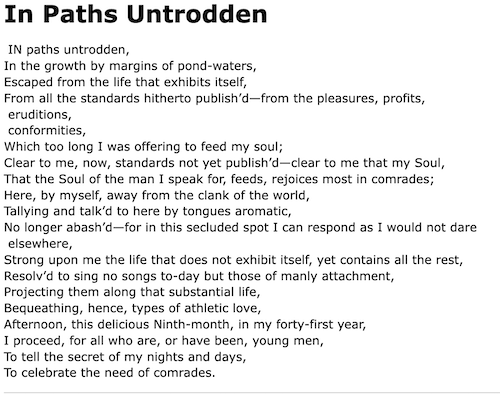
A poem by Walt Whitman:
A poem by Sylvia Plath:
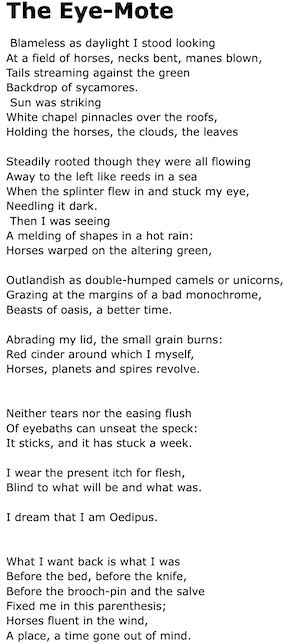

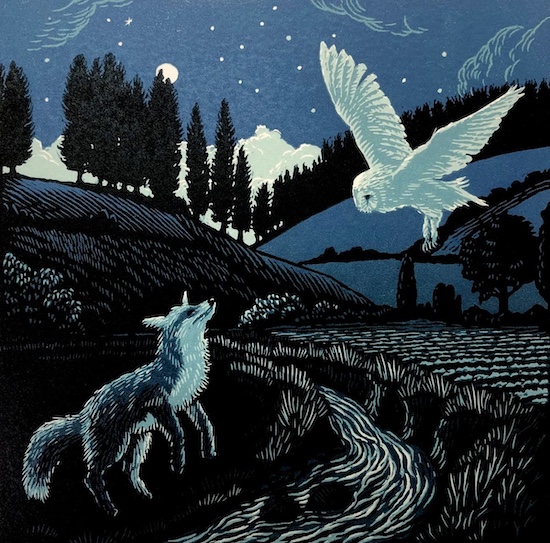
“Morning Poem” by Mary Oliver:
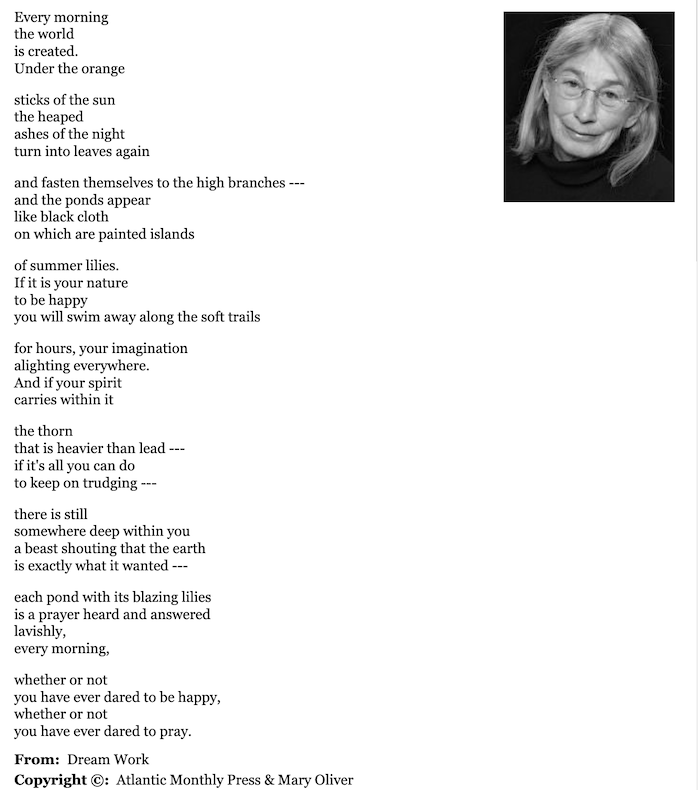
See also Oliver’s “Winter’s Margin.”
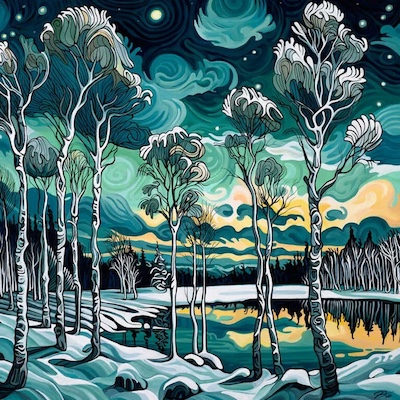
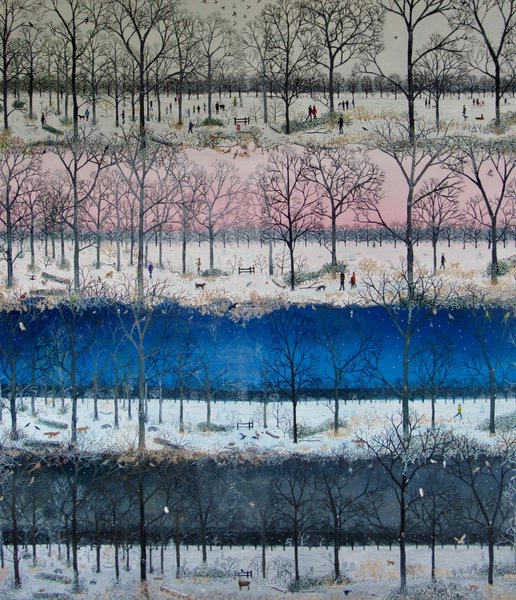
An excerpt from T.S. Eliot’s “Four Quartets 4: Little Gidding, V”:
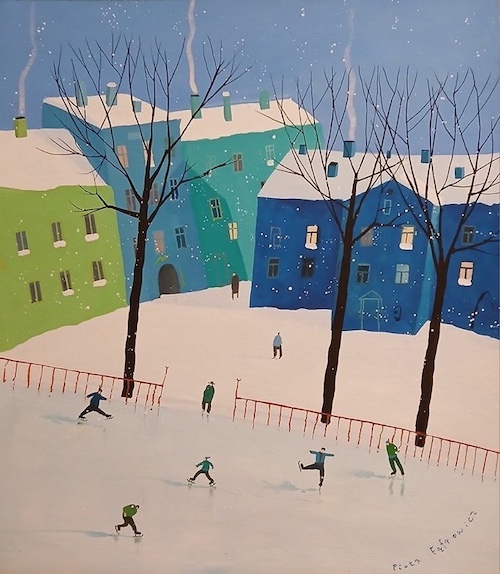
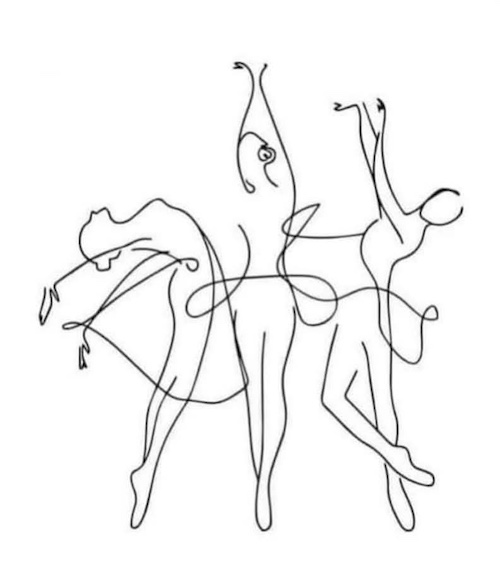
And finally, the last stanza of Yeats’ “Among School Children”:
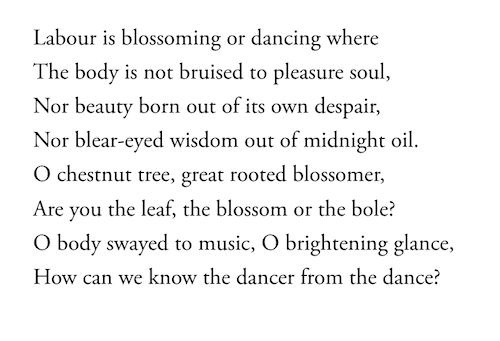
As I said, the theme of the poem is up to you. All I ask is that you use a type of margin as the springboard for your thought or in passing.
New to dVerse? Here’s how to join in:
* Write a poem in response to the challenge.
* Post your poem on your blog and link back to this post.
* Enter your name and the link to your post by clicking Mr. Linky below (remember to check the little box to accept the use/privacy policy).
* Read and comment on your fellow poets’ work –- there’s so much to derive from reading each other’s writing: new inspiration, new ideas, new friends.
 dVerse
Welcome, everyone, to the dVerse Poets Pub where your favorite refreshments await. I’m delighted to see you here. There’s still snow lining the streets here in the Washington, D.C. area, on the margins you might say, as there will be crowds next week for the inauguration of the next president.
I’m hoping you’ll enjoy diving into this challenge and can’t wait to read your poems!
Good evening all, and thank you Dora for hosting with a flexible prompt, and one for which I already had a poem that just needed a little tweaking. I look forward to reading what other poets have written on the margin theme.
I’m so glad, Kim. I did want the challenge to be as loose as possible. Loved your poem!
Thank you, Dora!
My pleasure!
Hello… so nice to be here… we have a turn for thaw from cold and nice. A lot of ice on the ground.
We’re having an arctic freeze here at the moment and the snow and ice are still packed pretty thick where it hasn’t been cleared. Too cold!
Good evening everyone. Dora, what an interesting prompt. I loved the poems you selected and the images are stunning. I will just post my poem and scoot. Will visit tomorrow to catch up with reading.
Sounds good, Punam! I’m thrilled you dropped by. Have a good night!
good evening all
Dora great prompt.
back to read soonish.
a Camilla tea would be nice ready for one i get read some of your poems
rog
Great to see you here, Rog! A cup of Camilla tea will be waiting for you. Loved your ekphrastic poem. So good.
thank you
Hello everyone. Dora, what a beautiful, thoughtful prompt. Thanks for hosting. 🙂
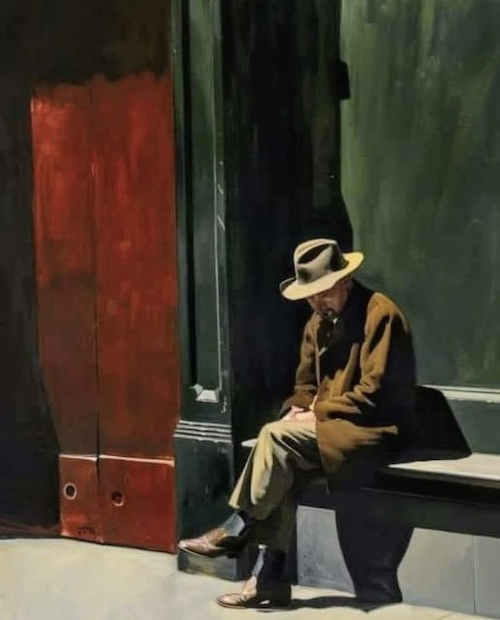
I’m so glad you enjoyed it, Mish. Googling the Hopper picture with the despondent man, I’m since finding out by googling that it may be an AI generated image and have noted it accordingly. UGH. The AI/human margin was not what I intended there.
Sorry, distracted by a contractor and cleaning up soot. Don’t ask. Do you have a nice cruise behind the bar?
Bless you, Nolcha, hope all goes well. And yes, I’ve been saving one up for you: enjoy!
The contractor noticed that an odd structure in the kitchen, about cabinet level, was cracking. He tore out the structure, and discovered part of a chimney, supported by two boards that were buckling. He climbed into the attic and found the rest of the chimney. Someone built a new roof over it. OMG
That’s insane. You never knew there was a chimney there? What else will he discover in that attic? If anything, let’s hope it’s a treasure chest! Hope everything gets fixed up soon, Nolcha. The kitchen is not the most convenient place for this restructuring to be happening.
We had no idea. No chimney showed itself on the roof. It was all disguised, and a disaster waiting to happen. We may need that treasure to pay the contractor!
I bet. Keeping my fingers crossed that you get it all fixed just right, even better than before.
Thank you for hosting, Dora. To date, Bend Oregon has escaped the ice, snow and freezing temps so much of our country is experiencing. We lived in DC 1968-70 …. I remember what the monuments, etc looked like … beautiful in the sparkly white. My poem reflects a book club choice several months ago, a collection of short stories about Vietnam. It’s lingering somewhere in my psyche.
Oh this arctic blast is something! I’m glad you don’t have to deal with it in Oregon. Your poem touches on the raw tragedy of that war. They really were just boys, many drafted. They should never have been.
Oh….and I think it is noteworthy to mention in the pub, that two dVerse anthologies are scheduled to launch to the moon tomorrow as part of the LUNAR CODEX. Samuel Peralta is the mastermind of this project. I know I will be manifesting a safe landing on Mar. 1. I’m sure there are few regulars included.
Exciting news! Wow! dVerse poetry will have made it to the moon: I had no idea there was even such a thing as the Lunar Codex. That’s wonderful.
Check out lunarcodex.com
It is incredible.
Thanks for the link. I’ll definitely look it up to see the anthologies listed.
For those interested, here’s the page with the two dVerse anthologies listed from 2013 & 2017:
https://www.lunarcodex.com/poetry
Under LETTERS to Poetry Collections
Late to the party…..this three hour time difference from California to Boston really botches me up. It’s almost 7 PM in Boston and only approaching 4 PM in San Diego. None-the-less, I just posted. This was a fascinating prompt, Dora. Took me a while to decide what time of “margins” I wanted to write about.
Not late at all, at least not by my clock! I’m glad you could join and more than happy you enjoyed the topic. (San Diego sounds so good to me given our freezing weather here on the east coast. Enjoy yourselves!)
A great prompt, my friend! I love the way you have opened our minds to the margins of life. So many to choose from… and here I thought that margins were only that edge around my letter page! :>)
Haha! Good luck choosing! I can’t wait to read what you come up with, Dwight. 🙂
:>)
Thank you for hosting Dora. I am setting this one free like an untamed wild colt, with hope that it finds a home and survives. I never could quite get it saddled, but I found it had some spirit!? 👍🏼✌🏼🫶🏼
BTW — I love tye image I chose from your offerings. I ran it through an AI analyzer to find the title of the piece. It came back saying that it couldn’t identify it as a Hopper. 🤔 But I loved it, so who cares. Maybe you know its title?
I don’t know its title, Rob. It wasn’t available or else I would have definitely included it. I’ll have to remember to use that AI analyzer for images in the future but I agree with you, it’s a striking image and very Hopper-ish.
Ah this riddle must be solved pronto! Heading over to your post ASAP!
Thank you Dora, love the prompt and thank you for the wonderful resources too.
I’m so glad to hear that, Paul. Thank you. Looking forward to seeing yet another gem you’ve shaped for us to wonder at!
In the margin of my thoughts a song is stirring.
Hark! I believe I can hear it calling . . . . ❤
Pingback: Verify This: The Blurred Margins of Authenticity and Trust – HeartIlluminations
Linked up mine. Beautiful prompt and great art / poems shared, thank you, Dora!
I loved your poem, Jay. It was intense and remarkable.
Pingback: Withholding – K.
I missed the deadline, but I wanted to share it with you anyway.
https://yvettemcalleiro.blogspot.com/2025/01/shades-of-gray-margins-dverse-poetry.html
Yvette M Calleiro 🙂
No worries, Yvette. I went ahead and added your post to Mr. Linky so others can see it. It’s not quite the end of the week and the deadline is more a guideline in that case. Headed to your post now! 😉
Thank you so much, Dora! I plan to look through Mr. Linky this weekend to see what others wrote. 🙂
Dear Dora, again I am late. But I wanted to share with you what I came up with. Thank you so much for this site and all your efforts!
https://wrestlingwordblog.wordpress.com/2025/01/18/in-the-wings/
I just read your poem, Sheila! It’s beautiful. Thank you for sharing it. 🤗