
Tags
Gardening has its pleasures, Halfway through August, Monday Mood, Prosery prompt, Sanaa Rizvi, Yvor Winters
Hello dVerse Poets, this is Sanaa (aka adashofsunny) welcoming you to another round of Prosery where we ask you to write a very short piece of prose that tells a story, with a beginning, a middle and an end, in any genre of your choice.
Since it is a kind of Flash Fiction, we here at the pub have a limit of 144 words. What’s special about Prosery is that we give you a complete line from a poem, which must be included somewhere in your story, that is, within the word limit.
You may change punctuation but please bear in mind that you are not allowed to insert words in between parts of the quotation.

Picture courtesy: Green and brown grapes during daytime by Jose alfonso sierra, Unsplash.
While searching for poems on gardens, I stumbled upon one by Yvor Winters. Born in Chicago, he was an American poet, critic, and teacher who believed poetry should be clear, careful, and morally serious.
His poetry evolved from free verse to traditional meters and rhyme, reflecting his belief that strict form could best express disciplined thought. While some saw him as overly rigid, others considered him a necessary counterweight to more freewheeling, subjective trends in 20th-century poetry.
As a critic, Winters was famously combative—he often challenged the reputations of major figures like T.S. Eliot, Ezra Pound, and even Walt Whitman, arguing, at times, that their works sacrificed moral and intellectual rigor for emotional effect.
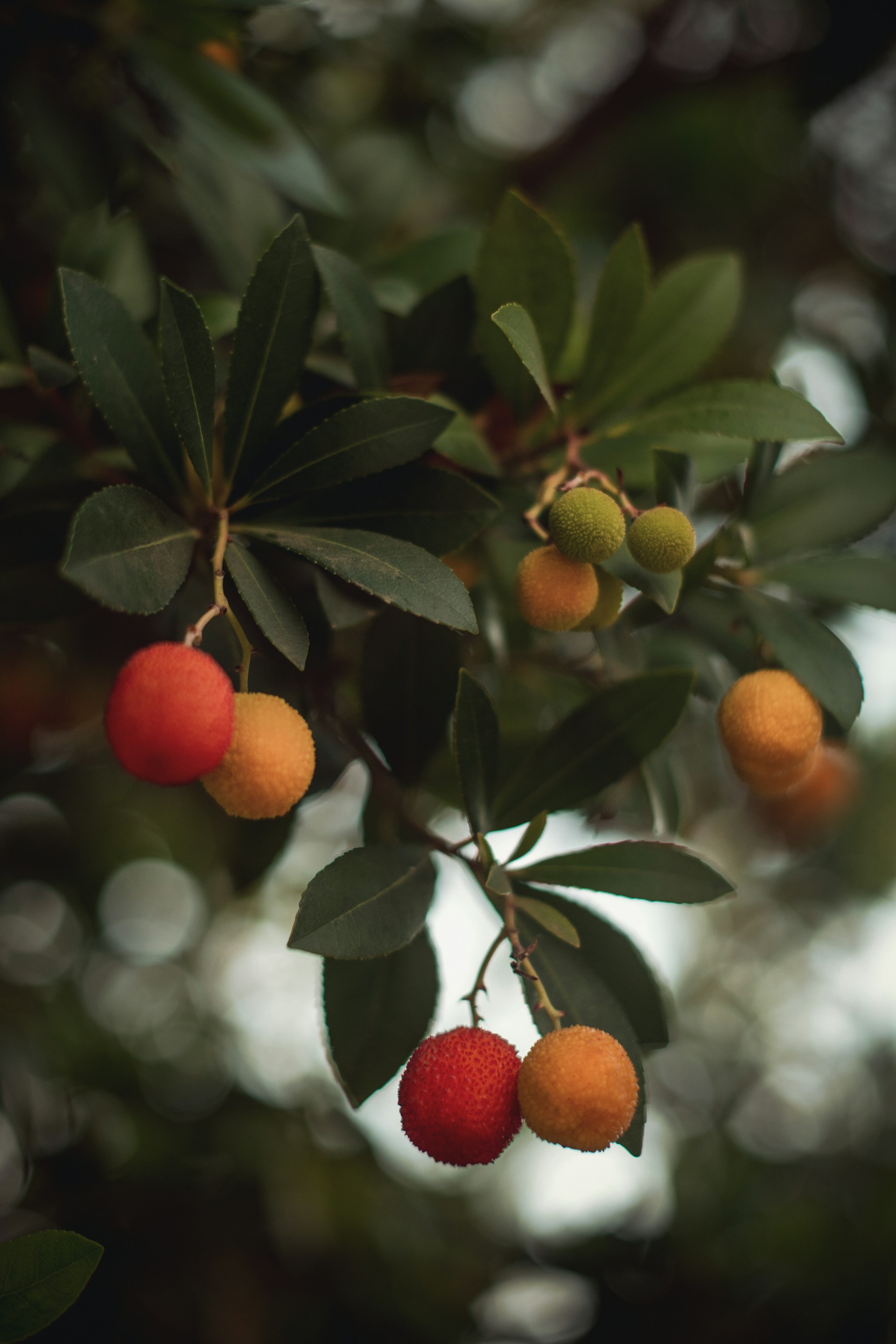
Picture courtesy: Orange fruits on a tree during daytime by Tim mossholder, Unsplash
Yvor Winters’s poem “Time and the Garden” begins with an image of a lush, ordered garden. It represents steadiness and patience, as well as a living space where things unfold gradually, as they are meant to.
The speaker, however, feels a deep restlessness. He is drawn to the fruit not as it ripens naturally, but with the desire to seize it all at once, to compress time so he can taste everything immediately. This impatience reflects a human tendency to want the rewards of growth and effort without fully living through the process. For him, the slow pace of the garden mirrors the slow pace of life, and he is frustrated that others seem content to let things unfold without haste.
As the poem unfolds, Winters connects this personal impatience to the work of poets and thinkers. He recalls older masters like Gascoigne, Ben Jonson, Greville, Raleigh, and Donne, who took years to craft their best work.
Their art was deliberate; each poem built with care over time. Winters contrasts this with the desire of some writers to capture all wisdom or beauty in a single moment—a powerful temptation, but one he warns against. The message of “Time and the Garden” is that real growth—whether in life, art, or understanding—cannot be rushed.

Picture courtesy: Green plant in tilt-shift lens by Tanul Agarwal, Unsplash
This evening, I would like you to write a Prose piece which includes the line:
“The future gathers in vine, bush, and tree: Persimmon, walnut, loquat, fig, and grape.” From the poem “Time and the Garden.”
Please also include the dVerse link in your published piece.
Here’s how to take part in the Prosery Prompt:
- Write a piece of flash fiction or other prose up of up to or exactly 144 words,
- Including the given line from the poem.
- Post your Prosery piece on your blog and link back to this post.
- Place the link to your actual post (not your blog url) on the Mister Linky page.
- Don’t forget to check the little box to accept use/privacy policy.
- Please visit other blogs and comment on their posts!
 dVerse
Welcome to Prosery Monday, everyone!
On the menu today we have cheese and charcuterie platter, caprese skewers and stuffed mini pitas with mojitos.
I can whip up any flavor you like! We also have red velvet cupcakes with coffee/tea of your choice.
Let me know if you’d like anything else! See you on the Prosery trail ❤️❤️
Hello Sanaa and All. Wonderful poem and choice of line to write prosery to. A pint of Magners please, even as today has cooled to a pleasant 76F.
Pint of Magners coming right up! Good to see you, Lisa ❤️❤️
Thanks, Sanaa. Cheers!
Cheers, Lisa! 🥂
A mojito and mini pita sounds perfect tonight… the line was a bit hard to incorporate, but I did my best.
Mojito and mini pita coming right up! Lovely prose piece, Bjorn! ❤️❤️
Pingback: dVerse Poets – The Bag Lady
Pingback: Escape: Southern Gothic Flash Fiction – Aaron Guile
Pingback: The Sweetness of Age – Addicted to Words
Thank you Sanaa, what a fascinating poet, and a great line for prosery too. I pushed back on the line, and in keeping with my piece I’ll have one of everything that’s going 😀
Thank you, Paul! 😀 I am so glad you enjoyed the prompt. I ll whip up a fresh batch and join you! ❤️❤️
Great prompt, Sanaa, thankyou for hosting!
Thanks Jay! Heading over to read you ❤️❤️
Pingback: Our Legacy – A Little Bit of Everything, With Love
Hi Sanaa. These images are stunning and a tempting challenge. If I may make a suggestion …. it would be extremely helpful if each new dVerse post (or Mr Linky) indicated the cut off date and time in the instructions. Personally, I can’t always respond to these challenges immediately and I’d like to know how much time I have to submit my piece. Just an idea which may be helpful to others as well. Thank you!
Thank you for your suggestion, Nancy! Prosery is open until Sunday 3pm EST. I ll be sure to mention the cutoff date and time in the instructions next time ❤️❤️
Pingback: A very valuable lesson – Keep it alive
Hey! Thanks so much, Sanaa! That will be a huge help; I’ve missed the cut offs on other dVerse postings and it’s such a drag, especially after preparing a piece to submit. Mille grazie!
You’re most welcome! ❤️❤️
Pingback: Re: Time and the Garden | Thru Violet's Lentz
This was a particularly challenging prompt! Thank you for the venue!
I am so pleased you liked it! ❤️❤️
Pingback: In Papa’s Garden – The Elephant's Trunk