
Tags
Hello poets and friends
We are now already more than midway through January. A month where many people struggle with the aftermath of holidays, maybe spending, drinking or eating too much. Before the next salary comes we may have some time to reflect and maybe even write a little bit longer.
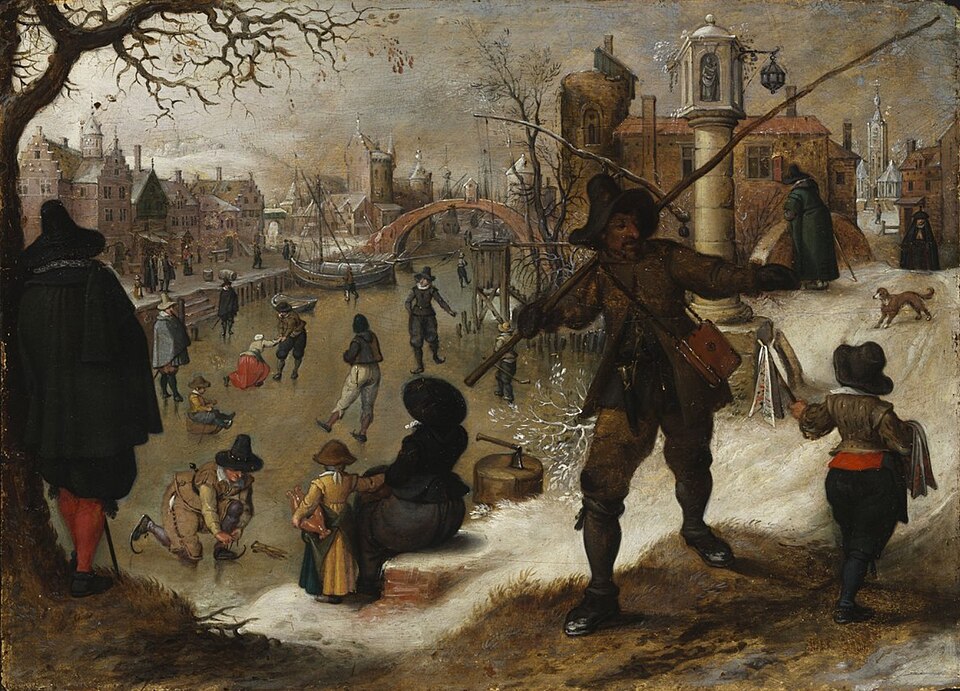
I thought we should revisit a form we had not done together since May 2013 when it was presented to the community by Samuel Peralta. This is the glosa (sometimes gloss or close) that is a poetry that goes back to the Spanish courts of the 14th century. The idea is to use four lines from a famous or well-known poet and expand on the poem keeping it in line with the original poem, and to honor the author. There are other variants of the form but this is the one that seems to be the most common variant for the modern glosa.
In November I wrote one myself for Open Link and also read it for the Live session, and as some of you remember I promised to have it as my next prompt.
Listen to their song
Before the sodden churchyard has been kissed
by daylight skipping in between headstones,
I hear them through the chilling autumn mist,
the muffled footsteps of returning souls.
From All Souls by Kim Russel 2025
We came through mud, through trenches dug
with muscles aching, we came with friends
for foes, through reek of sweat, on gangrene
feet, we marched before we came to rest
inside these walls, we came to sing our hymns
reminding humans all that have been missed:
our unborn children, our families erased;
yet on a dawn like this, you should recall
that soon the wind and sun will meet in tryst
before the sodden churchyard has been kissed
by jackdaws dancing with last of leaves; we leave
cause somewhere underneath the fattened bulbs
of tulips wait to burst in praise of life still had;
while boughs will bow and grass will grow to green
our home will serve to recall of beauty here,
remaining in the poppies sprung from our bones
and we will watch and walk with you a while
to serve and save, reminding you: preserve
what’s left and why we died in pain and groans.
By daylight skipping in between headstones,
you may hear our rattled breath in branches
moving with November winds, telling stories
of unrest, you may hear the calls for actions
you may hear the bells of war, and shadows
telling tales too true to comprehend
In your guts you sense revenge you must resist
our corpses has to serve the cause we set
when dying, we must remember lives denied
we urge you, please remember, we insist.
I hear them through the chilling autumn mist,
through fields and gardens on a restless wind
they’re burdened by the dread of words unread
by forgotten wisdoms, by my ignorance
to reckon what I failed to solve, my hate
my urge for retribution and attack.
while below in the darkness of their holes
they cannot rest, tonight to rise again
and sing for me, for us and even them.
can you hear it, how on threadbare soles
the muffled footsteps of returning souls?
In this case I thought it would be cool to borrow four lines from one of our dVerse poets (who I asked before I wrote the poem), but you may borrow from any poem of your liking.
The form consists of four borrowed lines from your poem (the cabreza) of choice and four stanzas of ten lines where the last line of each stanza is a line from the cabreza. There is no requirement on the meter other than it should not be too different from the borrowed poem. There is only one other requirement and that is that in the glosa line 6 and 9 should rhyme with the borrowed line.
After having writing a few of these poems I have some personal experience that I would like to share.
- Avoid poems with rhyming stanzas. since it may be hard to find enough rhyme words to complete the writing.
- Even though it is only a part of a poem. read it through to get a feeling for the theme not to disrupt it too much.
- Even though it was not typical in the original style I recommend not to hesitate to use enjambment across the stanzas to make the borrowed lines fit better with the flow.
I know that this is quite a challenge for many of you who are used to writing short poems, but every now and then I think it is good to stretch our muscles. If the number of words is a challenge it could be a good idea to select a cabreza with short lines and follow through in your own poem.
Also if you have an old glosa, maybe it is time to do an update and review it to get a semi-new poem.
When you have written your poem, please post it to your blog, and link back to dVerse and the prompt.
It would be nice to also say a few words about the poet you choose to honor with your glosa, but the most important is to read and comment on the other linked poems.
Have fun, and remember it is actually easier to write once you get writing.
 dVerse
Hello everyone…. this is one of my favorite poetry forms with a lot of flexibility so I’m very curious how you meet the challenge. We have not had it as a challenge here since 2013, but I thought that it was time again.
If it takes a little time I don’t mind, I will come back and read over the coming weekend.
If you need something for strengh the bar has lots to offer, all the way from sodas, coffee or tea to wine, beer and booze. As for eating we mostly offer simple bar food, olives and nuts, some excellent cheese and also fresh salad and bread. Enjoy
What an interesting form, Bjorn! Thanks for bringing it back for us to respond to. I enjoyed this a lot….and went to one of my favorite poets, Mary Oliver.
I’ll just help myself to a beverage and snack!
I look forward to see what you come up with
Yo — this was a difficult one Björn, but I gave it my best shot. Very interesting challenge. 👍🏼
Doing you best sounds very good
Hi Björn. It is a very interesting form but does take time to write. I had written one a few years ago and was tempted to share it but that takes away the fun of writing.
Thanks for the prompt.
Yesterday it felt as if winter is over but it has been raining incessantly since morning and is cold again. I would love a double shot of espresso, please.
Hello Punam… i am sure your winter has less snow than ours. Coffee is always available.
Hardly any snow in the plains, Björn! The few states that do get snow have not seen much snowfall this year…
Thanks for the coffee.
Your piece is outstanding, Bjorn!
Thank you…
Well, I gave it a go it went rather slow. A difficult challenge for sure but, thanks for the hint about not trying to rhyme.
I look forward to read yours.
Thanks so much for the great prompt. My poem, which took me a great evening to materials will publish in the morning (my time) I hope the backlink works. Again thanks.
I think it is a great challenge… at least for length
oh no. I missed the cut off time. And backlink failed. Sheesh 🙄 anyway, sharing with you.
https://selmamartin.com/at-the-spanish-court-mtb/ 🙇🏻♀️
I had a blast with this one! Thanks for the prompt, BR. ❤
Great, thank you