Tags
dream interpretations, dVerse Poets Pub, January, Langston Hughes, Michael Collier, poetics, Sanaa Rizvi, Winter is as winter does, Writing Emotion
Good evening, Poets!
Sanaa here aka adashofsunny to accompany you to the realm of dreams, which can be elusive and fluid, but the feelings they evoke tend to linger on for a while.
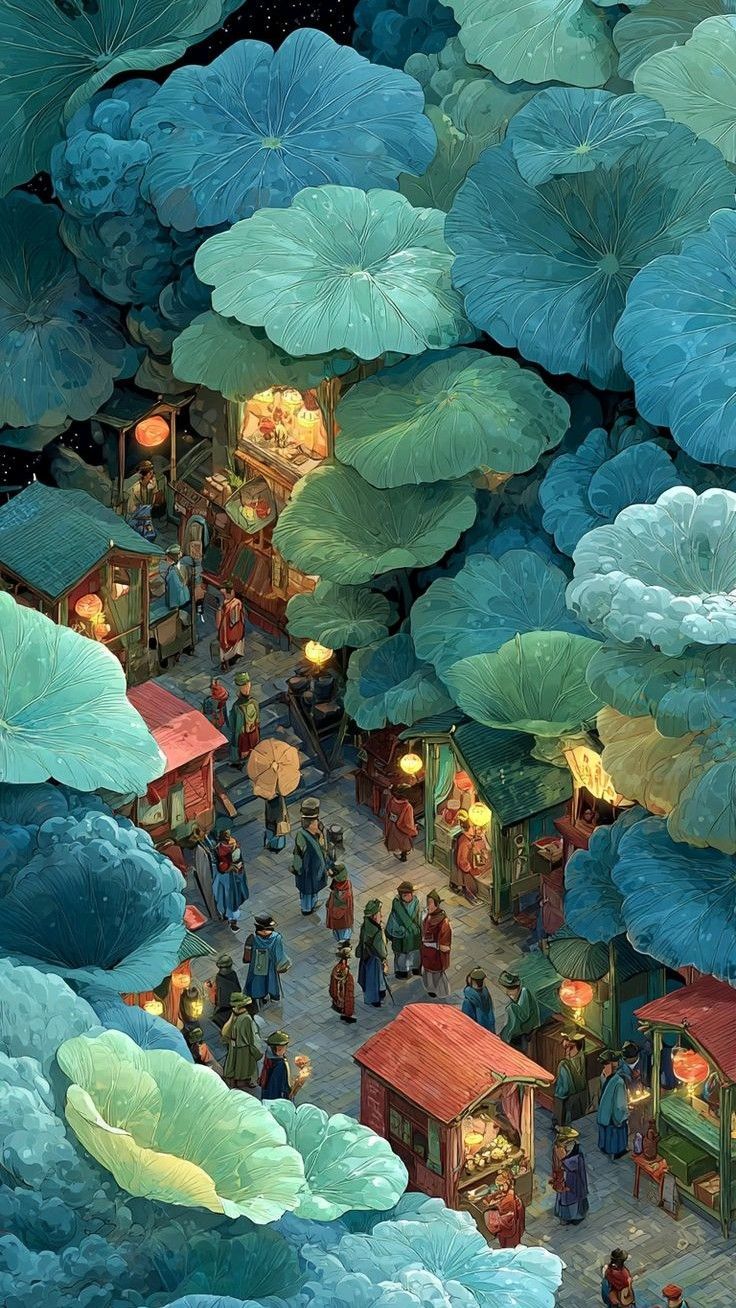
Picture courtesy: Dreamscape on Pinterest
Before we begin, let us explore what the state of dreaming is – The state of dreaming is a threshold—not fully consciousness, not fully oblivion. The mind loosens its grip on logic and time, allowing memory, desire, fear, and image to speak in symbols instead of sentences.
In dreaming, the brain is active, but the self is porous; boundaries blur, identities shift, and emotions roam without explanation. It’s a state where truth doesn’t need to be accurate to be felt, where the inner world briefly becomes the only reality that matters.
In a quieter sense, dreaming is the psyche talking to itself when it no longer has to perform— when it can be strange, honest, tender, or cruel without consequence. It’s thinking without defense.
Here are two of my favorite poems about dreams below:
Dream Variations by Langston Hughes
To fling my arms wide
In some place of the sun,
To whirl and to dance
Till the white day is done.
Then rest at cool evening
Beneath a tall tree
While night comes on gently,
Dark like me—
That is my dream!
To fling my arms wide
In the face of the sun,
Dance! Whirl! Whirl!
Till the quick day is done.
Rest at pale evening . . .
A tall, slim tree . . .
Night coming tenderly
Black like me.
Birds appearing in a dream by Michael Collier
One had feathers like a blood-streaked koi,
another a tail of color-coded wires.
One was a blackbird stretching orchid wings,
another a flicker with a wounded head.
All flew like leaves fluttering to escape,
bright, circulating in burning air,
and all returned when the air cleared.
One was a kingfisher trapped in its bower,
deep in the ground, miles from water.
Everything is real and everything isn’t.
Some had names and some didn’t.
Named and nameless shapes of birds,
At night my hand can touch your feathers
and then I wipe the vernix from your wings,
you who have made bright things from shadows,
you who have crossed the distances to roost in me.
“Dream Variations” (1925) is a short lyric poem, but it carries layered meaning—emotional, racial, and symbolic—beneath its simplicity.
The poem contrasts light and darkness in a way that reflects Langston Hughes’s experience as a Black poet in America. Daylight represents public life—visibility, movement, labor, and exposure—while night offers safety, privacy, and release.
The repetition of “Black like me” at the end of each stanza is crucial: it asserts identity while also suggesting that true rest is only possible when the world no longer watches, judges, or threatens.
The word “dream” itself is double-edged. On one level, it’s literal sleep. On another, it echoes Hughes’s recurring theme of the Black dream deferred—a longing for freedom, dignity, and peace that remains out of reach in waking life. The tenderness of night becomes a symbolic refuge from racial oppression, where the speaker can finally exist without resistance.
Dream Variations is not just about sleep. It’s about the human need for rest from struggle, the yearning for a world where identity does not endanger the body, and the quiet hope that peace—if not found in daylight—might at least be claimed in dreams.
On the other hand, Michael Collier’s “Birds Appearing in a Dream” explores the dream state as a space where meaning arrives without explanation—sudden, symbolic, and emotionally precise rather than logical. The poem doesn’t try to interpret the dream so much as honor its strangeness, treating the birds as messengers whose significance lies in their presence, not in what they can be decoded into.
The birds function as interruptions. They appear unexpectedly, the way dream images do, and resist being fully understood. In many traditions, birds symbolize freedom, transcendence, or the soul—but Collier avoids fixing them to a single meaning. Instead, their appearance feels intimate and personal, suggesting that dreams speak in a private language shaped by memory and feeling rather than shared symbols.
On a deeper level, the poem can be read as meditation on the unconscious itself. The birds emerge from an inner landscape, carrying fragments of insight or emotion that the waking mind can sense but not fully grasp. Their appearance suggests that something within the speaker is trying to be seen—not explained, just acknowledged.
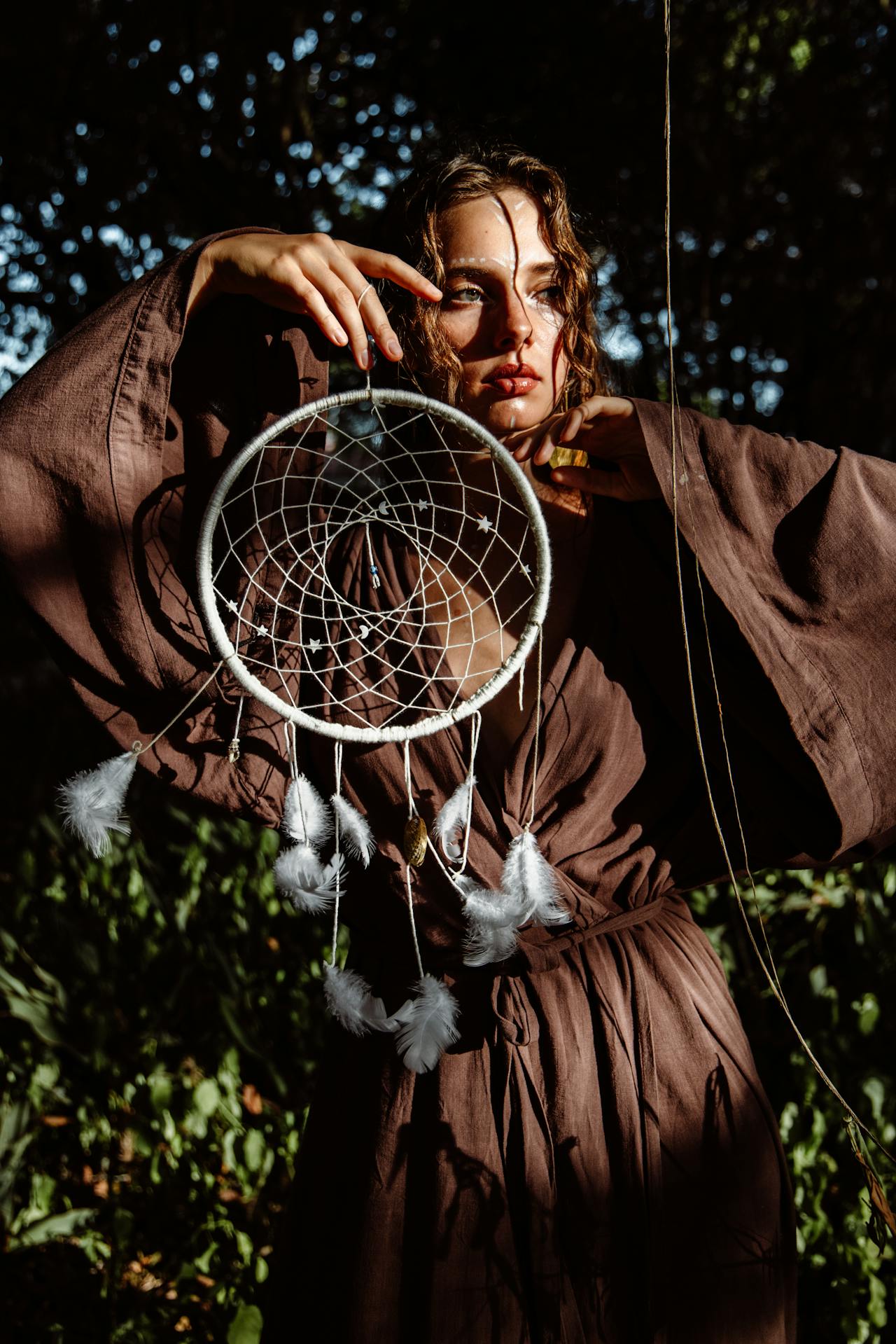
Picture courtesy: A woman posing with a dream catcher by Roman Odintsov, Pexels.
For today’s Poetics, I would like you to write a poem that interprets a dream. It can be about falling— where falling is not fear, but release. Let gravity feel like permission. What did you finally stop holding onto?
It can be about missing a train, time leaves without you. Tell us about lateness, regret, and the beauty of arriving nowhere. The prompt is wide open.
New to dVerse? Here’s how to join in:
- Write a poem (in any form) in response to the challenge.
- Enter a link directly to your poem and your name by clicking Mr. Linky below
and remember to check the little box to accept the use/privacy policy. - You will find links to other poets and more will join so please do check
back later in order to read their poems. - Read and comment on other poets’ work– we all come here to have our poems read.
- Please link back to dVerse from your site/blog.
 dVerse
Welcome to Poetics, everyone
On the menu we have crab cakes with remoulade and chardonnay, rainbow sushi rolls with riesling.
Or if you prefer we are also serving peach cobber with icecream and/or butter croissants with tea/ coffee of your choice.
Let me know if I can get you anything else. See you on the poetry trail! ❤️❤️
Good evening… I have a bit of problem with dreaming…. never remember anything except that they are too dark.
Good evening, Bjorn
Loved your poem! It describes perfectly how dreams can be too dark to understand 🙂
thank you for this prompt Sanaa and especially the Collier poem. As therapist, I’ve listened to many dreams so this piqued my interest and so too the poet’s through a whole gamut of them rather than just one. Hope that still fits the prompt
Your menus are always so tempting but the time zones mismatch my stomach’s needs – in future I might just have to delay evening meal and save up for that peach cobbler.
I m so pleased you enjoyed the prompt, Laura! Heading over to read you!
Happy Tuesday! ❤️❤️
Hi Sanaa. Those crab cakes sound delicious.🤤
Hi Melissa
I ll join you for some crab cakes! 😄
Happy Tuesday ❤️❤️
Pingback: dVerse Poetics Tuesday — The Seeker – Tao Talk
Hello Sanaa and All. Snowed in today as the blizzard and low temps continue. Since real dreams can vary in length from a snapshot to one that feels like it goes on for hours, I chose a snapshot one. Sometimes the shortest dreams are like a seed that germinates like a magic bean into a beanstalk. Thank you for the prompt as I revisited this 2020 dream.
A cup of hot rooibos with a splash of Baileys would be perfect please!
Hi Lisa
Loved your poem 🥰 thank you for sharing it with us!
A cup of hot rooibos with a splash of Baileys coming right up! ❤️❤️
Thank you, Sanaa ❤ Cheers!
You’re welcome! Cheers! ❤️
Pingback: By Choice | rivrvlogr
Thank you for this prompt, Sanaa. Had a rough day at the doctor’s ahead of me and it helped take my mind off it to enjoy rummaging through my dream imagery. I would love a slice of peach cobbler (yum!) and a cup of whatever tea you have on hand, thank you very much. 🙂 💖
Peach cobbler and tea coming right up! I m so glad you liked the prompt, Dora ❤️❤️
Hello, Sanaa! Thanks for hosting.
Hello, Jay! Thanks for joining in! ☺️
What a beautiful interpretation of dreams as being on the threshold!
Thank you so much, Reena! I am so glad you liked the prompt ❤️❤️
thanks dearly for the prompt, Sanaa. Lovely. I appreciate you.
Thank you so much ☺️ heading over to read you, Selma ❤️❤️
Hi Sanaa! I didn’t get a chance to post yesterday. Some peach cobbler for breakfast would be delicious!
I will join you for peach cobbler, Merril! Can’t wait to read what you posted, heading over now!
Happy Wednesday! 💙💙
Happy Wednesday, Sanaa! 💙
💙💙💙
I like working with my dreams so thank you for this Sanaa.
And thank you for the lovely poem 😀 Cheers! 🥂
😀
🥰🥰
Sanaa, I am so sorry I am late to the party but couldn’t give a miss to your lovely prompt. I have linked my poem to OLN.
Heading over to read you, Punam! ❤️❤️
Thanks for your lovely comment, Sanaa! ❤️
You’re most welcome ❤️❤️