
Tags
John Keats, Lewis Carroll, Edgar Allan Poe, Acrostic name poems, Sir John Davies, Alice Liddell, Elizabeth I
It’s Thursday, and the dVerse Poets Pub is open with toasted crumpets, a variety of teas, and a range of real ale and other beverages from our well-stocked bar, as well as a selection of delicious poetry. I’m Kim from writinginnorthnorfolk.com, your host this week for Meeting the Bar.
Recently, I’ve been thinking about names, of family and pets, places, books and poems, and I thought that this week it would be fun to write acrostic name poems.
Name poems tell about a name, using the letters of the name for the first letter of each line. Acrostic name poems can be as simple or complex as you wish to make them.
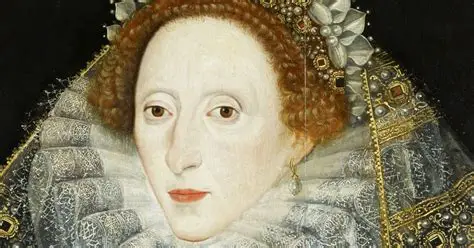
The poet Sir John Davies (1569-1626) is pretty much unknown now but was an interesting figure in Elizabethan and Jacobean literature. His Hymnes of Astraea (1599) has no fewer than twenty-six acrostics in praise of Elisabeth I. Each hymn’s first letters form the name ‘Elisa betha Regina’. Here is an extract from one of them:
Hymne VII: To the Rose
Eye of the Garden, Queene of flowres,
Love’s cup wherein he nectar powres,
Ingendered first of nectar;
Sweet nurse-child of the Spring’s young howres,
And Beautie’s faire character …
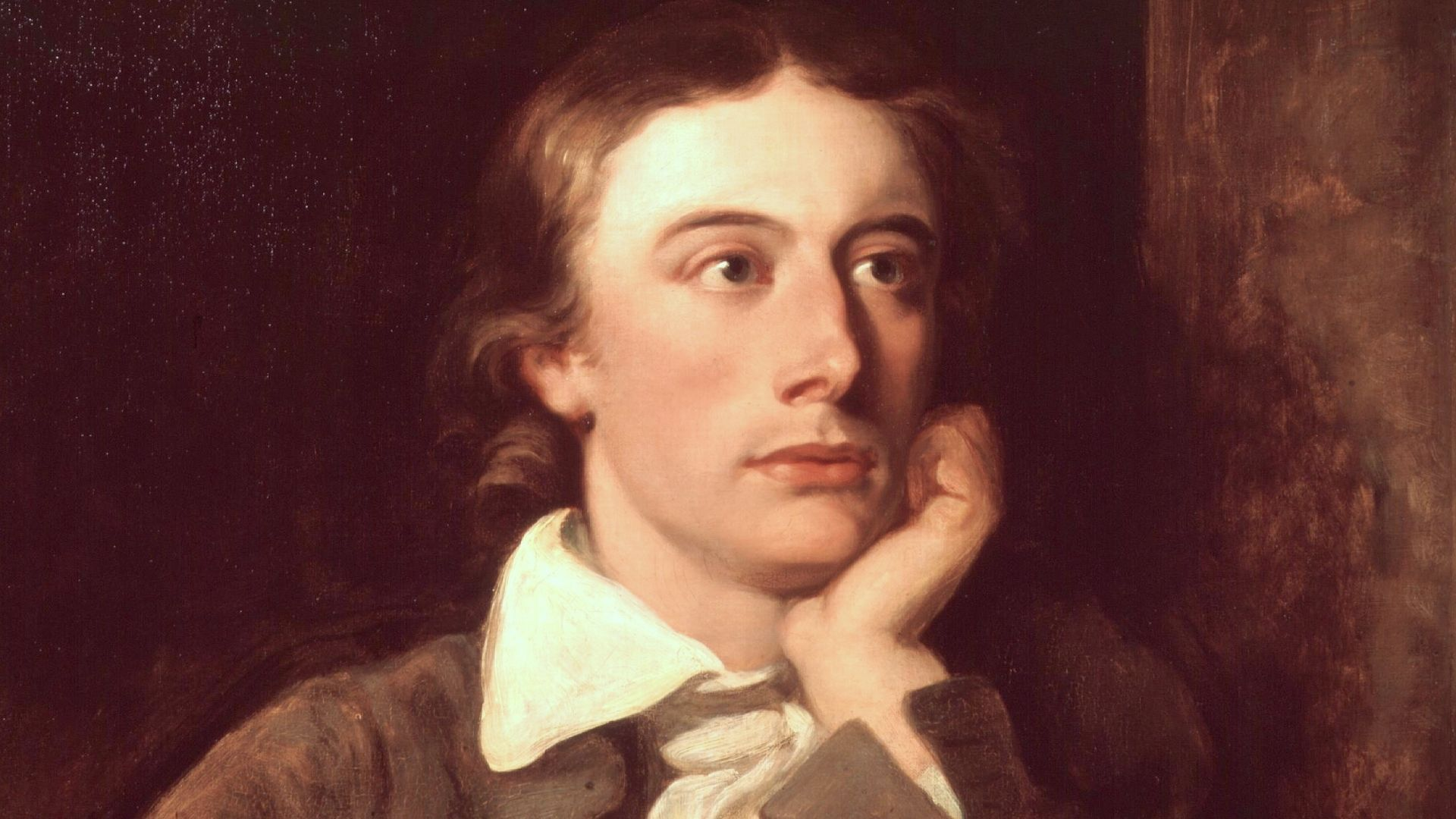
The great Romantic poet John Keats (1795-1821) wrote the following acrostic name poem for his sister-in-law, Georgiana Keats, who was married to his brother George. This is the first stanza, which spells out her first name, or, as Keats put it, “exacts in capitals her golden name”:
Acrostic: Georgiana Augusta Keats
Give me your patience, sister, while I frame
Exact in capitals your golden name;
Or sue the fair Apollo and he will
Rouse from his heavy slumber and instill
Great love in me for thee and Poesy.
Imagine not that greatest mastery
And kingdom over all the Realms of verse,
Nears more to heaven in aught, than when we nurse
And surety give to love and Brotherhood …
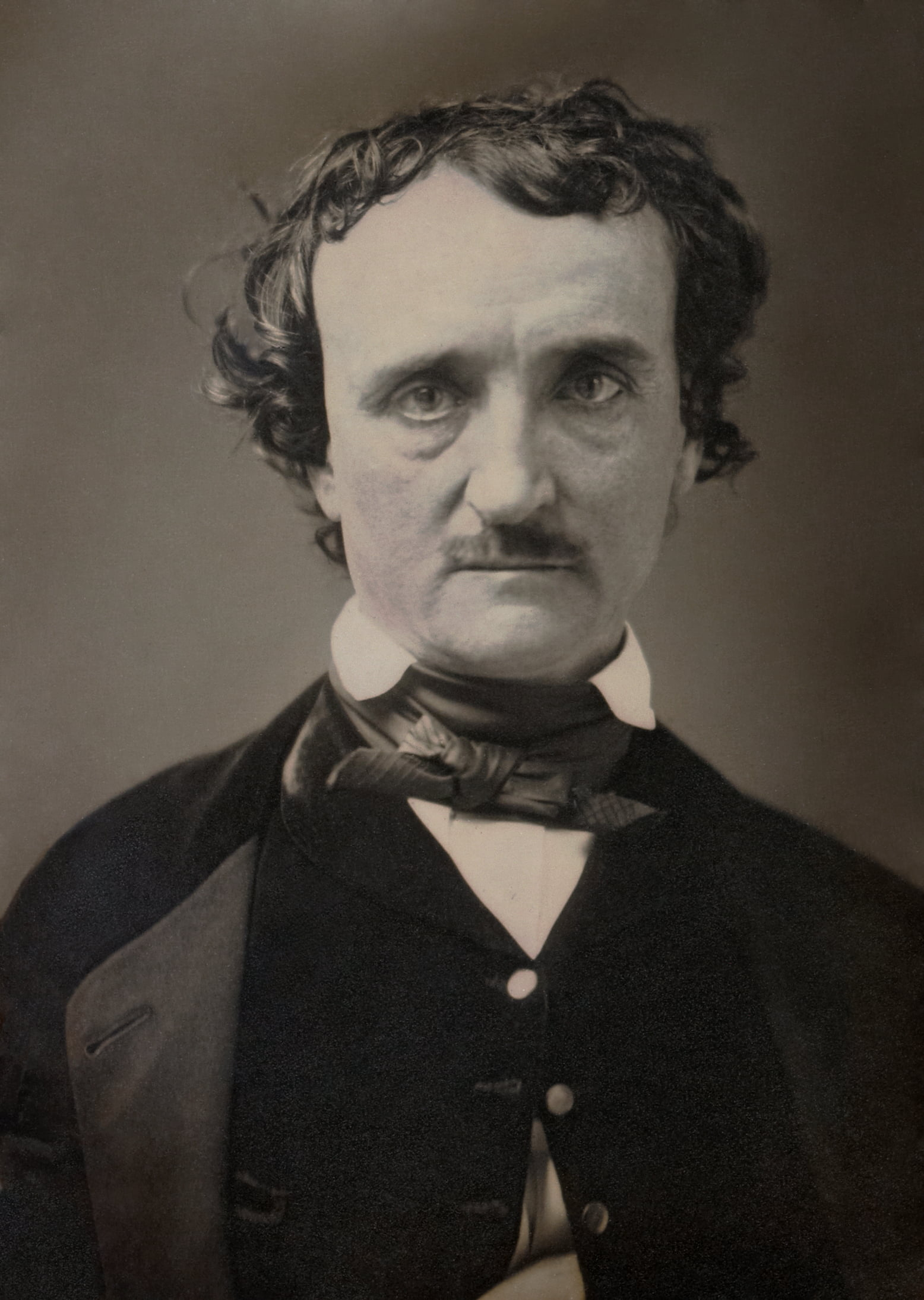
Here’s an acrostic name poem by Edgar Allan Poe (1809-49):
Elizabeth
ELIZBETH – it surely is most fit
[Logic and common usage so commanding]
In thy own book that first thy name be writ,
Zeno and other sages notwithstanding;
And I have other reasons for so doing
Besides my innate love of contradiction;
Each poet – if a poet – in persuing
The muses thro’ their bowers of Truth or Fiction,
Has studied very little of his part,
Read nothing, written less – in short ’s a fool
Endued with neither soul, nor sense, nor art,
Being ignorant of one important rule,
Employed in even the theses of the school –
Called – I forget the heathenish Greek name –
[Called anything, its meaning is the same]
‘Always write first things uppermost in the heart.’
Poe composed several acrostic poems in his youth. This one was written for Elizabeth Rebecca Herring, who was Poe’s cousin (Poe later married another of his cousins, Virginia).
One of the most famous and prolific acrostic-writers in the nineteenth century was the master of nonsense literature, Lewis Carroll (1832-98):
Acrostic
Little maidens, when you look
On this little story-book,
Reading with attentive eye
Its enticing history,
Never think that hours of play
Are your only HOLIDAY,
And that in a HOUSE of joy
Lessons serve but to annoy:
If in any HOUSE you find
Children of a gentle mind,
Each the others pleasing ever–
Each the others vexing never–
Daily work and pastime daily
In their order taking gaily–
Then be very sure that they
Have a life of HOLIDAY.
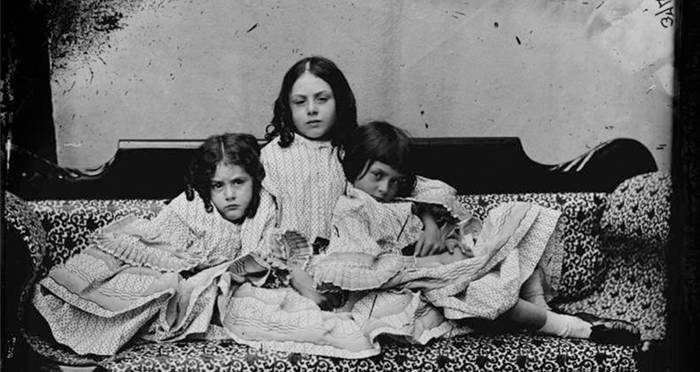
Here’s an extract from another Carroll acrostic, this time written for Alice Pleasance Liddell, the inspiration for Alice’s Adventures in Wonderland (1865). You can read the full poem here:
A Boat Beneath a Sunny Sky
A boat beneath a sunny sky,
Lingering onward dreamily
In an evening of July —
Children three that nestle near,
Eager eye and willing ear,
Pleased a simple tale to hear —
Long has paled that sunny sky:
Echoes fade and memories die:
Autumn frosts have slain July …
It’s even possible to sustain the acrostic form over something longer – even an entire book, as in the American poet Anna Rabinowitz’s Darkling: A Poem (2001), based on a collection of letters from family members lost in the Shoah or Final Solution.
Your challenge is to write a name acrostic for someone in the public eye, a loved one or even yourself. Try to use the full name, but you can leave out any middle name(s) if you wish. You can make it romantic, humorous, political, and write in any form you choose, for example a sonnet, about your chosen subject.
If you are new to dVerse and/or Poetics, here’s how to join in:
- Write a poem in response to the challenge.
- Enter a link directly to your poem and your name by clicking Mr Linky below.
- There you will find links to other poets, and more will join, so check back for their poems.
- Read and comment on other poets’ work – we all come here to have our poems appreciated.
- Please link back to dVerse from your site/blog.
- Comment and participate in our discussion below, if you like. We are a friendly bunch of poets.
- Have fun.
- Mister Linky will be open until Saturday morning. If you need longer to compose your acrostic name poem and the link has closed, there is always Open Link Night, where we are happy to read any latecomers.
 dVerse
Greetings! Acrostics are so much fun ~ Thank you Kim. Would love a Corona in the bottle with a wedge of lime, please. A purist when it comes to my favorite beer.
Greetings Helen! A Corona with lime coming up!
Good evening all. I nearly missed opening time – have the clocks changed in the US? Welcome to the bar and our name acrostic prompt. I look forward to reading them.
We have “sprung” forward. I love the “Boat Beneath the Sunny Sky” poem, Kim. And the Jefferson Airplane song.
Thank you for confirming that, Melissa. I noticed that the Monday and Tuesday prompts started earlier – it’s usually at 8 pm here, but the prompts were already live at 7. I’m so glad you enjoyed the Lewis Carroll poem. I’m an old Jefferson fan, Ellen was kind of named Grainne because it’s the Irish form of Grace.
Pingback: Reverberations – Yesterday and today: Merril's historical musings
Hi Kim, and thank you for hosting! I thought you knew we had switched to DST. It was two weeks ago. I think you change at the end of the month?
Thank you for the prompt. I never write acrostics, but this one made me quite sentimental. 😊
White Rabbit is a classic!
I was at Ellen’s when you switched to DST and then I got that stupid chest infection so I can’t have been paying attention. I’m so glad you like the prompt and I love your name acrostic.
Hope you’re feeling better!
It’s taken over a week, but I’m getting there, thank you, Merril.
I’m happy to hear that!
This is a lovely idea, Kim! I’ll see if I can rustle something up…
By the way, sidenote – I was asked to do a Throwback Thursday post for The Ekphrastic Review Challenges and I came across one of your poems. Anyway, I loved it and it’s in my selection! Just thought I’d let you know 🙂
I’m pleased you like the prompt, Nina, and look forward to reading yours, you have until Saturday morning,. And than you for loving my poem – which one was it?
I found it! I’d completely forgotten Figures in a Landscape.
That’s the one!
Pingback: dVerse Poets MTB – The Bag Lady
Gre
Pingback: Acrostic Cento / Cento Acrostic – Mom With a Blog
Pingback: Love Of Language – 22nd March 2026 – 1994ever
Great challenge Kim 🙌
I’m glad you like it!
Pingback: Life and Love – Creative Experiments and More
Pingback: Olivia – a poem by Paul Vincent Cannon | parallax
Thank you Kim, a chance to reacquaint with the form.
So glad you joined us, Paul!
Pingback: dVerse MTB/Forms — Metamorphosist – Tao-Talk
Hello Kim and All. Finally linked up. Hope you are enjoying your Friday.
It’s Saturday now, Lisa, and I’ve had my laser capsulotomy and can see so much clearer. I’m about to read and comment again and look forward to reading your name acrostic.
Nice that your recovery time on that is quick ❤ So happy you can see so much clearer!
Thanks so much, Lisa. I can drive again, too.
!YAY! Sounds like time for a road trip ❤
I haven’t written an acrostic in a long time. The name theme for one is a fab idea, Kim. Thank you~
I’m pleased you like the prompt, Jennifer, and look forward to reading yours.
Pingback: Roberta Writes – W3, Tanka Tuesday, d’Verse and Thursday Doors
Pingback: What is in a name? – Keep it alive
Sorry I missed the deadline for adding my link;
Pingback: What’s in a name?-an acrostic – Not all who wander are lost
Pingback: W I N N I F R E D—In Memoriam ©Dawn Minott – Poems & More
Oops, looks like Mr. Linky deserted me. I enjoyed yours. Here is mine: https://judydykstrabrown.com/2026/03/22/memories-of-bob-for-dverse-poets-acrostic-challenge/
Help!!! I cannot leave comments for Rob Kistner. I know Blogger can be tricky at times however I have no problems commenting on your WordPress poems. If you have suggestions for me, you can email me @
hdwoonie23@gmail.com
or text to
541.639.6527
I often have problems commenting on some people’s blogs, but not on Rob’s so far. I’m not sure what is causing this Helen, but I hope it resolves itself soon.