***ANNOUNCEMENT*** Join dVerse at our LIVE session (video and audio) on Saturday, April 11th from 10 to 11 AM (EST). We always have attendees from around the globe! Read a poem of your own aloud OR come sit in to watch and listen. The more the merrier! A Google Meet link will be provided on the Thursday, April 9th OLN prompt.
It’s Dora again. I’m feeling a little moody today. In a vortex of the unanswerable. Sure. I hear you. “Stop with the news scrolling!” “Know your limits.” “Touch grass.” “Consider the lilies of the field.” “Take a deep breath.” “Feel the breeze!” Long sigh. Moody. Imperatively so.
Dearest, I beg of you, sleep properly and go for walks.”
Franz Kafka, Letters to Milena, 1912
In poetry and prose, the imperative mood dissolves the barrier between the assumed persona and the reader by its direct address of demand, instruction, or persuasion, like the Delphic maxim, “Know thyself,” or Polonius’ advice to his son: “This above all: to thine own self be true,/And it must follow, as the night the day,/Thou canst not then be false to any man” (Shakespeare, Hamlet, 1:3). (The imperative mood is italicized.)
You see, we English speakers often operate in three grammatical moods which describe the way a verb is used: the indicative, the subjunctive, and the imperative. Simply put, the indicative is a statement/question, the subjunctive is a wish, and the imperative is a demand.
Love yourself. Then forget it. Then, love the world.”
Mary Oliver, “To Begin With, the Sweet Grass,” Evidence: Poems (2009)
As simple as it seems, the imperative mood or voice can assume a full spectrum of tones, from argumentative to ruminative to cajoling, all in service to our rhetoric. I have examples galore for you and you can click on the links for the poems referred to but not shown.
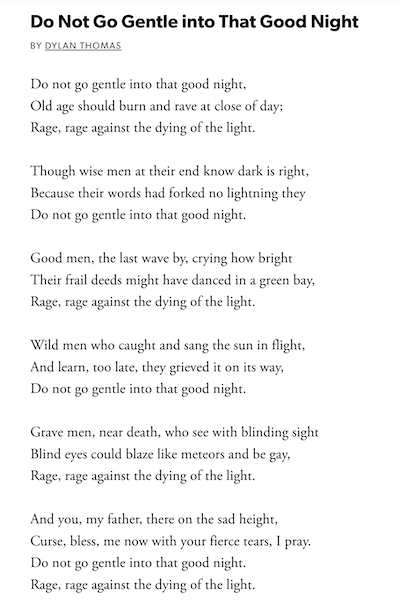
Dylan Thomas’ “Do Not Go Gentle into That Good Night” (1947) and Shakespeare’s Sonnet 116 (“Let me not to the marriage of true minds”) both seek to persuade and both begin with a negative imperative construct. But whereas one is urgently pleading, almost to the point of admonition, the latter is more temperate in tone yet no less passionate.
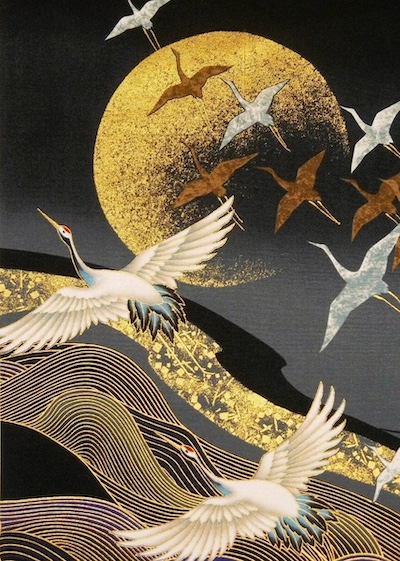
Nobu Fujiyama, Cranes’ Flight to the Golden Moon (Japanese painter/fabric designer in the Nihonga style)
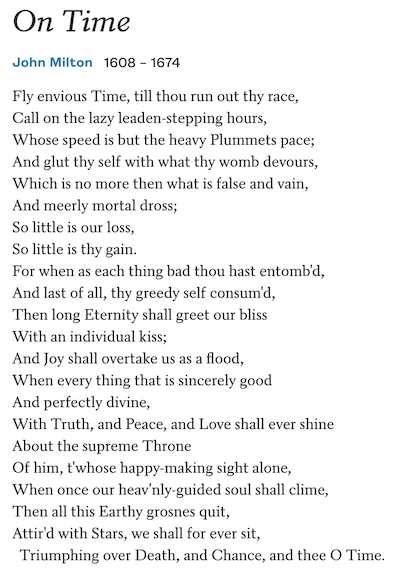
In “On Time,” Milton addresses time rather triumphantly, if not mockingly, using the imperative mood, well, imperiously: “Fly envious time . . . .”
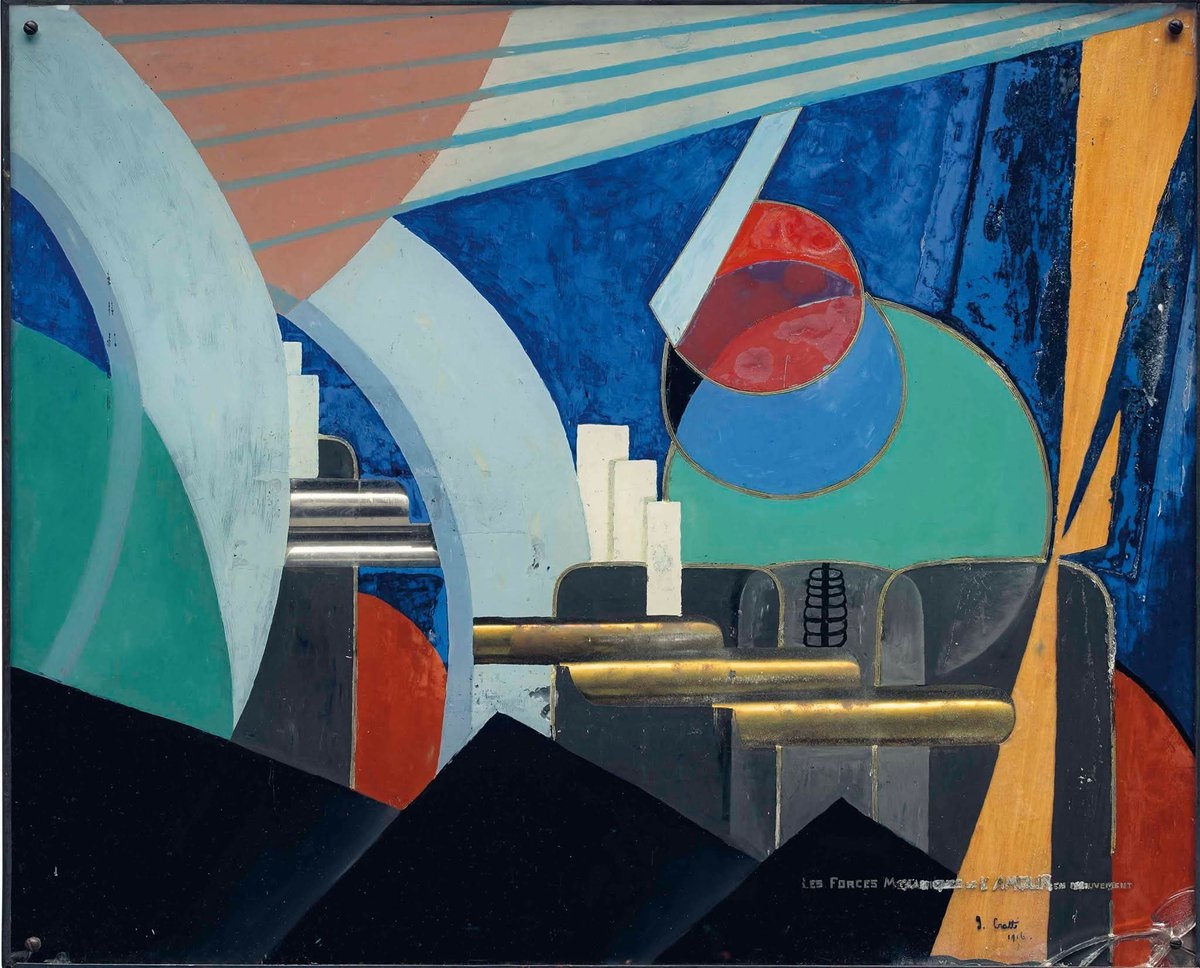
Jean Crotti, Les forces mécaniques de l’amour en mouvement (1916) oil on glass, wood, newsprint, tin, paper, wire and metal tubing assemblage 60.2 x 74.3 cm
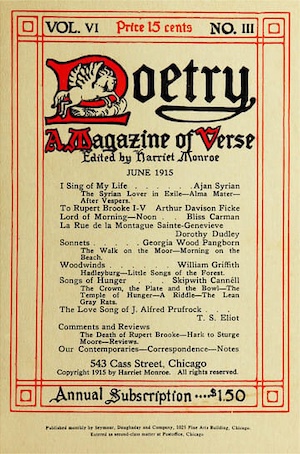
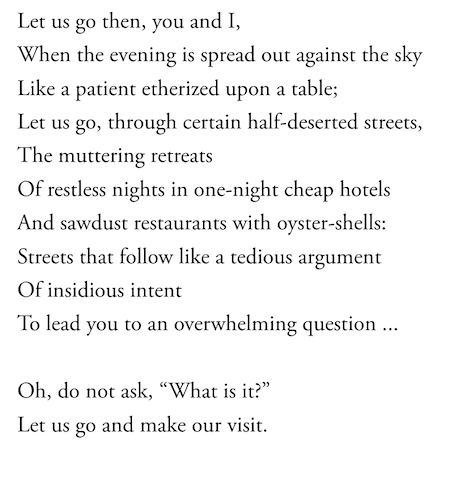
Emblazoned in the mind of every poetry lover is T. S. Eliot’s opening line to “The Love Song of J. Alfred Prufrock” where the poet’s use of the imperative mood (“Let us go then, you and I”) is a construct repeated three lines later, temptingly and with a certain doomed lassitude that erupts only to allow Prufrock to implore with irritation, “Oh, do not ask . . . Let us go . . .,” imperatives that lead up to nothing momentous and everything dissolute and impotent.
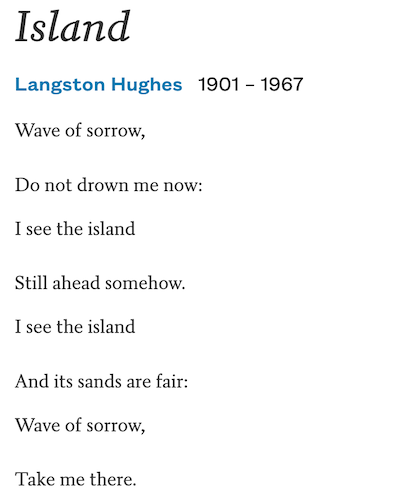
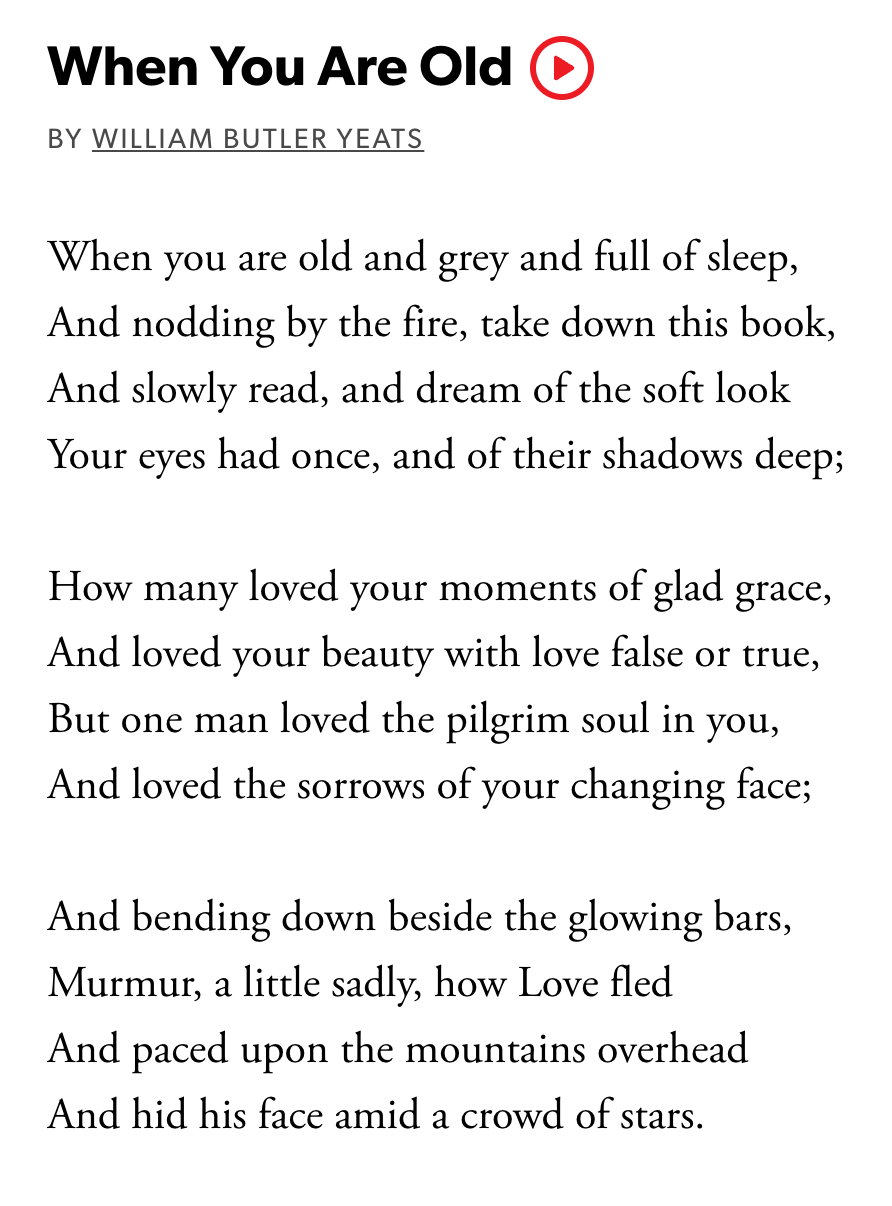
As grief washes over him, Langston Hughes addresses it in “Island” using the imperative voice, again in a negative construct, “Do not drown me now.” In “When You Are Old” Yeats offers his poetry as consolation to a lover growing old, directs her, “When you are old and grey and full of sleep,/And nodding by the fire, take down this book,/And slowly read . . . .”
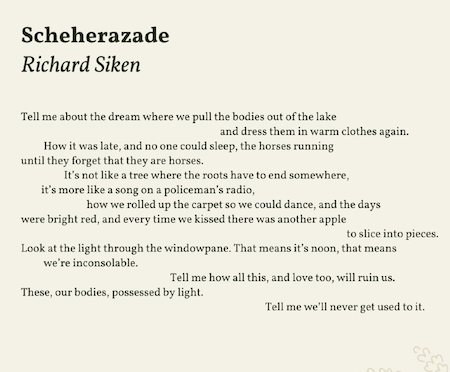
Richard Siken in “Scheherazade” (2005) opens his love poem in the imperative mood (“Tell me”) striking a note of ardent yet fearful intimacy.
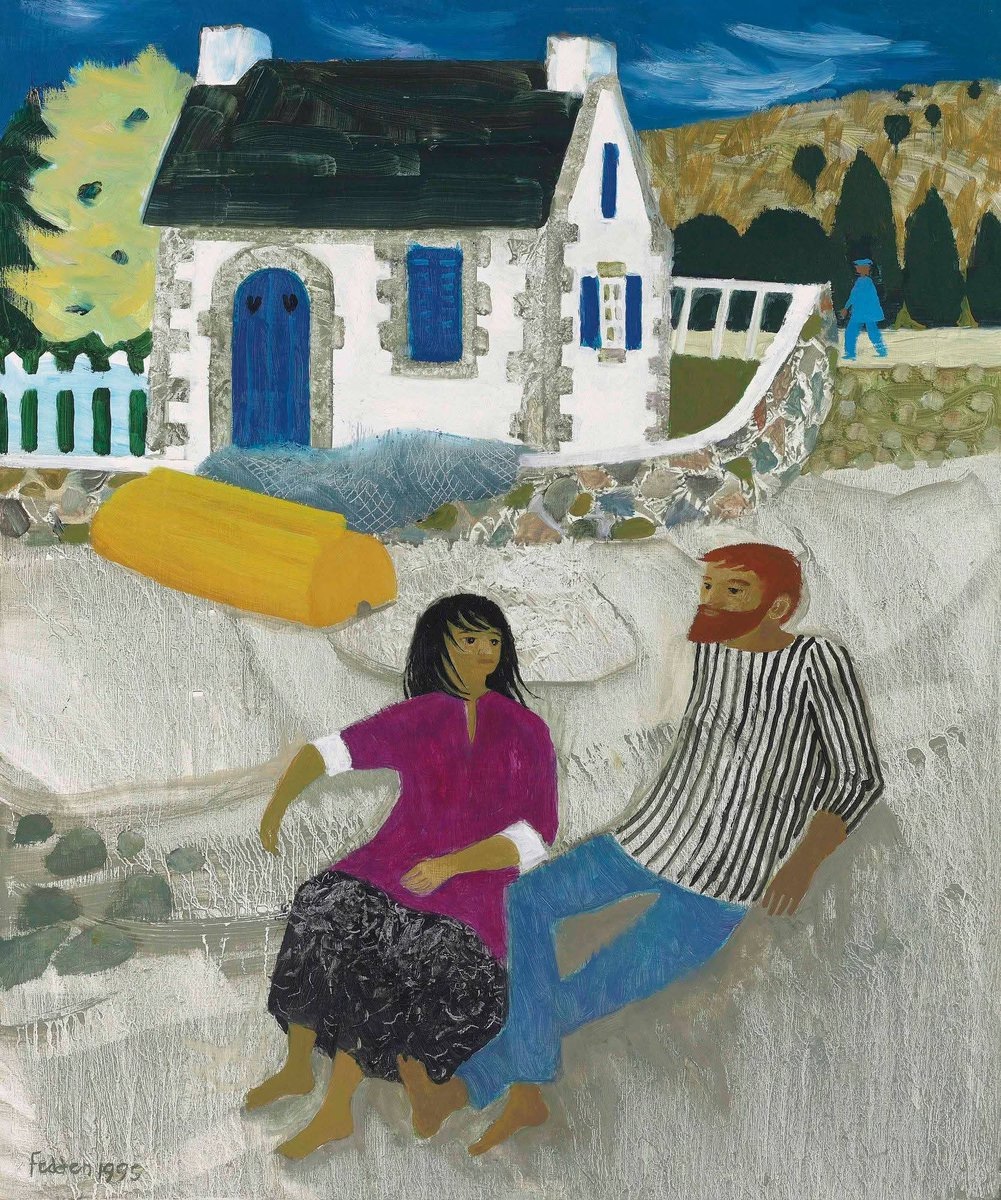
Mary Fedden, Brittany (1995), oil on board 61 x 51 cm
Begin at once to live, and count each day as a separate life.”
Seneca the Younger, Moral Letters to Lucilius (c. 65 AD)
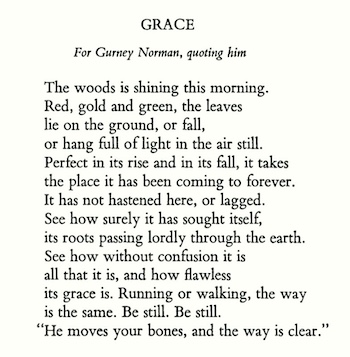
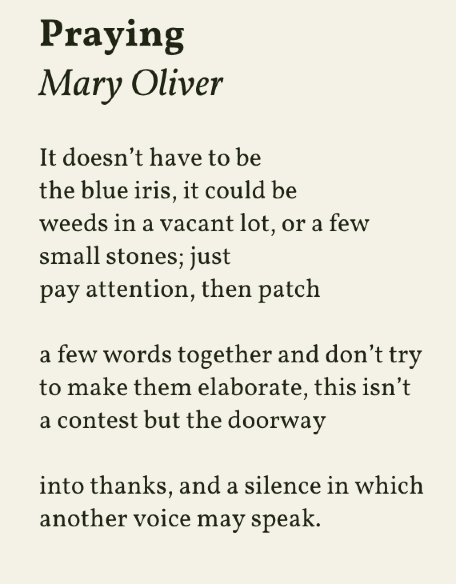
Wendell Berry’s “Grace” (1967) uses the imperative mood to create a space for wonder towards the end of his poem, saying, “Be still. Be still” — as does Mary Oliver’s “Praying” (2007) after encouraging us to “pay attention.“
Don’t talk unless you can improve the silence.”
Jorge Luis Borges
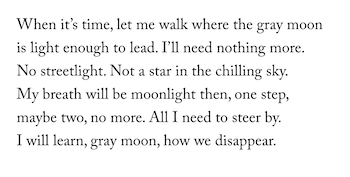
William Carlos Williams in “This is Just to Say” (1938) employs the imperative voice to sweetly confess and implore, “Forgive me.” And David Baker uses the imperative mood in the first line – “let me walk” – of his poem, “Breath.”
David Baker, “Breath” (New Yorker, March 9, 2026)
Believe nothing you hear, and only one half that you see.”
Edgar Allen Poe, The System of Doctor Tarr and Professor Fether, 1845
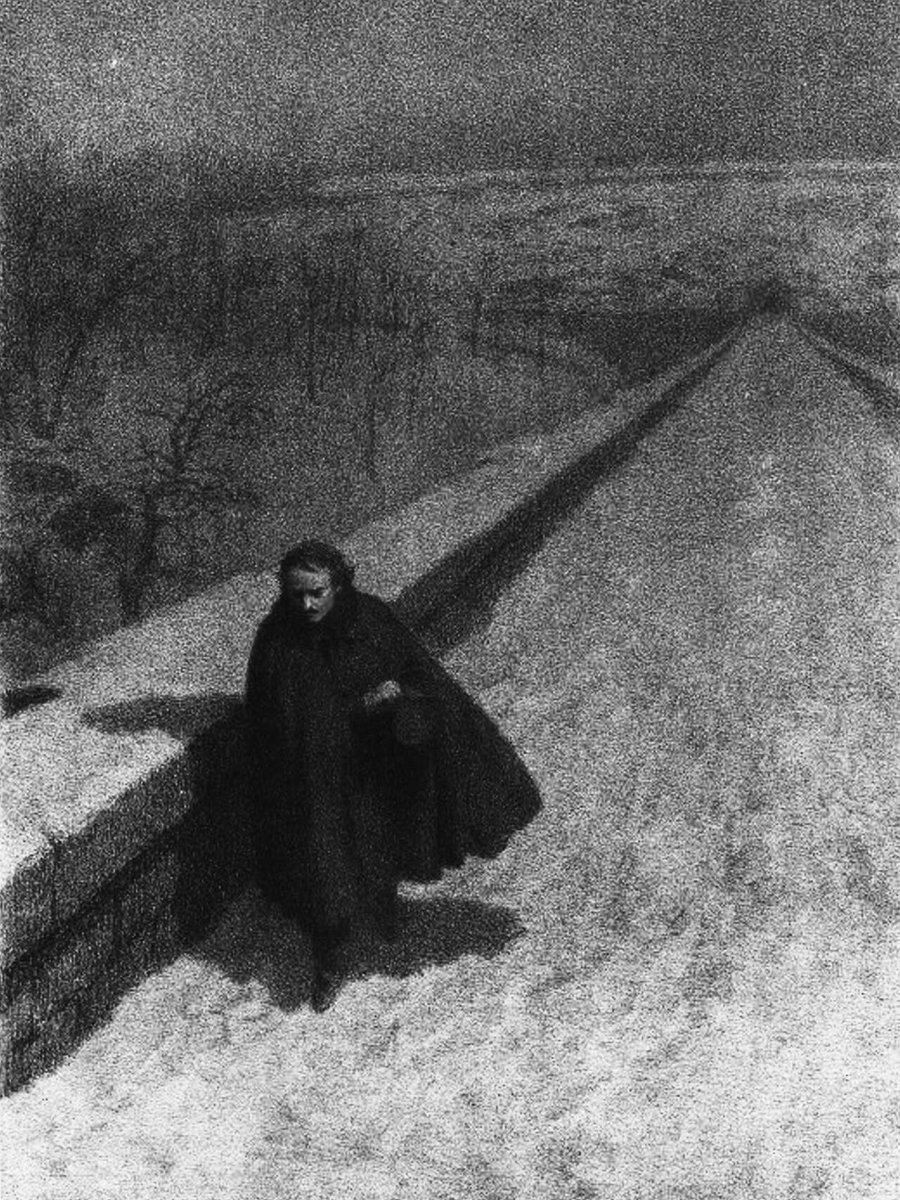
‘Poe Walking on the High Bridge’ by Bernard Jacob Rosenmeyer, 1930
Your Poetics prompt? Use at least one line in the imperative mood in your poem. Dear Poets, Go for it!
New to dVerse? Here’s how to join in: * Write a poem in response to the challenge. * Post your poem on your blog and link back to this post. * Enter your name and the link to your post by clicking Mr. Linky below (remember to check the little box to accept the use/privacy policy). * Read and comment on your fellow poets’ work –- there’s so much to derive from reading each other’s writing: new inspiration, new ideas, new friends.
Mr. Linky will remain open until 3pm EST on Thursday, April 9th. If you miss the closing time, do link your poem up to the next dVerse OLN so we can all still enjoy it.
Welcome, Poets! Pub doors are open on this chilly but delightful spring day here in DC. Refreshments are not wanting — Let me know what you need to bolster your muses on the poetry trail.
Hi Dora! It’s raining here (quite unseasonal) and I would have loved something hot but it is late now. Maybe I will have a cup of tea in the morning.
Love all the poems selected by you. I enjoyed writing to the prompt. Will catch up during the day.

 dVerse
Welcome, Poets! Pub doors are open on this chilly but delightful spring day here in DC. Refreshments are not wanting — Let me know what you need to bolster your muses on the poetry trail.
Hi Dora! It’s raining here (quite unseasonal) and I would have loved something hot but it is late now. Maybe I will have a cup of tea in the morning.
Love all the poems selected by you. I enjoyed writing to the prompt. Will catch up during the day.
Punam, thanks for stopping by! Loved your poem — an absolute delight and it showed off your poetic prowess to a tee, my friend.
I love this ❤️
I’m so glad! Thank you! 🙏🏽🙂
Absolutely!
i luv the message from the snowdrops and crocuses
much love
Isn’t that just apropos?! Can’t wait to see you what you come up with, something blooming lovely, I know. 😉🥰