
Tags
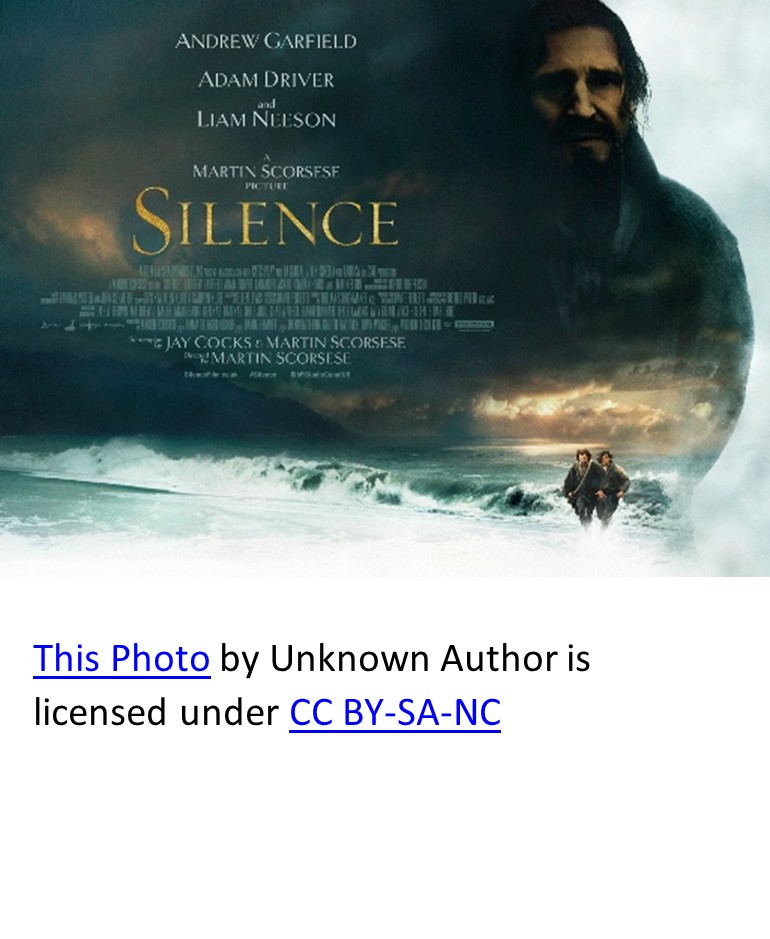
Listen, for the sound you cannot hear. Listen, for the unspoken word that says everything. Listen, to the first language of God, as St. John of the Cross might say. Frank Tassone, here, your host for today’s Haibun Monday, where we sculpt silence with poetic prose and haiku to fashion that hybrid form Basho pioneered. Today, let’s get paradoxical: Let’s talk silence!
The absence of noise? Or the muting of our voice? A liberation from the endless chatter of our restless minds? Or the suppression of our revolutionary impulses? A rest in the orchestral score? Or its dissolution?
So many connotations to silence. I have my own ambivalence on the subject. As an adult survivor of family alcoholism, I understand all to well the perils of that unspoken rule, “Don’t talk.” Silence like that allows a sickness to fester. On the other hand, as a nearly-lifelong meditator, I value that silence in which I can let my own existential chatter fall away.
& where would the musicality of our poetry be without a healthy use of silence in our own meter, even—especially—in our freeverse?
The irony of my own situation this April is how silent I have been during National Poetry Month. As I may have said before, I will retire from teaching this July. I’ve encountered a tsunamic ambivalence about the prospect. Processing this coming reality has prompted in me a curious silence—provoking yet more ambivalence!
Whatever our perspective on it, silence is a reality we dare not ignore. Certain poets have found their own inspiration in it:
閑かさや 岩にしみ入る 蝉の声
Shizukasa ya iwa ni shimiiru semi no koedeep silence
the shrill of cicadas
seeps into rocks—Matsuo Bashō
(1644–94)[Haiku composed at Yama-dera, “Mountain Temple”, Japan, 1689.]
(courtesy of Paula Marvelly and The Culturium)
stillness
sand sifts through the roots
of a fallen tree
—Con Van Dan Heuvel, The Haiku Anthology
once
everyone is gone . . .
the clock
—Tom Clausen, Albatross, Vol. V, No. 1, 1996
(courtesy of “Haiku Silence”, by Angelee Deodhar, presented by the Haiku Foundation)
Let’s ponder silence as we understand it. Then bear witness to it in haibun! This week, write a haibun that alludes to haibun in any way that works for you.
New to haibun? The form consists of one to a few paragraphs of prose—usually written in the present tense—that evoke an experience and are often non-fictional/autobiographical. They may be preceded or followed by one or more haiku—nature-based, using a seasonal image—that complement without directly repeating what the prose stated.
New to dVerse? Here is what you do:
- Write a haibun that alludes to silence
- Post it on your personal site/blog.
- Include a link back to dVerse in your post.
- Copy your link onto the Mr. Linky.
- Remember to click the small checkbox about data protection.
- Read and comment on some of your fellow poets’ work.
- Like and leave a comment below if you choose to do so.
- Have fun!


Good evening… Monday is here and we have now been back from our journey for one week…. it still feels strange, and looking back on what we have done for the last couple of months is starting to sink in.
Good Afternoon, Poets! Sorry I’m late. The pub is open!
Thank you for the prompt Frank, silence – sigh.