
Tags
#ChristinaRossetti, #EmilyDickinson, #GillianClarke, #GreenMountains, #LindaGregerson, #PatriciaLockwood, #PoetryPrompt, #RSMerwin, #SaraTeasdale, poetry, Poets, rocks
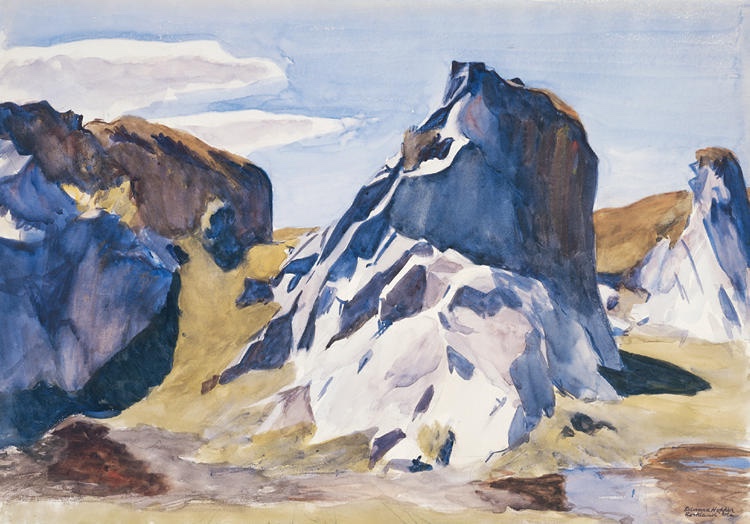
The more we know the
from Linda Gregerson’s “On Form,” TNY 2026
more we know the world’s a wonder. We’re
apprenticed, every one of us, to stone.
Welcome, everyone. Dora here (Dreams from a Pilgrimage) hoping to tempt your poetic muses to sing songs of stone, be the stone as small as a pebble in a macadam pavement and a gem set in jewelry, or as towering as a mountain and cavernous as a canyon.
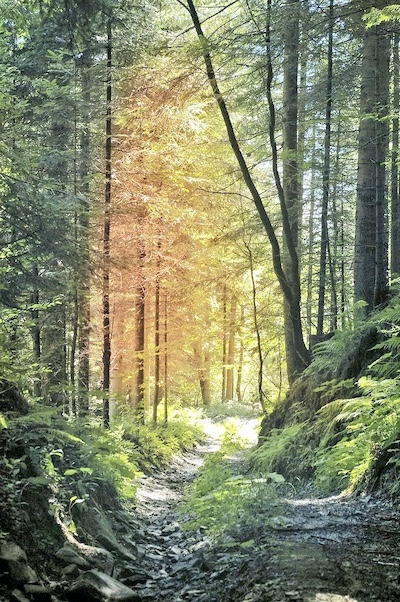
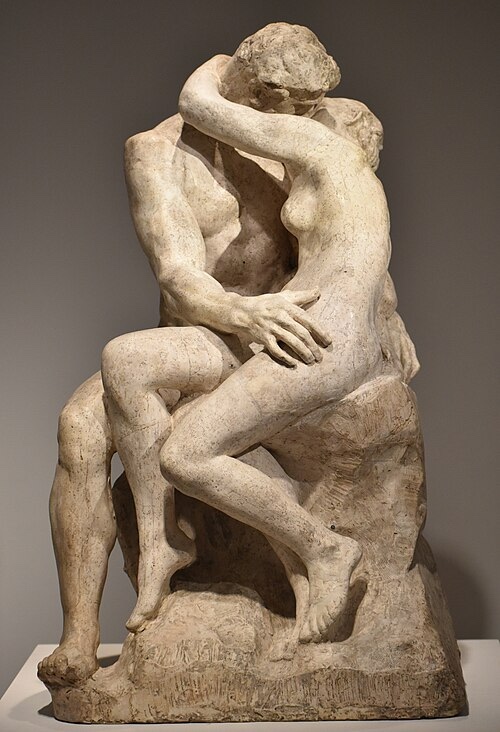
Petrology (from Ancient Greek πέτρος (pétros) ‘rock’ and -λογία (-logía) ‘study of’) is the branch of geology that studies rocks, their mineralogy, composition, texture, structure and the conditions under which they form.
Lyric petrology is a study of rocks that revolves around our relationship to them. Actually, I have no idea if such a term exists but it’s within the purview of my poetic license.
I tell you, He answered, if they remain silent, the very stones will cry out.”
Luke 19:40
Here’s a list of examples of lyric petrology to get you started:
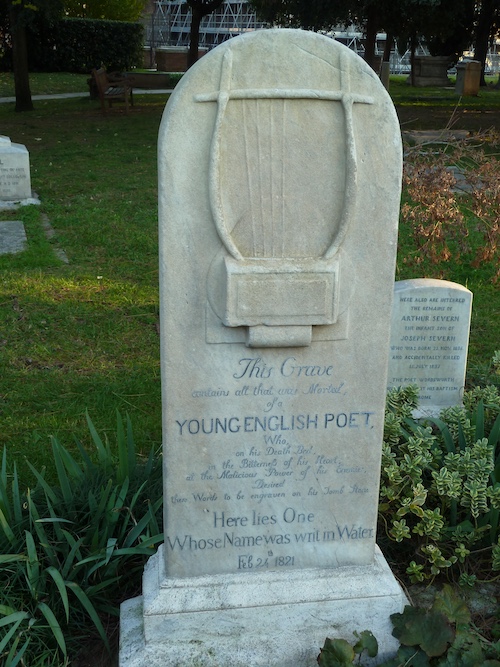
William Blake’s “The Clod and the Pebble” (Songs of Experience, 1794) is a dialogue of selfless love and cruel pride.
Christina Rossetti, “Good Friday” (1862), compares the hardness of her heart to a rock.
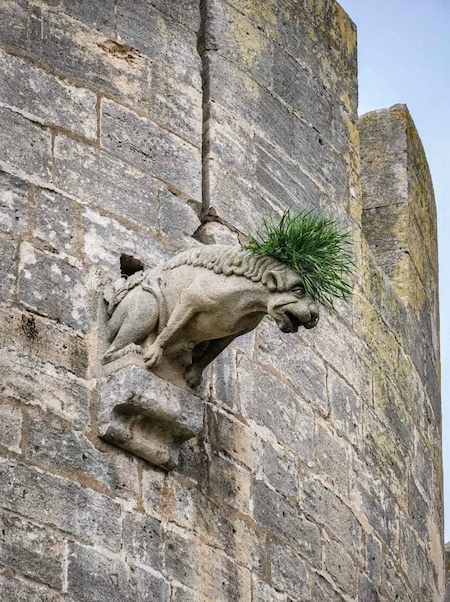
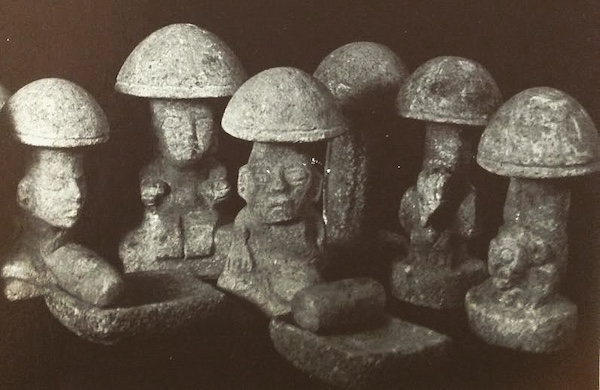
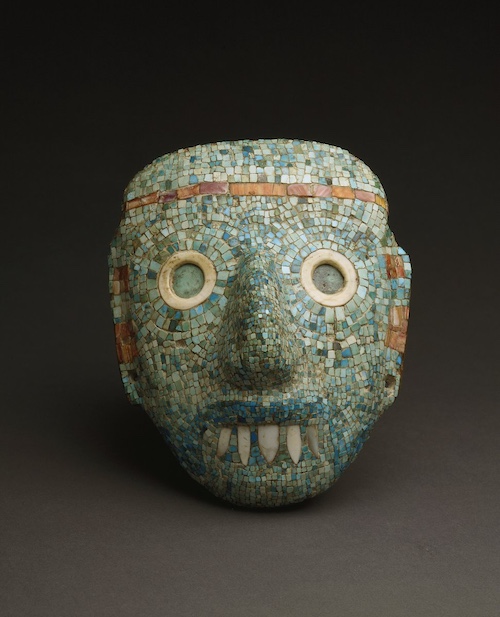
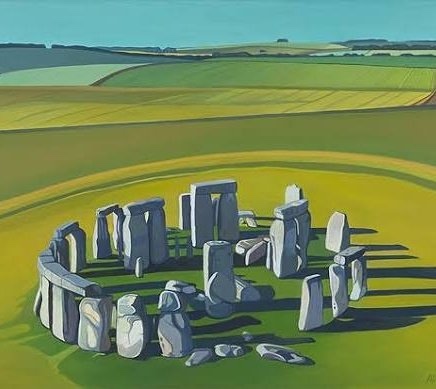
James Russell Lowell, “The Green Mountains” (1841-1844), writes of the mighty force of nature that is the mountain.
Emily Dickinson, “The Mountain Sat Upon the Plain” (1890), transforms an imposing geological creation into a homespun figure.
The Romans, whatever you think
of them, did this better. Ditched
and cambered, layered roadbed fivefeet deep. Lime from the likewise
layered rock that once was coral and algaeand shell, ash that was once a volcano.
from Linda Gregerson’s “On Form,” TNY 2026
Sara Teasdale, “Jewels” (1917), uses the metaphors of precious stones to reflect longingly on love’s idyllic days.
R.S. Merwin’s, “Tidal” (1993) reveals Merwin’s spiritual struggle using the metaphors of rock and sea.
But how
in the history of accident hadhumanity come upon quicklime?
Which, added to concrete, meansthat something not in nature can, like nature,
from Linda Gregorson’s “On Form,” TNY 2026
heal.
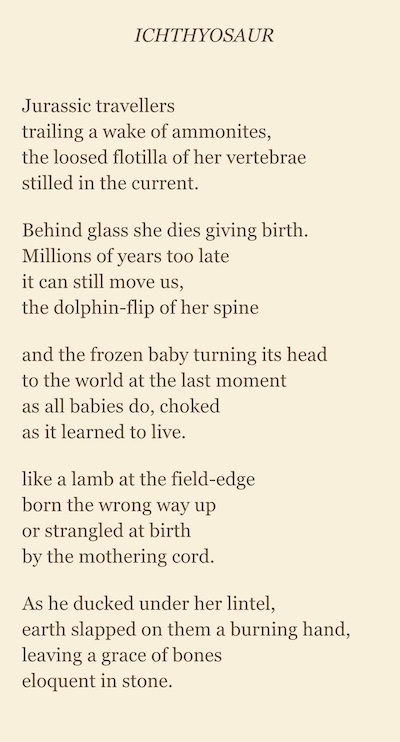
Gillian Clarke, “Ichthyosaur”(2017), meditates on a fossilized ichthyosaur skull and the death of a stillborn lamb.
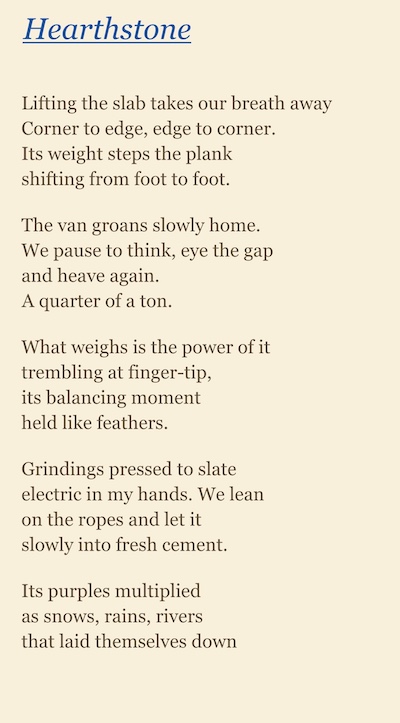
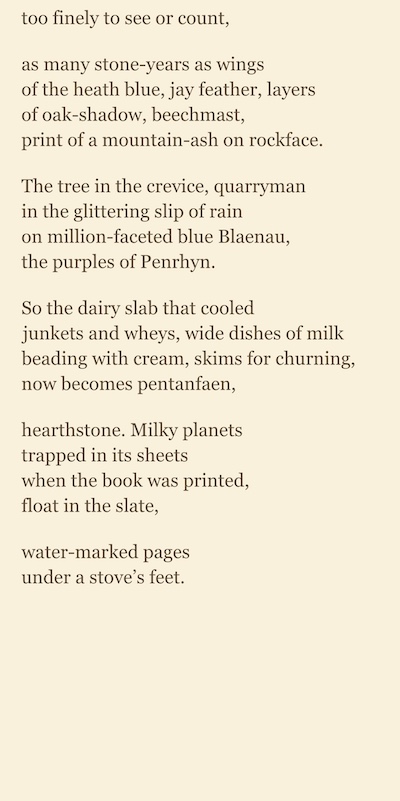
Gillian Clarke, “Hearthstone” (1997), ponders the literal and symbolic weight of a quarter-ton slab of slate transported from a quarry in Blaenau to serve as the foundation for a home fireplace. The imagery mingles local culture and human history as they overlap with geological time.
In Patricia Lockwood’s, “Rosarita” (LRB 2026), a glass slag created as a by-product of smelted gold, becomes the central symbol for an examination of love and artistry. Rosarita is a striking red, orange, and sometimes gold tones resulting from the high-temperature fusion of quartz sand (silica) and residual gold left in the material.
Last week our own Lillian the Home Poet, who at the moment is on the high seas, shared a poem literally “From the Land of Fire and Ice” where basaltic volcanic flow continues to change the landscape.
You’ve guessed it! Using the above poems as examples, I want you to write a poem featuring, if not centering, on rock or stone. The earth, so to speak, is your oyster.
For newcomers, here’s what to do:
Write your poem and link it up to Mr Linky below.
Please put a link back to this post in your post – it increases our traffic, and ultimately yours.
Mr. Linky will close on Saturday at 3 PM (EST)
Read and comment – there’s no better way to get to know your fellow poets. Enjoy!


Welcome, poets! Pub doors are open and refreshments are not wanting — Let me know what you need to light up your muse on the poetry trail.
I have a chocolate and vanilla swirled marble cake on hand to suit our theme and our sweet tooth. Come and get it!
When thinking about stones I thought it was appropriate to tell about the stones we have in our vicinity with runes on them.
Stones with stories. I like that.
Hello Dora and All. A pint of Magners please!
Hi Li! For your poetic treat, you deserve one! Cheers!
Thanks and Cheers!
Thank you for hosting, Dora! What a fabulous prompt 🙂
I’m delighted you enjoyed it, Freya. Thank you! 😊
Happy September – Dora and thanks for this sumptuous prompt 😊
Happy September, Ange, and I’m ready for it. Let the leaves fly! I am thrilled you enjoyed the prompt. 😊
❤️
Hello Dora and all,
We are transitioning into Autumn here! Hot chocolate for me please 😀
Sounds great, Sanaa! Hot chocolate coming up and I may join you, though it’s hotter than blue blazes here in DC. Thanks for dropping by! (LOVED your poem!)
Thank you! 🥰🥰
Great prompt, Dora. I love geology and the stories rocks tell.
In your final instructions did you mean to say write your prose instead of write your poem?
Hi Dwight,
You could write a prose poem, of course, but, yeah, poetics is all about poems. “Stories rocks tell” — Can’t wait to hear! 🙂
:>) You are right!!
Hey lady! As Paul Roger instructs, rock steady! I will see what I can do!
Music to my ears, Shay! 🙂
Thanks for hosting and stones are a great theme for writing.
Thank you for dropping by, True! I’m happy you like the theme. Can’t wait to read what you’ve got for us. 🙂
Hello, Dora, great prompt!
Thank you, Jay! Thanks for dropping by. 🙌
Have myself surrounded by rocks so should have a go at this one. These summer days here in southern Spain I usually have their black coffee ‘con hielo’, with ice, perhaps should be called coffee on rocks. Thanks for all the inspiring poems and prompts.
Coffee on the rocks, huh? Here we call it iced coffee and it is a treat! I’m ready to hear about those Spanish rocks though. 🙂
I may run out of time! Just leaving the rocks for the UK but will have a look at Mr Linky.
👍 Have a good trip!
Many thanks Dora, rocks are especially significant here, so grateful for the chance to write about the.
I’m blown away by the poems so far, Paul, learning so much about folks’ connections to the most common of nature’s gifts, the humble rock. I’m looking forward as always to yours.
Hi Dora, this is a lovely prompt. I will try to write for it. It’s been crazy busy with the new job, trying to finalize my new short story collection and the Sunflower tanka anthology.
How you keep all those balls in the air, I don’t know, but more power to ya! Good luck with the collection and anthology. I can’t wait to read them both. 🤗 (P.S. I’m following Kim’s lead and keeping Mr. Linky open till Saturday at 3 EST so you don’t have to rush.)
Great, I will be able to write before then. I have an idea.
Sorry, Dora, I only managed to post today. https://robbiesinspiration.wordpress.com/2026/09/06/robbies-inspiration-dverse-petrologies-and-birds-of-the-week/ I’m pleased with my poem. Thanks for the inspiration.
I’m headed over to read — 🙌🙌❤️🥰
P.S. Asha Greyling has her mystery sequel out now.
https://a.co/d/0iQU49Eq
That is lovely. I’ll go and have a look.
great prompt! nature is always a. inspiration of course. i wrote about my goddaughter. i’m off to the pacific northwest in sept for work
thank you, Eric, glad you enjoyed. Loved your poem, my friend. Have a good trip and keep collecting rocks.
I got it 🧛♀️
😀 Awesome! ♥️ Hope you enjoy it…🍷
I’m sure I will