It’s Tuesday and the dVerse Poets Pub is open with a selection of hot and cold drinks, spicy sweet potato soup, and crusty rustic bread, as well as a selection of delicious poetry. I’m Kim from writinginnorthnorfolk.com, your host for this week’s Poetics.
When I was twelve or thirteen, I dreamed of being a classical musician, but my love of literature took over, and I only managed a couple of years of classical guitar before I fell in love with rock music. However, I never lost my love of classical music.
One of the pieces that always moves me is ‘Adagio for Strings’ by Samuel Barber, a piece that is recognisable to many.
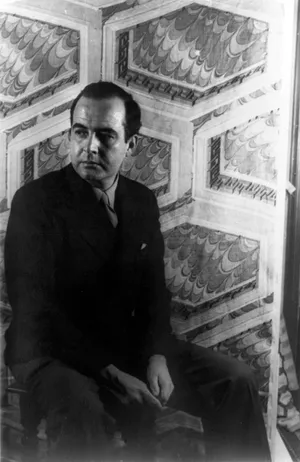
Samuel Osmond Barber II (March 9, 1910 – January 23, 1981) was an American composer, pianist, conductor, baritone, and music educator. A child prodigy, he began studying the piano at the age of six and at age seven composed his first work, ‘Sadness’. When he was ten years old, Barber wrote his first operetta, ‘The Rose Tree’ and, at twelve years old, he became an organist at a local church. At the age of fourteen, Barber entered the youth artist program at the Curtis Institute of Music in Philadelphia, where he ultimately spent ten years developing his talents as a triple prodigy in composition, voice, and piano. Following his graduation from high school in 1928, he entered the adult professional program at Curtis, from which he graduated in 1934.
Barber was adept at both instrumental and vocal music. His works were successful on the international stage and many of his compositions enjoyed rapid adoption into the classical performance canon. His ‘Adagio for Strings’ (1936) has earned a permanent place in the orchestral concert repertory, as has its adaptation for chorus, ‘Agnus Dei’ (1967). Barber received the Pulitzer Prize for Music twice: for his opera ‘Vanessa’ (1956–1957), and for the ‘Concerto for Piano and Orchestra’ (1962).
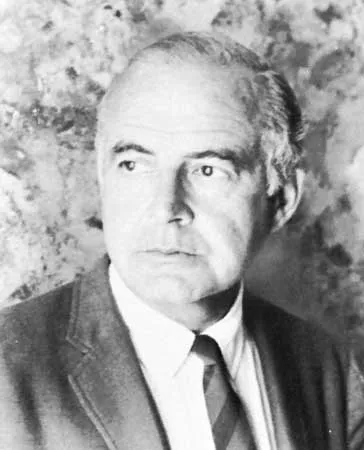
‘Adagio for Strings’ was originally the second movement of Barber’s String Quartet, Op. 11, composed in 1936 while he was spending a summer in Europe with Gian Carlo Menotti, an Italian composer and Barber’s partner since their student years at the Curtis Institute of Music. Barber was inspired by Virgil’s didactic poem ‘Georgics’. In the quartet, the Adagio follows a violently contrasting first movement (Molto allegro e appassionato) and is succeeded by a third movement that opens with a brief reprise of the music from the first movement (marked Molto allegro (come prima) – Presto).
In 1938, when Barber was 28, ‘Adagio for Strings’ was performed by the NBC Symphony Orchestra under the direction of Arturo Toscanini, along with his first ‘Essay for Orchestra’. Toscanini had rarely performed music by American composers before. At the end of the first rehearsal of the piece, Toscanini remarked, “Semplice e bella” (simple and beautiful).
In 2004, listeners to the BBC Radio’s Today program voted ‘Adagio for Strings’ the “saddest classical” work ever. Among other occasions, it was broadcast over radio at the announcement of Franklin D. Roosevelt’s death in 1945 and played at the funeral of Albert Einstein in 1955, as well as being performed by the National Symphony Orchestra in a national radio broadcast following the funeral of assassinated President John F. Kennedy in 1963 – it was one of Kennedy’s favourite pieces of music – and the funeral of Princess Grace of Monaco in 1982.
Adagio for Strings can also be heard on many film and television soundtracks, including ‘The Elephant Man’ (1980), ‘Platoon’ (1986), ‘Lorenzo’s Oil’ (1992), and ‘Outlander’ (2019). More comedic or light-hearted uses of it have appeared in the film ‘Amélie’ (2001) and on episodes of the sitcoms ‘Seinfeld’, ‘The Simpsons’, ‘American Dad!’, and ‘South Park’.
Source Wikipedia
Now listen to ‘Adagio for Strings’ conducted by Gustavo Dudamel and played by the Wiener Philharmoniker.
Your challenge:
Write a poem that does one of the following:
- Expresses your thoughts and feelings on listening to this piece of music.
- Describes the music in words.
- Explores the music through imaginative imagery or storytelling.
To help you, I have included some comments made by people about Adagio for Strings:
“This piece perfectly represents the pain of being a living person.”
“This is what it sounds like when angels sing in heaven.”
“In a perfect world, this is the song we should all hear when we depart this earth.”
“Music is mankind’s greatest contribution.”
“The duality of man, sir.” – Full Metal Jacket
“Barber’s Adagio for Strings makes the world stop when I hear it.”
“It doesn’t play. It bleeds. It rises like grief in the throat. It breaks like prayer in a hollowed cathedral.”
Leave yourself time to refine your draft and then follow the usual instructions:
- Write a poem in response to the challenge.
- Enter a link directly to your poem and your name by clicking Mr Linky below.
- There you will find links to other poets, and more will join, so check back for their poems.
- Read and comment on other poets’ work – we all come here to have our poems appreciated.
- Please link back to dVerse from your site/blog.
- Mister Linky will close on Saturday at 3 p.m. EST.
- Comment and participate in our discussion below, if you like. We are a friendly bunch of poets.
- Have fun.


Good evening esteemed poets and welcome to the bar. I hope you enjoy the prompt and look forward to reading excellent poems today and tomorrow, before I go off for a week to visit my daughter and grandsons.
Hi Kim and All, I found this prompt immensely challenging but also entertaining for that very reason. Barber’s Adagio can break your heart, though. 💔
Have a great time with your family next week, Kim.
I agree, Dora, it does break your heart. Thank you. I’ll miss the Poets Pub while I’m away, but I will be busy helping my daughter while her husband is away and she has no kitchen while building work is being done. I’ll be sleeping in an airbnb round the corner and spending the days with her, collecting the boys from school and keeping them occupied.,
Sounds like a labor of love! Hope the remodeling work goes well. 🙂
Thank you so much!
Pingback: Breathe Deep – Tao-Talk
I would have love to participate in this prompt, but alas tonight and tomorrow night I will be busy… I will see if I can weave the challenge into a later prompt.
That’s a shame, Björn. Maybe write a poem for a future OLN.
Hello Kim and All. I was going into this song “cold,” not knowing anything about it, as well as it not sounding familiar during the listen. It was difficult watching the YouTube first time through. Listening to it again without the video and it worked much better in pulling me into the music. Thank you for the listening prompt, as it is always a favorite to glean impressions from music.
Kim, I know you’ll have a good time with your family on vacay and like the idea of you getting pampered at the Bed & Breakfast. ❤
Thank you so much, Lisa. I look forward to reading your poem.
You’re very welcome.
Pingback: Song – Dreams from a Pilgrimage
Pingback: Loss | rivrvlogr
Pingback: Loss | rivrvlogr
Pingback: The Sparrow – The Tigress Awakens
Hello Kim and all,
Loved the prompt, about to post to it shortly, my laptop mouse died.. so I am using keypad.. be right there 🙂
Happy Tuesday everyone! ❤
This is a great prompt Kim – ‘Adagio for Strings’ is one of my favourite pieces it’s so beautifully sad – it will be lovely to immerse myself in it again ❤️
Thank you, Ange, I’m delighted you like the prompt and look forward to reading your poem.
🩷
Pingback: A prelude – Mom With a Blog
Pingback: Adagio for Strings | Poetry, Satire & Art by Ociola | Planet PU
polly-o said no
to asiago for string
cheese
😭😂
Truly one of my favourites!
Pingback: Heartfelt – a poem by Paul Vincent Cannon | parallax
Ah, sublime, one of my fave pieces of music Kim, moves me to tears of joy and melancholy in one.
I’m so pleased about that, Paul. I was worried it wasn’t everyone’s cup of tea.
I read somewhere it is one of the most appreciated pieces by non-classical lovers, and maybe you’ve hooked a few more too 😀
Sorry I can’t post the video. It’s blocked.
I’ve never listened to classical music voluntarily, I’ve heard it played in movies but that’s just about it. THIS piece moved me, thanks for sharing, Kim. I’ll listen to this one many times in my life, I’m sure about it.
I’m delighted it had that effect on you, Jay.
Pingback: Sound-Evoked Imagery – Experience Writing
What a very interesting and challenging prompt. Thank you for the prompt and the music. 🙂
Thank you for joining us, Imelda. 😊
I have always loved this piece of music Kim, such a lovely prompt, I am a little late to post, I hope you enjoy your week with your daughter and grandsons 💞Suzanne
Thank you, Suzanne! 💕
https://brazannemuse.com/2026/09/17/chordae-tendineae-heart-strings-and-acoustic-chambers/
wish i saw this earlier. I play cello and i am working on barber’s adagio. it is gorgeous music.also i just started playing spiegel im spiegel (part composure) and am noodling around with benedictus for cello. i used to be a writer and used to post on dversepoets.combat covid took my writing away and cello brought my brain back in my head. lol
Hi Jane! I’m pleased you dropped by the pub! I’m so sorry Covid took your writing away, but the cello is a great way to get your brain back. I would have loved to play the cello. xxx
hi kim, i’m not totally out of the writing yet, am doing a funny book with two ai characters from claude and meta about a cello duel with two weird cellos, and a 12 foot crock that spashes the cardinals red robes in st marks square with brown lagoon water. lol.
That sounds intriguing and crazy at the same time!
it is but ai or these two have unhinged comic attitudes. lol. i just go with the flow. it is like having two unruly boys in the room but trying top each other with comic relief. but they are exhausting.
cello restored my peace and sanity….and my abilities for something creative. will return to dversepoets.com when i can. thanks, kim.
You’re most welcome, Jane.
i tried to leave a poem, winter trees but mr. lucky isn’t working for me. i am stumpted. lol.
Jane, the link expired for that Poetics, but you can link it up to open link night, which open.
thanks, kim! will do soon,