**Announcement** Please join us at 2024’s last dVerse LIVE, Saturday, December 14th from 10 to 11 AM New York time (Eastern Standard Time). The link to join will be embedded in Thursday’s OLN prompt.
“The artist must train not only his eye but also his soul.”
Wassily Wassilyevich Kandinsky (1866-1944), Russian painter and art theorist.
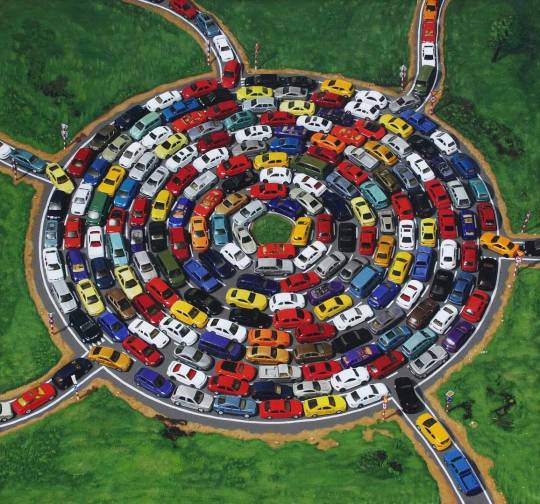
Anna Pugh, Party Time (2010), acrylic on board 24 x 29 ins.
Happy Holidays, friends and fellow poets! Thank you for joining us here at the dVerse Pub for the last Poetics of the year. I’m Dora from Dreams from a Pilgrimage, and as your pubtender, eager for you to drink in the title of this post despite its opacity and still in the spirit of curiosity.
Question: Do the holidays test you? For some of us, they can be filled with frantic activity: gifts to be bought, parties to attend, food to be cooked, hospitality extended, and in all the fast-paced, daily hurly-burly, the need to put on a holiday face of imperturbable cheer. For others of us, depression and loneliness, sometimes on top of chronic sickness, stalk the holidays, making them an excruciating test of endurance.
Yet despite the inevitable ruptures in social niceties, eruptions of bad temper, seething impatience, last-minute aggravations of crowded stores and holiday traffic, still there are those redeeming times of holiday memories created, the joy of seeing family and friends enjoying gifts, festive concerts, games, and religious observances.
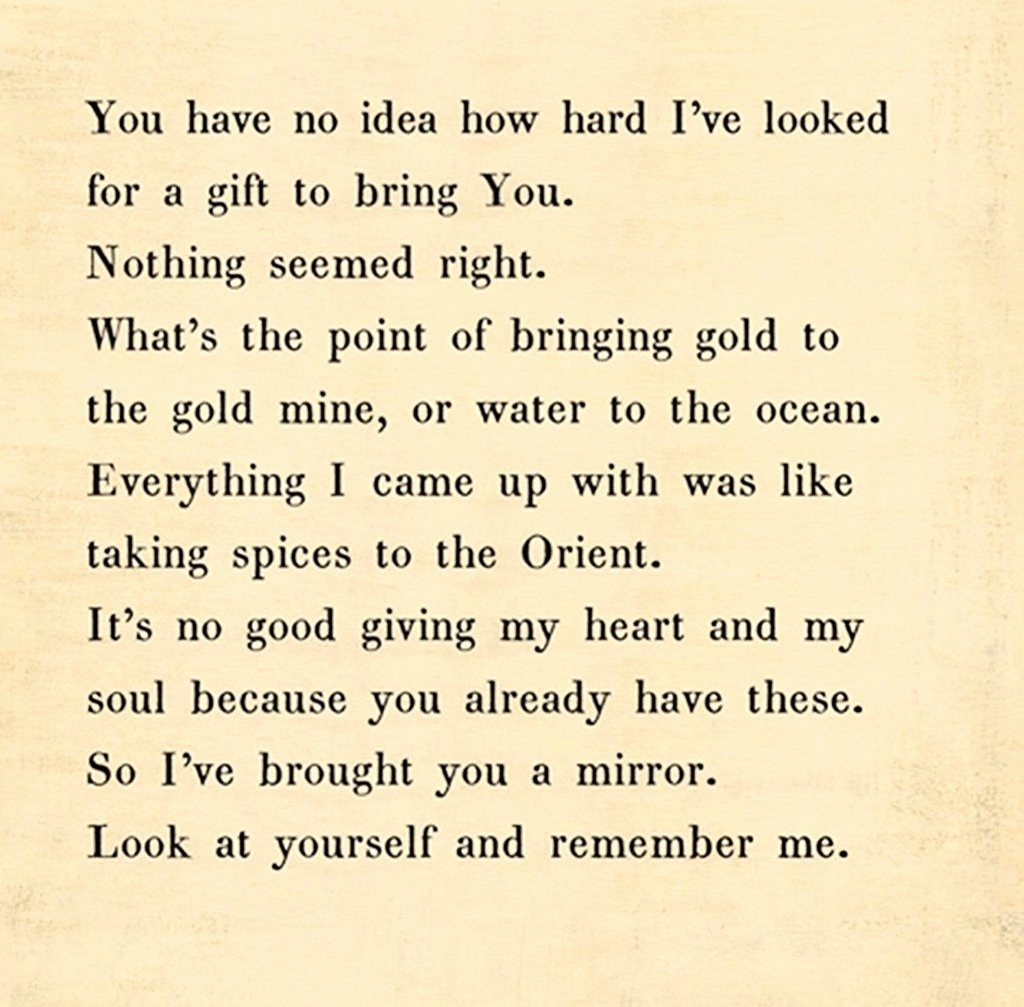
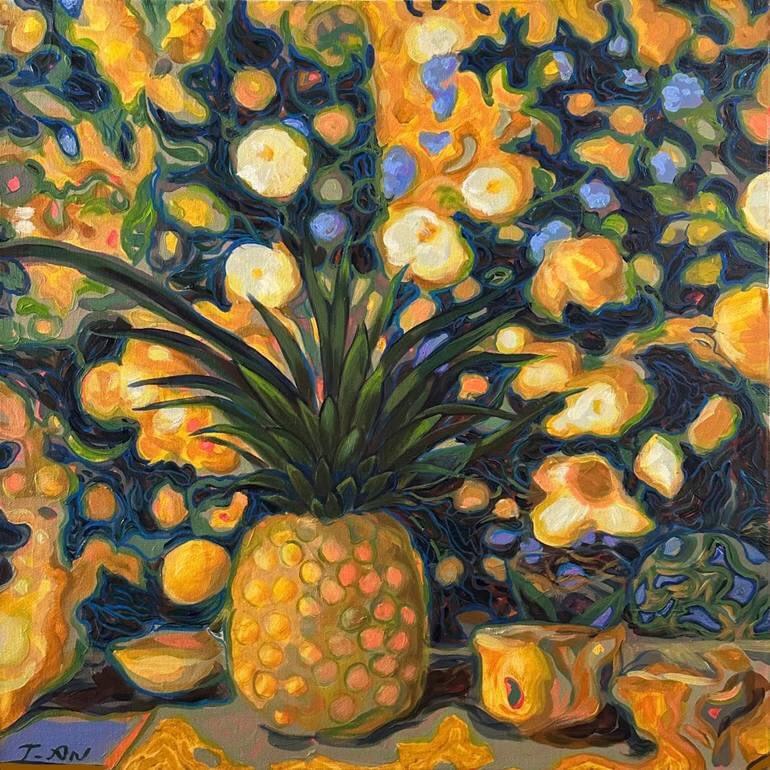
(Click on the images for a better look. (Left) The poem “A Gift For You” is by the 13th c. Persian poet, Rumi. (Right) In the American South a pineapple is a symbol of hospitality, which I think the Danish painter Tatiana Ans’ painting, “Sommer Dessert” captures marvelously.)
In the United States, the current climate of political hatred for the “other” side has brought into sharp focus how much we fear the Other, and in that fear we have turned our neighbors, even our family members, into our enemies. Despite it all, the holidays still offer the hope of mending fences torn down if we would only take advantage of the opportunity.
In the same way, despite the weight of the past and the anxiety for the future, still we discover peace, love, lasting joy, unshakable hope, sometimes unexpectedly, sometimes sought.
Those who are willing to be vulnerable move among mysteries.”
Theodore Roethke
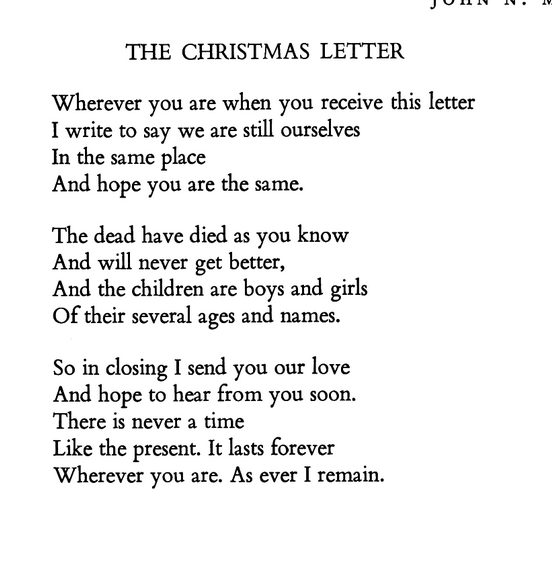
One of the things many of us do is send out holiday cards to those we have not had occasion to see, separated by time and distance. Poet John N. Morris finds that despite the passage of years, we write in the hope that we will still receive a response that renews old ties.
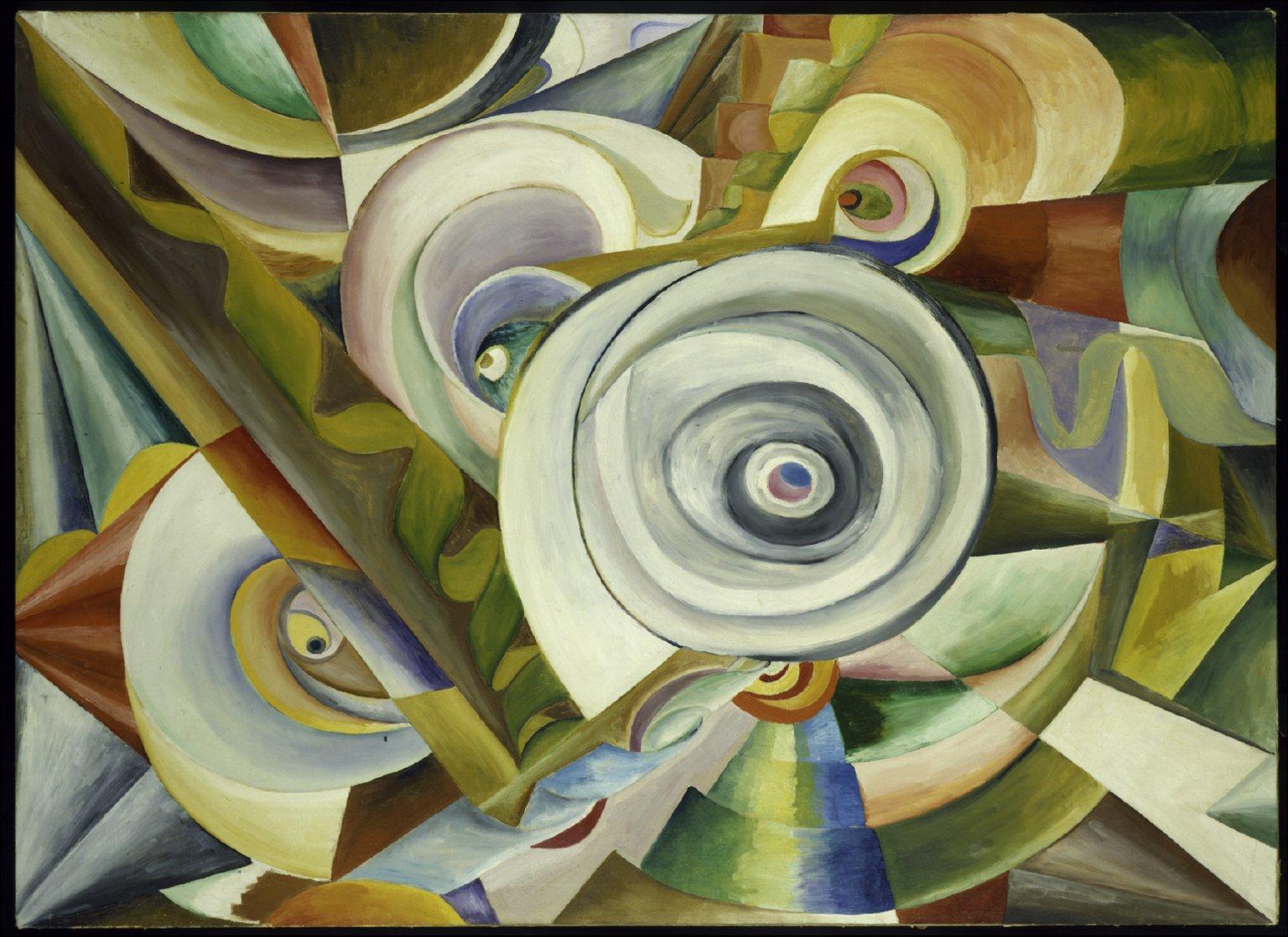
Wassily Kandinsky, Composition VII(1913), oil on canvas, 200 x 300 cm
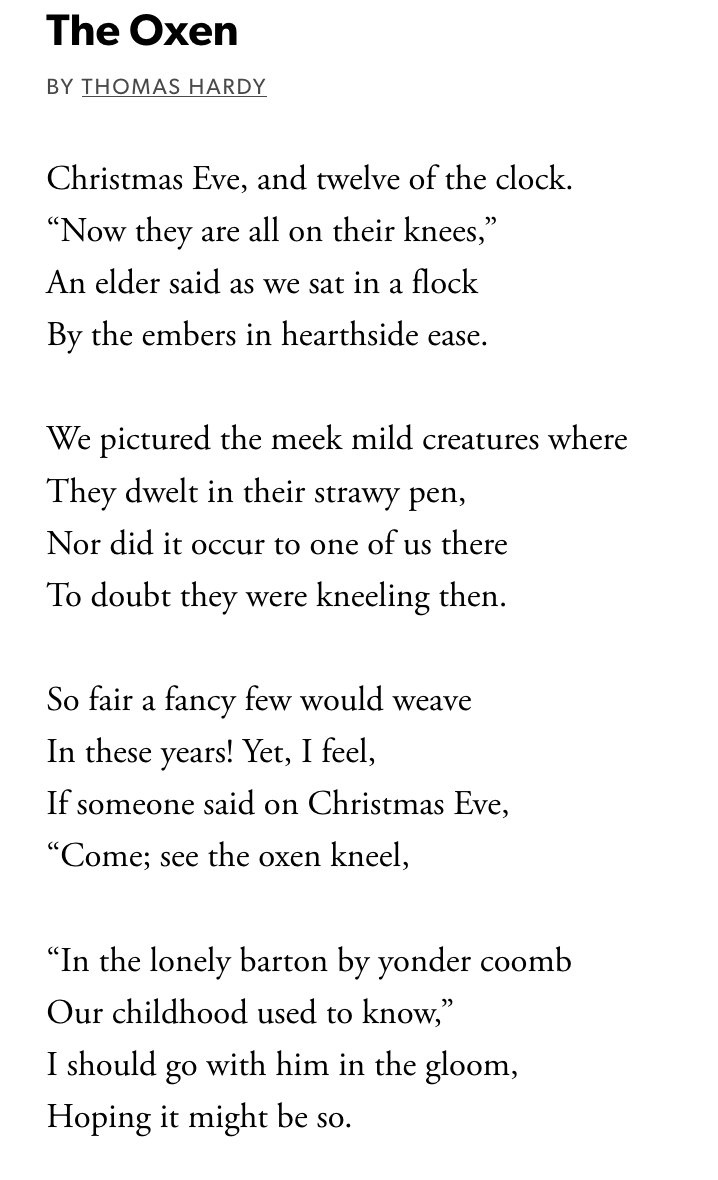
In Thomas Hardy’s “The Oxen” (1915) the yearning for a child-like faith outruns childish faith in the events of Christmas.
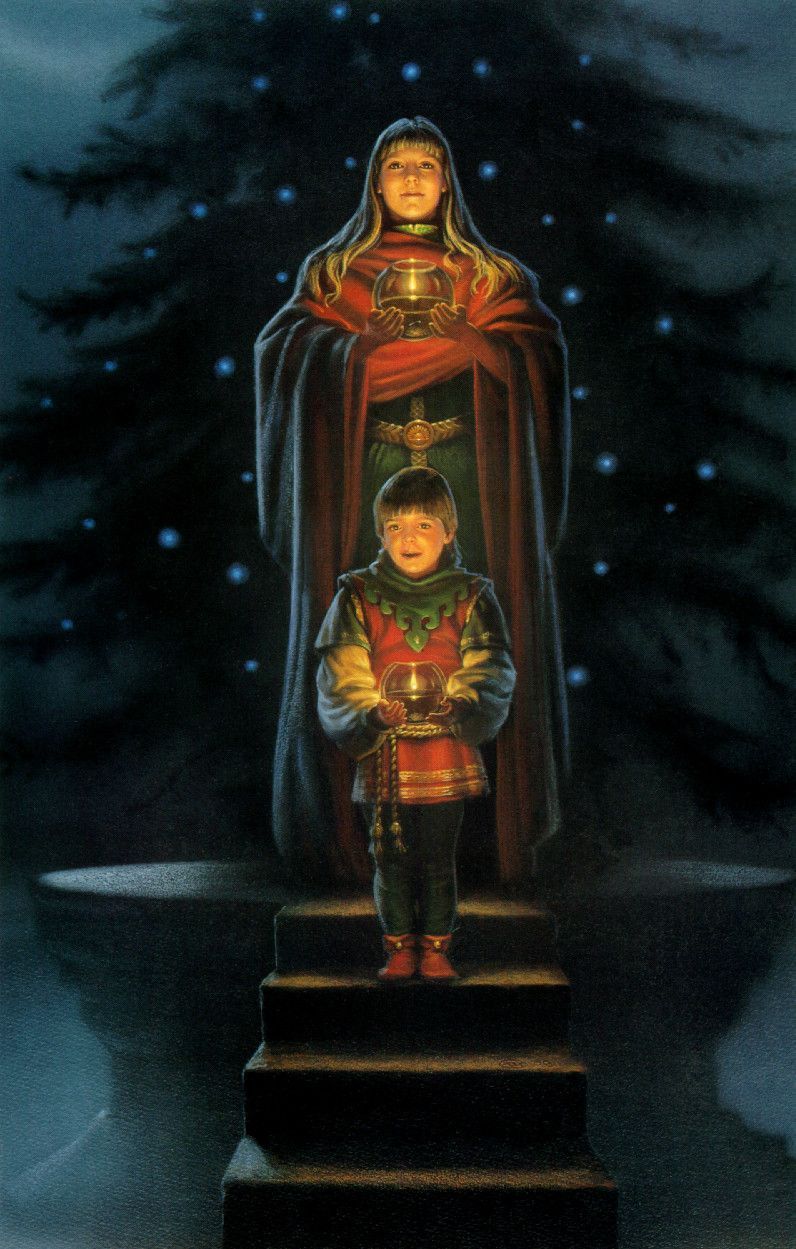
Michael Whelan, Lights (1991), acrylic on watercolor board – 30″ x 20″
Despite … Still.
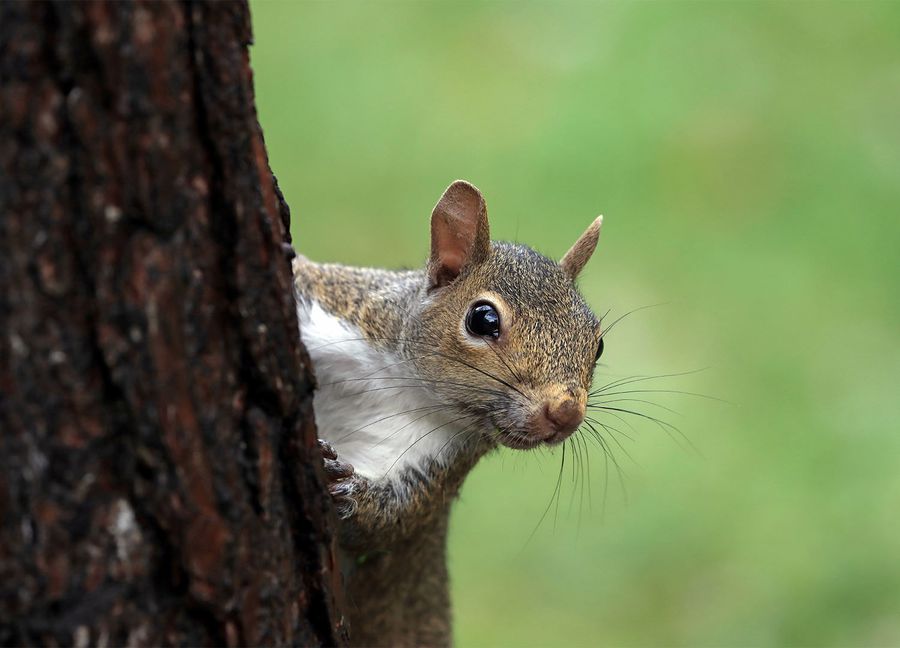
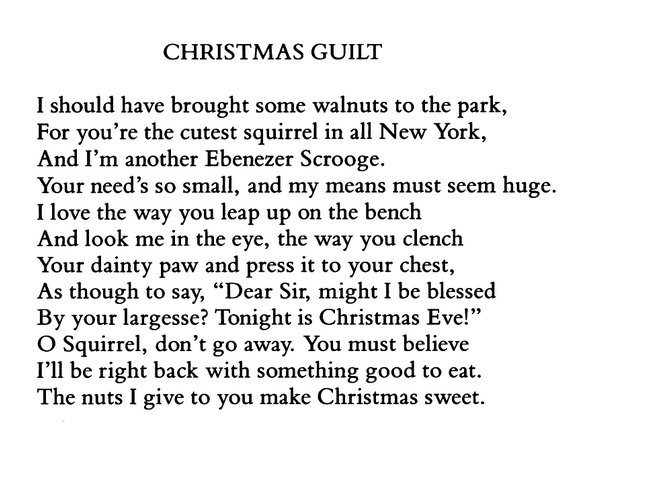
In “Christmas Guilt,” the speaker apologetically addresses a squirrel yet promises to make amends.
Tom Disch in Poetry (December 1991)
Despite … Still.
It’s actually the title of a poem by Robert Graves (a great admirer of Thomas Hardy) written in Graves’ favorite Skeltonic style, to wit:
Despite and Still
Have you not read The words in my head, And I made part Of your own heart? We have been such as draw The losing straw — You of your gentleness, I of my rashness, Both of despair — Yet still might share This happy will: To love despite and still. Never let us deny The thing’s necessity, But, O, refuse To choose, Where chance may seem to give Love in alternative.
what if a much of a which of a wind gives truth to the summer’s lie; bloodies with dizzying leaves the sun and yanks immortal stars awry? Blow king to beggar and queen to seem (blow friend to fiend:blow space to time) —when skies are hanged and oceans drowned, the single secret will still be man
Despite … Still.
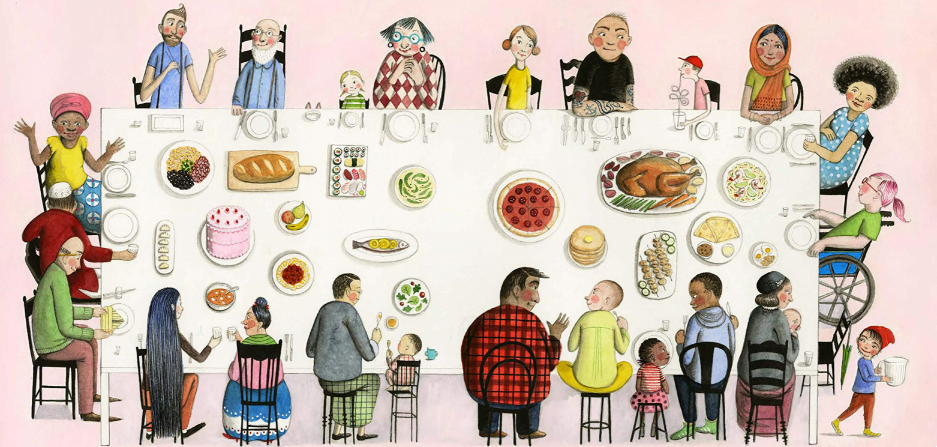
Seventeenth-century Welsh poet George Herbert wrote The Temple (published posthumously in 1633), a collection of poems with titles like “The Porch,” “The Altar,” and “The Windows.” The final poem was “Love (III)” which the French philosopher, mystic, and activist Simone Weil considered “the most beautiful poem ever written.” “Love (III)” operates on three levels: the narrative/dialogue, the Eucharist or Lord’s Supper, and the eschatological heavenly banquet.
George Herbert, “Love (III)” (from The Temple, 1633)
Despite … Still.
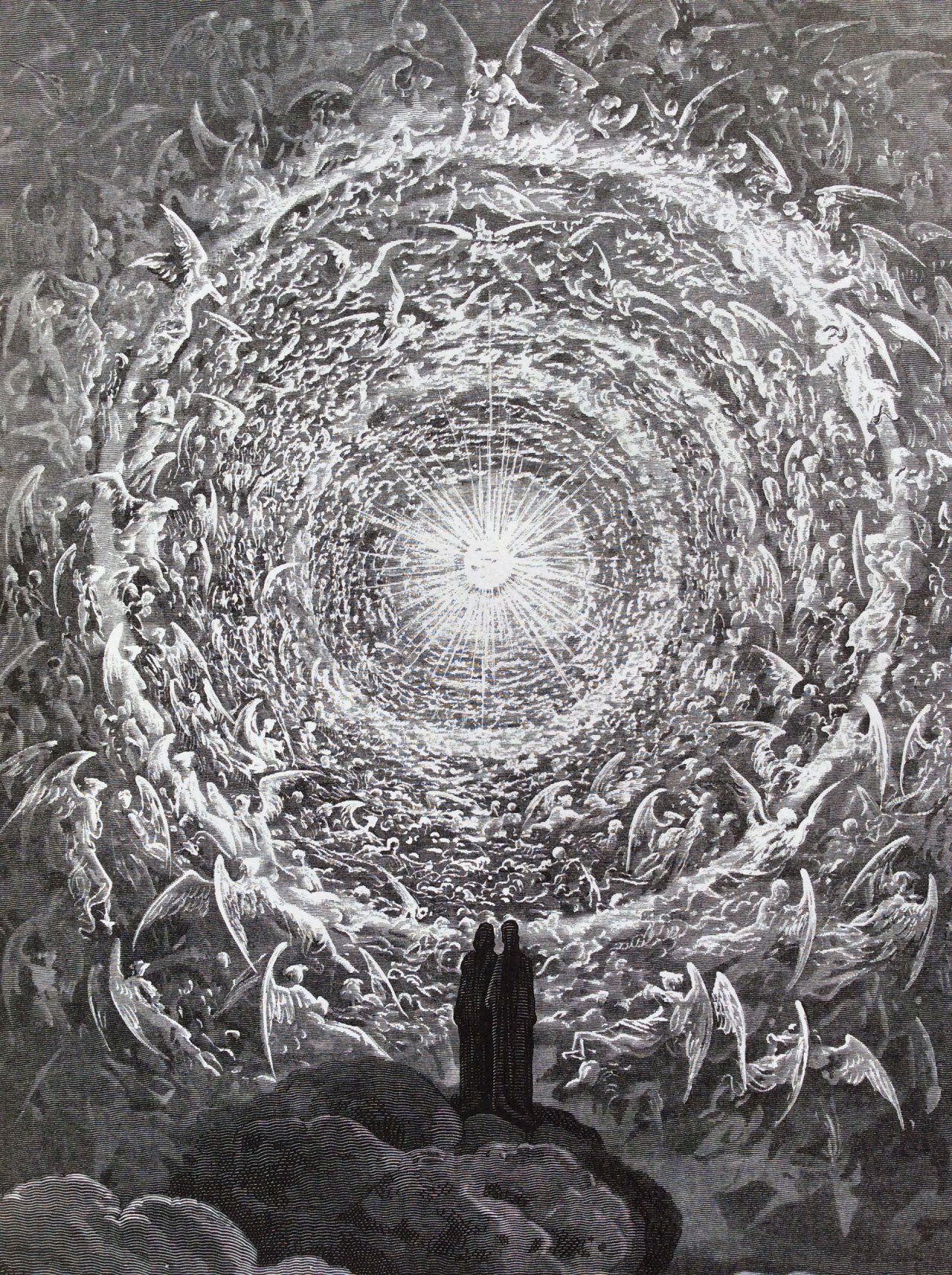
Gustave Doré’s illustration of the Empyrean (where God dwells) for the “Paradiso”, the third and final part of Dante’s Divine Comedy
In Sonnet 29, Shakespeare’s persona appears to be trapped in a mimetic cycle of desire, wanting what he does not possess.
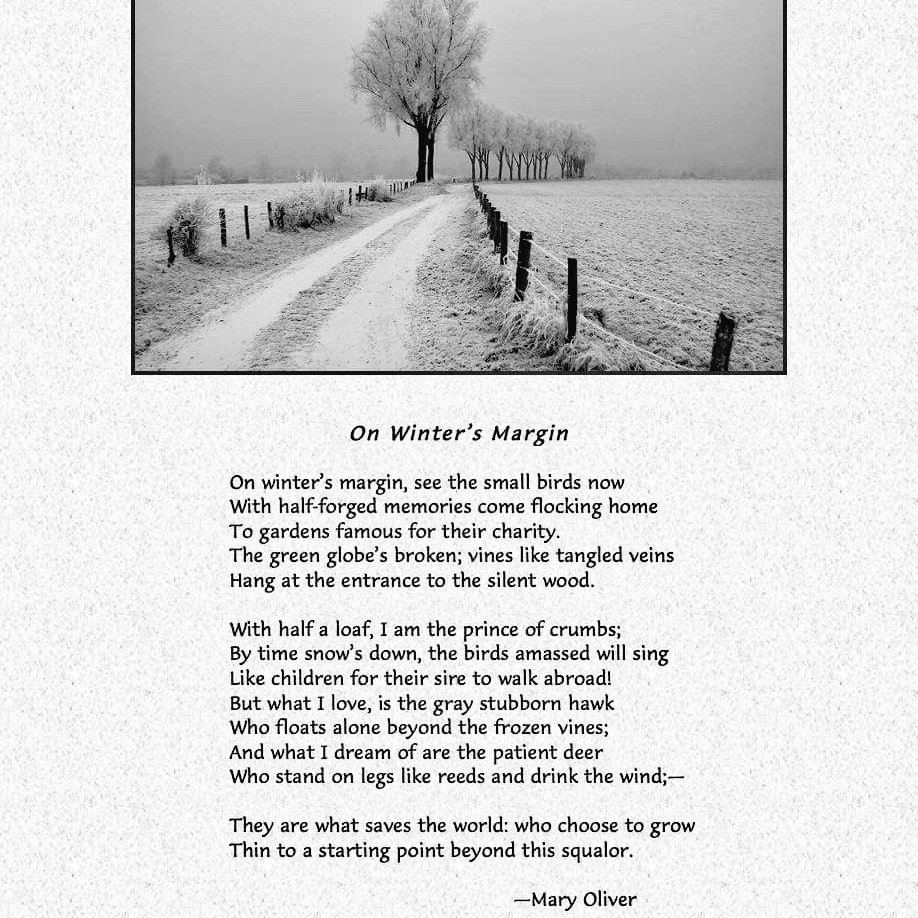
Ohio poet Mary Oliver, writes of the brokenness of the “green globe,” then finds that which remains undefeated in “On Winter’s Margin.”
Despite … Still.
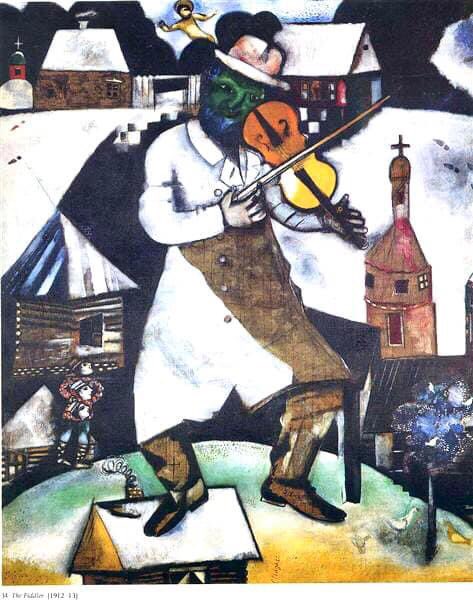
Marc Chagall, The Fiddler (1913), oil on canvas, Stedelijk Museum
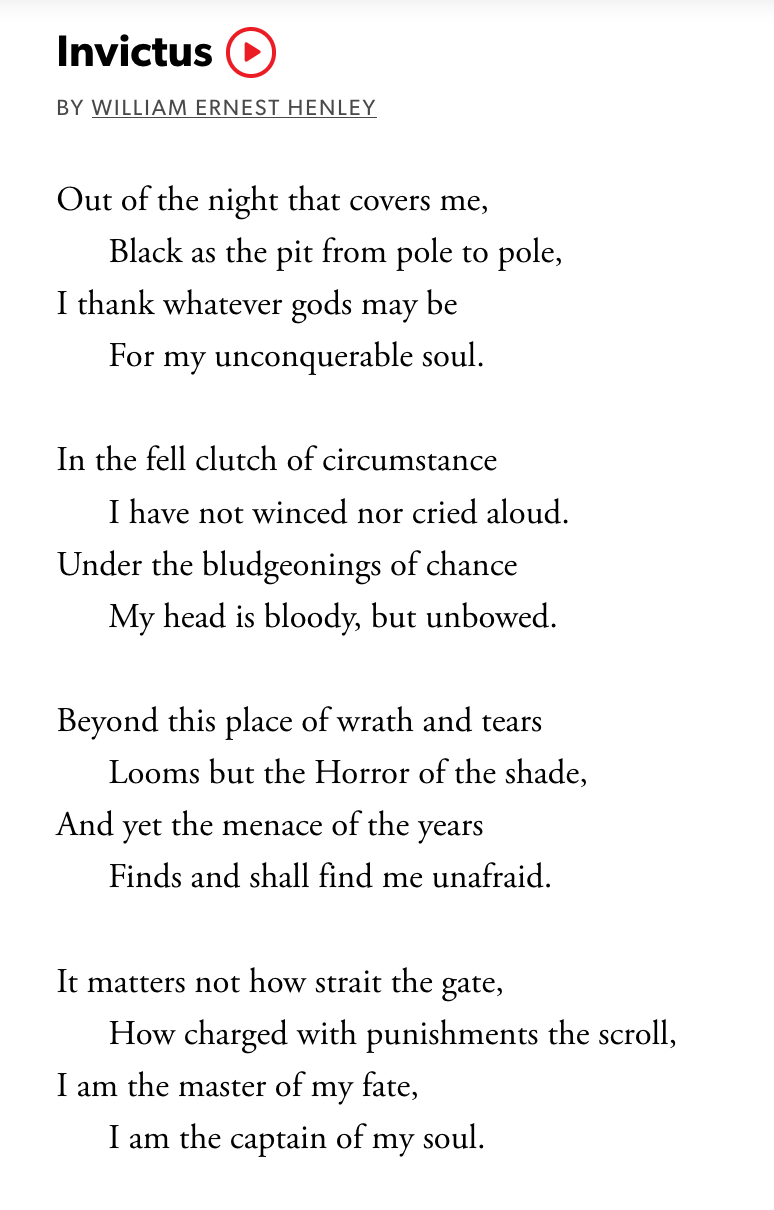
The anti-apartheid leader Nelson Mandela was jailed in South Africa for twenty-seven years. He later said that during his imprisonment he would regularly recite the poem “Invictus”(Latin. “unconquerable” or “undefeated”).
Despite … Still.
Alexander Calder, 1966.
William Butler Yeats turns the formula on its head in “Adam’s Curse,” contemplating poetry, beauty, and finally love, looking back on what was once and finding it has faded or died. He ends his poem saying:
excerpt from “Adam’s Curse” by Yeats (first published in 1903)
The challenge: Write a poem on any theme that the “despite … still” dynamic evokes. As the above poems and art prove, the setting can be the holidays or any occasion, or a mood or fancy, your choice. Or you can choose to pull a Yeats and turn the “despite…still” dynamic on its head. Let the muse be your guide!
New to dVerse? Here’s how to join in: * Write a poem in response to the challenge. * Post your poem on your blog and link back to this post. * Enter your name and the link to your post by clicking Mr. Linky below (remember to check the little box to accept the use/privacy policy). * Read and comment on your fellow poets’ work –- there’s so much to derive from reading each other’s writing: new inspiration, new ideas, new friends.
Welcome, everyone, to the dVerse Pub where your pubtender today will be peering at you one-eyed thanks to an eye-patch necessitated by a recurring corneal issue. Despite this, I’m still looking forward to relishing your poetic offerings. (See what I did there?! 😉)
I’m delighted you’re here!
We’ve got a smorgasbord of holiday fare today: stollen from Germany, buñuelos from Mexico, panettone from Italy, yule log (sponge cake rolled and filled with cream) from France, tamaless from Central America, Christmas pudding from the UK and Goa (India), kransekake and speculaas from Norway, coconut candy from Nigeria, and bibingka from the Philippines. To top it all off, glogg (wine infused with spices like cinnamon and cloves) from Sweden or, an American staple at Christmas, some good old-fashioned egg nog.
Hi Dora. Thanks for the prompt. I loved it. It helped me complete my trilogy which started with Merril’s prompt and you provided the inspiration for the second and now the last. It is quite long and I might need to edit it later. But I am sleepy so I will post it as it is.
Thanks again. ❤️
Welcome, Dora and All. Excellent prompt, and it is perfect for the end of the year. I’ll try a nice mug of glogg before I head out into the cold. Will be back later to meander the poetry trail.
I’m sorry to hear about your recurring corneal issue. An eye-patch lends you a jaunty look, like the singer Gabrielle. Stollen and some glogg would be lovely on a cold winter’s night. I hope you like my poem.
I loved your poem, Kim. It has your usual perceptive stamp, a perception of nature that only your eyes can give us. Speaking of eyes, I have a harder time keeping it on than I should. Gets in the way. Here’s some stollen and glogg! Enjoy! And Merry Christmas!
Hey QCD. You’ve got this poetry stuff burrowed way down in your bones same as I do, dontcha? When I was younger, 20 maybe, I asked a teacher turned friend of mine, “What use is it to notice the small things we notice that others don’t?” He said to me, “Because it makes each moment richer and every situation fuller.” Your prompt here is bigger than that modest word, and I enjoyed every word and image. What a feast. I will try to do it justice. Thanks for the time and care you have obviously taken with this.
As compliments go, what a crown you’ve given me, Shay! As QCD, I will, QED, wear it lightly, else I would topple over and lose all my cool. I had a ball fixing this feast, and that you enjoyed it makes me happy. Thank you, dear friend. Can’t wait to read what flows from your poetic quill. ❤
Hi Dora! I was thinking that a pubtender with an eyepatch sounds appropriate. Though I do hope your eye is on the mend. I’d love a big slice of panettone if it’s covered in chocolate. And perhaps a cappuccino.🍫
Thanks, Melissa! I wish it gave me a seasoned bartender look, but it only makes me look . . . one-eyed! 😉 Here you go, panettone and cappuccino, and a Merry Christmas wish to you and yours. Cheers!.
Loved the prompt, Dora! Hmmmm if it were halloween, the eye patch could be seen as a pirates’ attire. But, sorry you’re in the need of one for medical reasons….hope all resolves itself soon.
Thanks for hosting! Would love some panettone and a good strong cup of black coffee, please! Or no, wait….panettone and a small glass of lemoncello over ice. That sounds more festive! 🙂
Thanks, Lillian. The patch is not at all dashing, I assure you. But when I rip it off to put drops in, you could probably hear my yell over the high seas! Panettone and a small glass of lemoncello over ice coming right up. Enjoy, Lillian, and a Merry Christmas to you and yours!
Thank you for the wonderful selection of poems and artworks, Dora. I hope your eye gets better soon. Do you perchance have any mulled wine behind the bar? Cheers!
Thank you, Lesley! I have a feeling I’m stuck with this eye patch for at least another few days and I’m hoping for the best outcome. As for mulled wine, I’ve been saving it up for someone. Must have been you! 😊 Merry Christmas! 🎄
Lol. Despite my intention to keep it short, I still manage to tax everyone’s patience! I’m glad you liked it though and it’s always a pleasure to host. Which is why I am giving you not only a hefty slice of the yule log but also a triple scoop of homemade vanilla ice cream with my blessings to boot! Merry Christmas, Dwight, to you and yours!
I am sorry to hear of your corneal eye issues. I had a partial cornea transplant on both eyes with great success! I am now almost 20/20 vision again! My eyes surgeon was great! Wishing you the best with yours!
Wow! That’s great and gives me hope if that’s the way our Lord intends for me to go too! 20/20 vision — why the last time I had that was when I was 14, so about a hundred years ago! Thank you for your well-wishes, my friend.
I loved your poem, Sheila! I’m going to add it into Mr. Linky manually as it’s still within the week and others will want to see it. Have a Merry Christmas!
Dora, I didn’t have time to participate when this prompt was shared, but read the whole thing, and MARVELLED. I thought at the time, and have come back to share my thoughts, that this prompt is a master class. It took a few minutes to find which one I meant, but I have read it again, and bookmarked it for further reading and reflection. It must have taken a great deal of time to put this together, and I wanted you to know that I am still absorbing and learning from it.
I didn’t write to this prompt but realized today when I came back to revisit and learn more by reading the poems you shared, that I had my own “despite and still” that I could have shared at the time. It would have been much more timely in more ways than one, as it was Christmas-themed: https://glovergardens.com/dad-is-gone-and-still-our-hearts-are-full/
Anyway, thank you again for the time and thoughtfulness that you and the rest of the Poets Pub hosts put into these prompts. It’s definitely an adult learning course for me!
Kim, You are so very kind, and so very thoughtful to revisit this prompt and share your poetry too (which I’m about to go read). I can’t tell you how encouraging it is to hear you got something out of it as I never know how it comes across, if I’m guilty of taxing everyone’s patience or not. If I can communicate one iota of my love of poetry, I’m thrilled. Thank you so much, Kim. I am so cheered, even as I plan my prompt for next week! 🙂






 dVerse
Welcome, everyone, to the dVerse Pub where your pubtender today will be peering at you one-eyed thanks to an eye-patch necessitated by a recurring corneal issue. Despite this, I’m still looking forward to relishing your poetic offerings. (See what I did there?! 😉)
I’m delighted you’re here!
We’ve got a smorgasbord of holiday fare today: stollen from Germany, buñuelos from Mexico, panettone from Italy, yule log (sponge cake rolled and filled with cream) from France, tamaless from Central America, Christmas pudding from the UK and Goa (India), kransekake and speculaas from Norway, coconut candy from Nigeria, and bibingka from the Philippines. To top it all off, glogg (wine infused with spices like cinnamon and cloves) from Sweden or, an American staple at Christmas, some good old-fashioned egg nog.
I can bring some lussekatter (sweat wheat bread with lots of butter and saffron)….from Sweden
Oh yummy! Please do! I don’t think I’ve ever had that before. 😃
Dee-licious, even imagined! 😊
Hi Dora. Thanks for the prompt. I loved it. It helped me complete my trilogy which started with Merril’s prompt and you provided the inspiration for the second and now the last. It is quite long and I might need to edit it later. But I am sleepy so I will post it as it is.
Thanks again. ❤️
Do take care of your eye.
Thanks, Punam! Sleep tight and we’ll see you in the morning. Can’t wait to read what you’ve written. 🤗❤️
Welcome, Dora and All. Excellent prompt, and it is perfect for the end of the year. I’ll try a nice mug of glogg before I head out into the cold. Will be back later to meander the poetry trail.
Mug of glogg to send you out into the wintry day, Li. Loved your poem btw. ❤️ Cheers!
Thank you ❤
My pleasure!
I’m sorry to hear about your recurring corneal issue. An eye-patch lends you a jaunty look, like the singer Gabrielle. Stollen and some glogg would be lovely on a cold winter’s night. I hope you like my poem.
I loved your poem, Kim. It has your usual perceptive stamp, a perception of nature that only your eyes can give us. Speaking of eyes, I have a harder time keeping it on than I should. Gets in the way. Here’s some stollen and glogg! Enjoy! And Merry Christmas!
Thank you so much, Dora. Merry Christmas to you and yours!
I am attending a seminarium of high interest, and will come around and read a bit later… loved the prompt and hope I understood it right.
I think you got it just right! Enjoy the seminarium!
I can’t keep a straight face today. Do you serve lemonade so that I can pucker?
Haha! You speak in riddles, my friend! Lemonade coming up and I’m headed over to your place to seek answers.
Rather impeccable stuff…thanks for a brill post Nora…
Hey QCD. You’ve got this poetry stuff burrowed way down in your bones same as I do, dontcha? When I was younger, 20 maybe, I asked a teacher turned friend of mine, “What use is it to notice the small things we notice that others don’t?” He said to me, “Because it makes each moment richer and every situation fuller.” Your prompt here is bigger than that modest word, and I enjoyed every word and image. What a feast. I will try to do it justice. Thanks for the time and care you have obviously taken with this.
As compliments go, what a crown you’ve given me, Shay! As QCD, I will, QED, wear it lightly, else I would topple over and lose all my cool. I had a ball fixing this feast, and that you enjoyed it makes me happy. Thank you, dear friend. Can’t wait to read what flows from your poetic quill. ❤
Hi Dora! I was thinking that a pubtender with an eyepatch sounds appropriate. Though I do hope your eye is on the mend. I’d love a big slice of panettone if it’s covered in chocolate. And perhaps a cappuccino.🍫
Thanks, Melissa! I wish it gave me a seasoned bartender look, but it only makes me look . . . one-eyed! 😉 Here you go, panettone and cappuccino, and a Merry Christmas wish to you and yours. Cheers!.
You, too, Dora!
Loved the prompt, Dora! Hmmmm if it were halloween, the eye patch could be seen as a pirates’ attire. But, sorry you’re in the need of one for medical reasons….hope all resolves itself soon.
Thanks for hosting! Would love some panettone and a good strong cup of black coffee, please! Or no, wait….panettone and a small glass of lemoncello over ice. That sounds more festive! 🙂
Hope to see you at our LIVE session Saturday!
Thanks, Lillian. The patch is not at all dashing, I assure you. But when I rip it off to put drops in, you could probably hear my yell over the high seas! Panettone and a small glass of lemoncello over ice coming right up. Enjoy, Lillian, and a Merry Christmas to you and yours!
Gosh, I love all the artworks you’ve chosen, Dora, you have such good taste! Love the poems too 🩷
Thank you, Nina! As you’re an artist and not just with words, I won’t take that nod of approval in stride, my friend. So glad you enjoyed them. 😃💞💞
Oh, you are sweet! I enjoy the contents of your brain, Dora! ☺️ 💕
And vice versa! Happy holidays, my friend. 🤗🥰
😉👌🏼Wonderful prompt Dora. Thank you for hosting… 🙂✌🏼🫶🏼🎼
…love the header display magic! 😏
Had to give Kandinsky that space! 🌹
Loved doing it, Rob, thank you! 😃🙏🏽🤗💞
Thank you for the wonderful selection of poems and artworks, Dora. I hope your eye gets better soon.
Do you perchance have any mulled wine behind the bar? Cheers!
Thank you, Lesley! I have a feeling I’m stuck with this eye patch for at least another few days and I’m hoping for the best outcome. As for mulled wine, I’ve been saving it up for someone. Must have been you! 😊 Merry Christmas! 🎄
Thank you very much, Dora! I shall drink it to your health. Salud! 🍷
Despite and Still – despite my grief I still found a poetic voice.
Peace and light to all
I would expect nothing less from you, Trudessa. Sending you all the best wishes of the season! 🌟
Despite your lengthy presentation, I still believe you have come up with a very fine prompt, my friend! Thank you for hosting today!
A thick slice of that yule log and a big scoop of ice cream would be very tasty!
Lol. Despite my intention to keep it short, I still manage to tax everyone’s patience! I’m glad you liked it though and it’s always a pleasure to host. Which is why I am giving you not only a hefty slice of the yule log but also a triple scoop of homemade vanilla ice cream with my blessings to boot! Merry Christmas, Dwight, to you and yours!
Oh…you know what I like!
You and me both!
I am sorry to hear of your corneal eye issues. I had a partial cornea transplant on both eyes with great success! I am now almost 20/20 vision again! My eyes surgeon was great! Wishing you the best with yours!
Wow! That’s great and gives me hope if that’s the way our Lord intends for me to go too! 20/20 vision — why the last time I had that was when I was 14, so about a hundred years ago! Thank you for your well-wishes, my friend.
I had one done in 2014 and the other in 2015.
I’m so glad both surgeries turned out well.
Thank you. I am also!
Nice one
Much❤️💚love
Thanks, Gillena. ❤️🎄💚
Thank you Dora, great prompt, my order – pudding and whiskey – I’ll share some pavlova.
Coming right up! Pavlova is one of my favorite desserts, Paul. Thank you! And I’m glad tou enjoyed the prompt.
Dora, sorry for coming in late on this one. But here is my poem. Love dVerse! https://wrestlingwordblog.wordpress.com/2024/12/14/he-comes-still/
I loved your poem, Sheila! I’m going to add it into Mr. Linky manually as it’s still within the week and others will want to see it. Have a Merry Christmas!
Thank you so much, Dora!
You’re most welcome, Sheila! 🙂
A wonderful challenge, Dora. I’m too late for the link, but I wrote to it anyway 🙂
http://www.poetlaundry.com/2024/12/still.html
An amazing response to the prompt, Jennifer. I loved it. ❤
I’m super honored by that. ❤
Dora, I didn’t have time to participate when this prompt was shared, but read the whole thing, and MARVELLED. I thought at the time, and have come back to share my thoughts, that this prompt is a master class. It took a few minutes to find which one I meant, but I have read it again, and bookmarked it for further reading and reflection. It must have taken a great deal of time to put this together, and I wanted you to know that I am still absorbing and learning from it.
I didn’t write to this prompt but realized today when I came back to revisit and learn more by reading the poems you shared, that I had my own “despite and still” that I could have shared at the time. It would have been much more timely in more ways than one, as it was Christmas-themed: https://glovergardens.com/dad-is-gone-and-still-our-hearts-are-full/
Anyway, thank you again for the time and thoughtfulness that you and the rest of the Poets Pub hosts put into these prompts. It’s definitely an adult learning course for me!
Kim, You are so very kind, and so very thoughtful to revisit this prompt and share your poetry too (which I’m about to go read). I can’t tell you how encouraging it is to hear you got something out of it as I never know how it comes across, if I’m guilty of taxing everyone’s patience or not. If I can communicate one iota of my love of poetry, I’m thrilled. Thank you so much, Kim. I am so cheered, even as I plan my prompt for next week! 🙂
Can’t wait!