Tags
cityscapes, dVerse Poets Pub, finearts, John Atkinson Grimshaw, nocturne, poetics, Sanaa Rizvi, September, urban scenes, Victorian
Good evening, Poets!
Sanaa here aka adashofsunny with yet another round of Poetics, today we are going to contemplate the artwork of John Atkinson Grimshaw.
Grimshaw was born in Leeds in 1836 and was largely self-taught. He initially had a secure job with the Great Northern Railway but eventually abandoned it to pursue painting. His decision was risky, but he became commercially successful and one of the most distinctive British painters of the Victorian era.
What’s particularly interesting is that he wasn’t primarily a grand historical or academic painter. He found poetry in things that might otherwise seem mundane: a railway road at night, a wet pavement, a dock, a suburban lane, a bridge. And then he added the moon. A lot of moon.
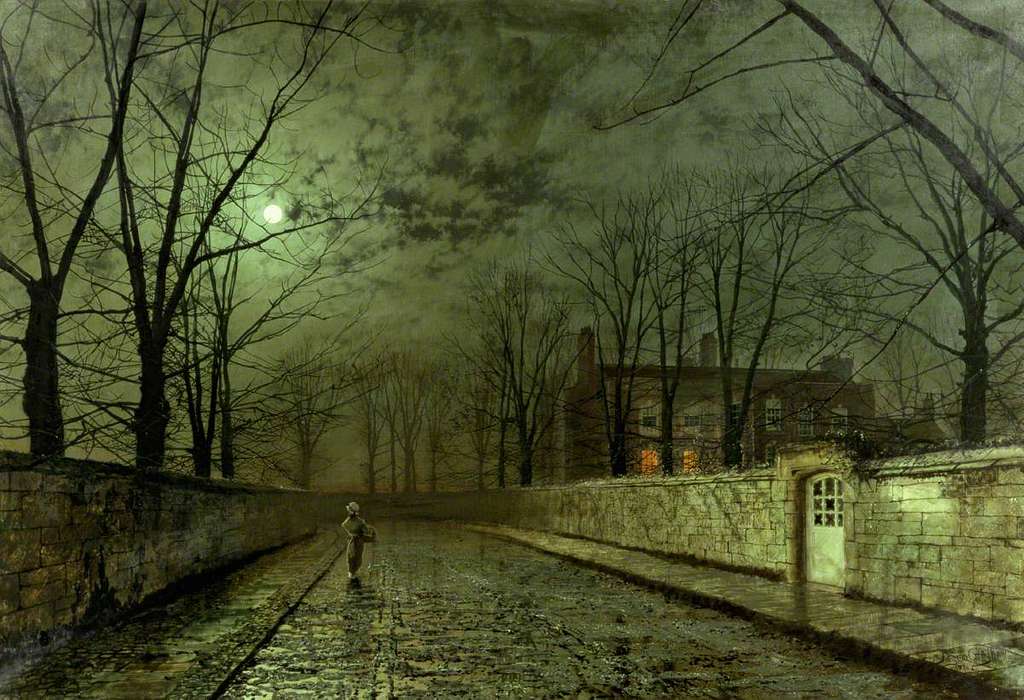
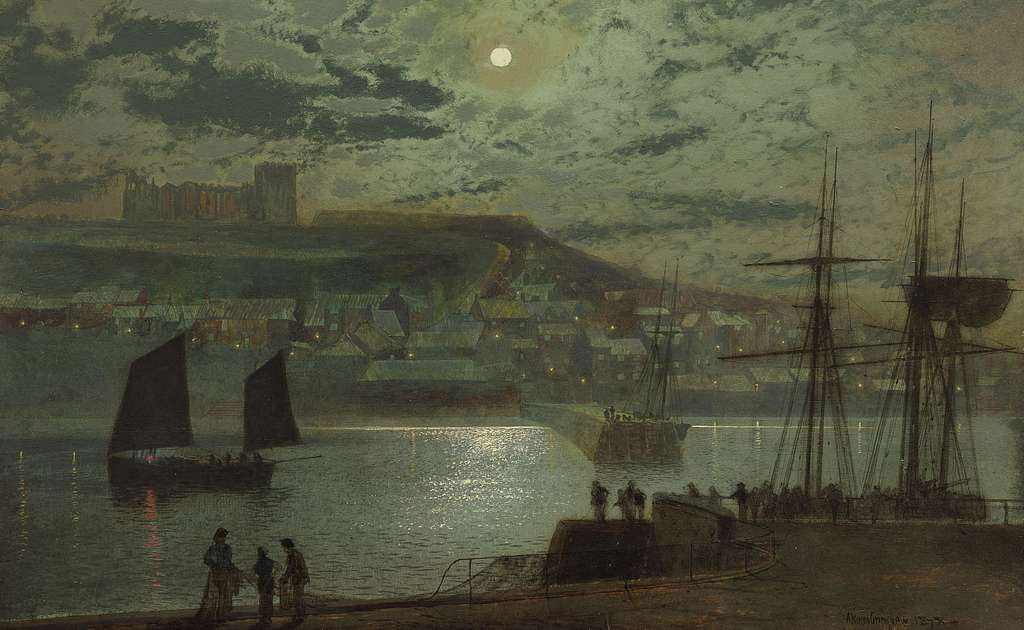
Grimshaw was remarkably precise. Contemporary descriptions and museum commentary emphasize his vivid detail, realism, and extraordinarily careful treatment of weather and light. But there’s something slightly deceptive about realism. Look closely at a Grimshaw landscape and you’ll realize that the world is being composed for mood.
The trees become framing devices. The road becomes a vanishing line. The moon becomes a psychological presence. The water becomes a mirror. The fog erases information. So, although the paintings look observational, they’re highly theatrical.
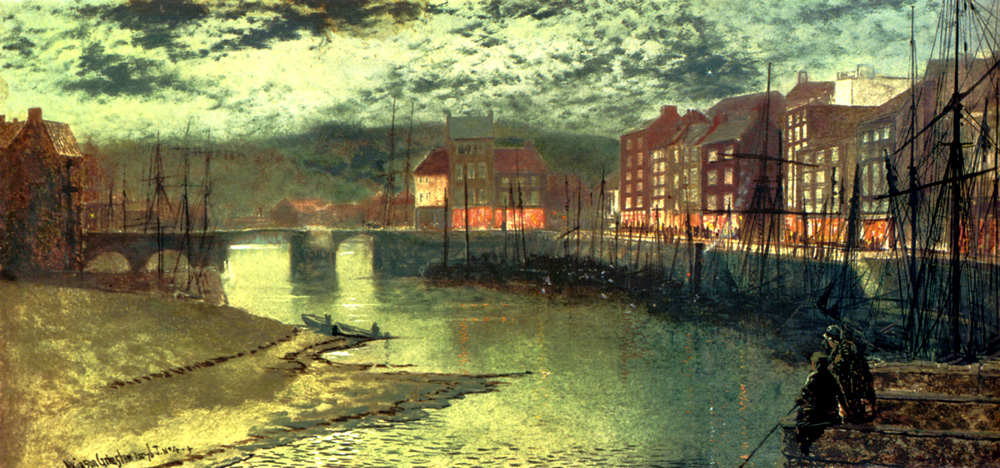
There’s a particular emotional formula in Grimshaw:
beauty + solitude + darkness + light
And crucially, the darkness isn’t necessarily frightening. It’s seductive. His night is a place where ordinary rules of visibility disappear.
You can’t see everything. You must imagine the rest. That’s why his paintings can feel romantic, gothic, erotic, melancholic, and mysterious simultaneously. His figures rarely dominate the composition. They’re swallowed by the environment. The landscape has greater power.
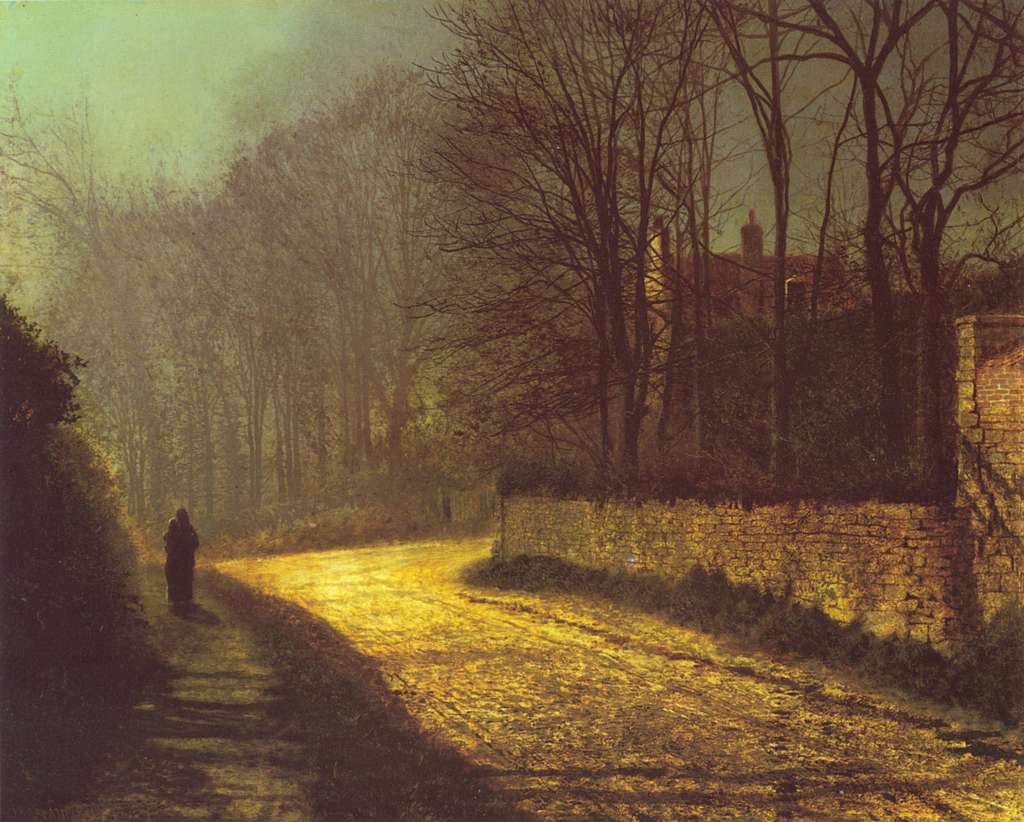
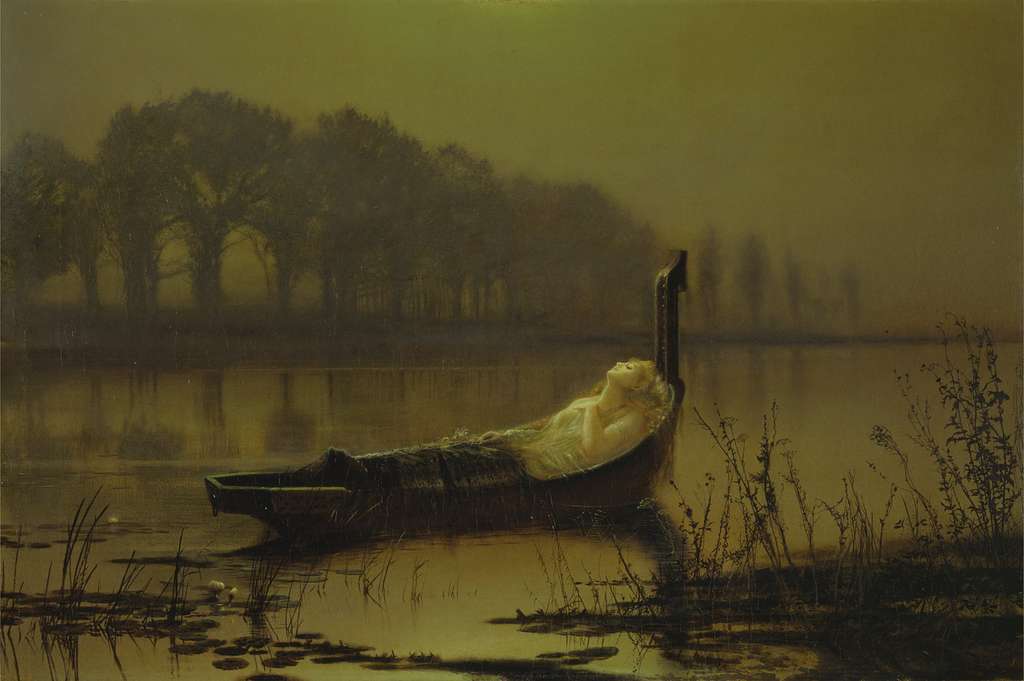
Perhaps this is why Grimshaw’s paintings remain so haunting: he understood that night is not merely the absence of light, but a world with its own language. In the silver of the moon, the glow of distant windows, and the reflections trembling across wet streets, the familiar becomes mysterious.
His cities and landscapes seem to wait for something unnamed to arrive—or for someone to finally notice that they have been there all along. He didn’t simply paint the night; he gave it a presence, a mood, almost a memory. And once we enter that world, darkness no longer feels empty. It feels alive.
Source: Paintings by John Atkinson Grimshaw (public domain) free for commercial use on Picryl
For today’s Poetics, I would like you all to choose ONE of the paintings above and to write a poem inspired by it. You can write an ekphrastic poem or simply take the title as a springboard or both. The choice is yours.
New to dVerse? Here’s how to join in:
- Write a poem (in any form) in response to the challenge.
- Enter a link directly to your poem and your name by clicking Mr. Linky below
- and remember to check the little box to accept the use/privacy policy.
- You will find links to other poets and more will join, so please do check back later to read their poems.
- Read and comment on other poets’ work– we all come here to have our poems read.
- Please link back to dVerse from your site/blog.


Welcome to Poetics, everyone
On the menu we have crab cakes with remoulade and chardonnay, rainbow sushi rolls with riesling.
Or if you prefer we are also serving peach cobber with icecream and/or butter croissants with tea/ coffee of your choice 🙂
Let me know if I can get you anything else. See you on the poetry trail! ❤️❤️
Wow… crabcakes, that makes it hard to say no. Loved the darkness of the images, and so fitting for the season coming.
Crab cakes coming right up! ❤️❤️
I am so glad you enjoyed the prompt, Bjorn. I wanted to match the mood of the coming season 😀
Wonderful prompt, Sanaa! Grimshaw’s paintings are so rich with atmosphere one can drown in them.
Peach cobbler, you say?! Oh yes, with ince cream please! 😊🩷
Hi Dora,
I am so glad you liked the prompt 😀 Peach cobbler with ice-cream coming right up! Happy Tuesday ❤️❤️
P.S. I’ll be back on the poetry trail soon.
Yes ofcourse 🙂 take your time
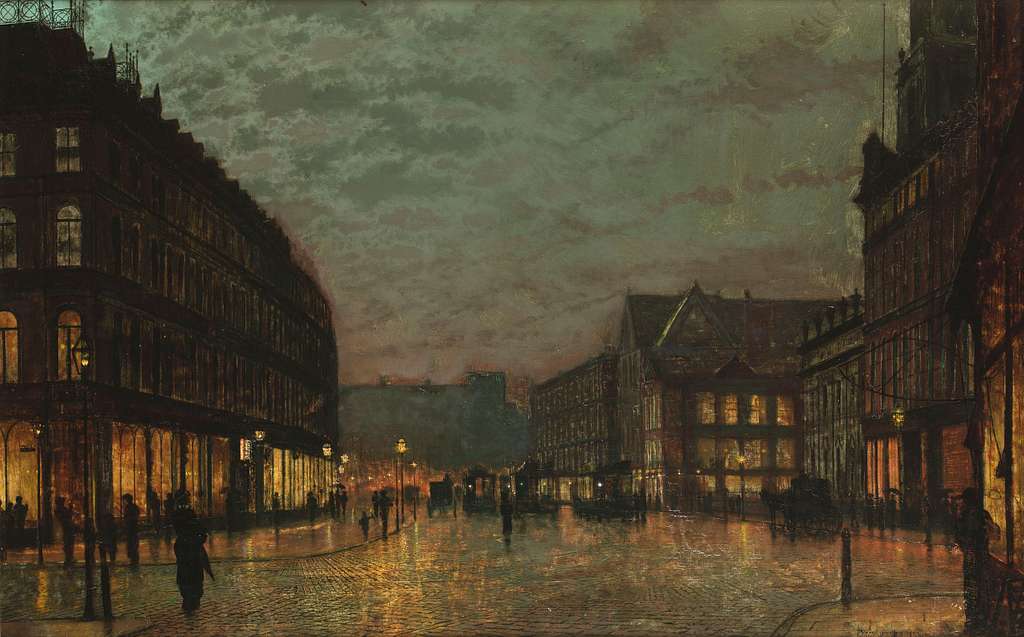
Good evening poets and thank you for hosting, Sanaa. I remember one of Merril’s prompts from 2022 with four images depicting November, one of which was ‘A November Morning’ by Grimshaw, an atmospheric artist. This time round, Boar Lane spoke to me.
Good evening, Kim
Loved your poem! 😀 You brought Boar lane to life with your words ❤️❤️
Thank you, Sanaa!
You’re welcome! ❤️❤️
Hi Sanaa. A great prompt! I loved your post. ❤️
So glad you enjoyed the prompt, Punam! ❤️❤️
❤️❤️
Pingback: Dreaming of the Next Grand Adventure: – Help from Heaven
Pingback: Dark Days ~ ekphrastic poem | rivrvlogr
Pingback: The Gravity Of Missing – The Tigress Awakens
Grimshaw’s style is most pleasing, I love his approach! The rainbow sushi rolls with Riesling a wonderful treat. Thanks, Sanaa for a great challenge.
Rainbow sushi rolls and riesling for the lovely lady 😀 so glad you liked the prompt, Helen.
Heading over to read you ❤️❤️
I’d love a glass of Chardonnay. Enjoyed all the artwork but, one just spoke to me louder.
Glass of Chardonnay coming right up! ❤️❤️ Heading over to read you now 🙂
thanks for this great prompt dear Sanaa. Fascinating. I will try to write something for it tonight. Maybe. And may I bother you with an Irish Coffee, please. thanks. Blessings to you and the team.
So good to see you, Selma. Here’s your Irish coffee ❤️❤️
☕️ ☕️ thanks Sanaa
You’re most welcome ❤️❤️
Wow! The paintings of Grimshaw are so special. Great prompt in this melancholy season!
I am so glad you liked the prompt! ❤️❤️
Great prompt, Sanaa!
Thanks, Jay! Heading over to read you ❤️❤️
Pingback: Open – a poem by Paul Vincent Cannon | parallax
Many thanks for the sumptuous feast of Grimshaw Sanaa, a stirring prompt.
Thank you so much, Paul! 😀 Heading over to read you ❤️❤️
Love this ekphrastic challenge, Sanaa. I had a hard time choosing one because I found them all inspiring. Thanks so much. 🤍
I am so glad you enjoyed the prompt, Jennifer ❤️❤️
Thank you for the lovely images and prompt.
Several Hindi movie songs came to my mind:) Happy to write and share this week. Thanks for hosting:)
My pleasure, Anita! Loved your poem ❤️❤️
Sharing my poem here as I foolishly missed the Mr Linky deadline. If you’re interested in reading, here it is. Thanks.
https://theelephantstrunk.org/2026/10/02/the-lady-through-grimshaws-eyes/
Loved your poem, Nancy 🙂 I have added you to the list. Thank you so much for writing to the prompt ❤️❤️
Hi Sanaa, here is mine: https://roberta-writes.com/2026/10/02/roberta-writes-dverse-thursday-doors-and-the-flower-hour/
Just came back from reading your poem, Roberta. I loved it! 🙂
Thank you so much for writing to the prompt. I have added you to the list ❤️❤️
I appreciate it, Sanaa 💝